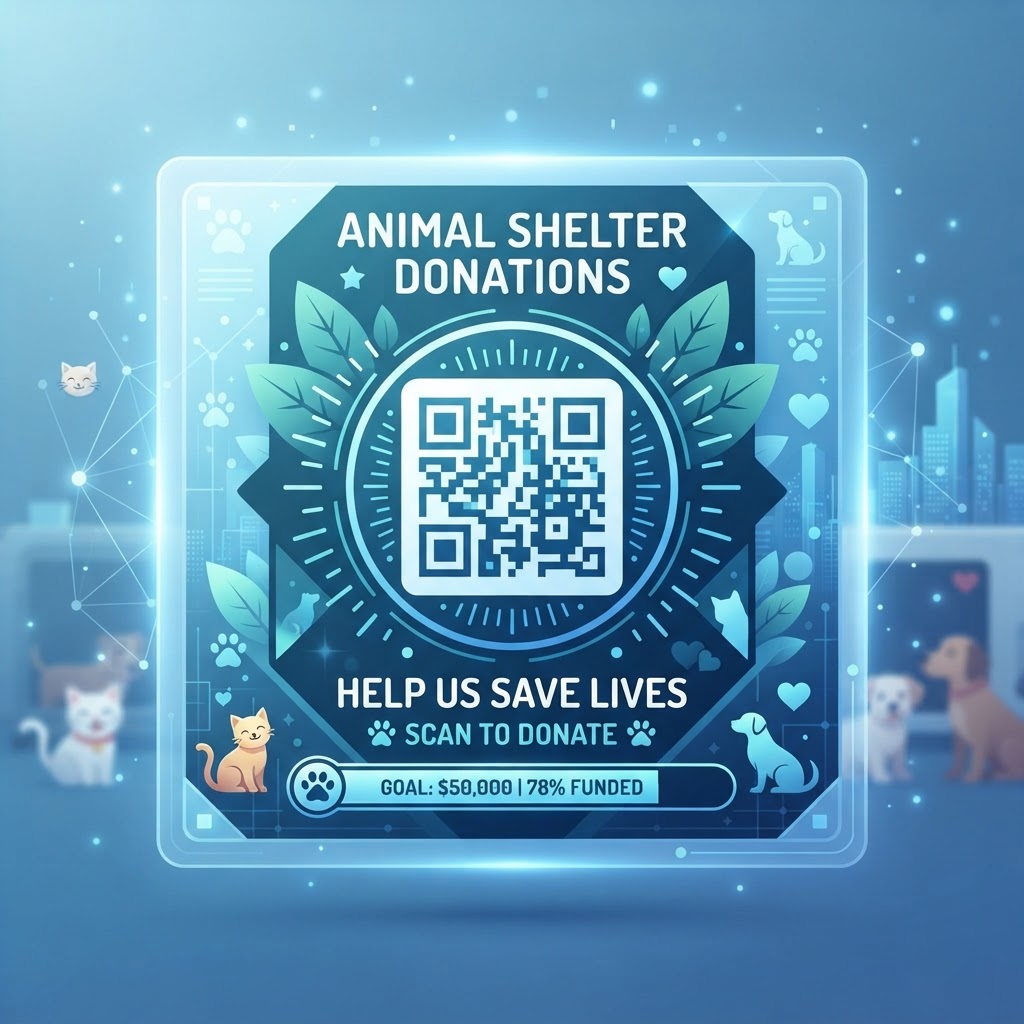
Why the QR Code is Essential for Animal Shelters in 2026
The landscape of non-profit fundraising has shifted dramatically toward mobile-first interactions. In 2026, most smartphone users expect to be able to complete transactions without the need for physical cash or cumbersome web forms.
For animal shelters, the challenge has always been capturing a supporter's fleeting interest—perhaps someone petting a dog at a community event or seeing a flyer on a bulletin board. A QR code acts as the ultimate call-to-action, minimizing the steps between a person’s desire to help and the successful completion of a donation.
Without this technology, you are essentially asking donors to remember a URL, type it into a browser, and then navigate a website—a process that is prone to human error and high abandonment rates.
Furthermore, the utility of a QR code extends beyond simple monetary giving. By linking to mobile-optimized landing pages, shelters can provide real-time updates on animals needing care, link to wishlists, or highlight immediate medical costs for rescued pets.
When a donor sees a specific cat or dog and can donate directly to its care through a QR scan, the emotional connection is significantly strengthened. This immediacy is the backbone of modern social advocacy.
Many businesses have already realized that physical advertising space is only as valuable as the digital engagement it prompts. By integrating QR technology, shelters ensure that every piece of printed collateral—posters, flyers, event banners, and even custom food bowls—becomes a potential donation point.
The adoption of this technology is not just about keeping pace with modern trends; it is about building a scalable infrastructure that invites the public into your mission with zero friction, ensuring that your organization remains accessible, transparent, and financially resilient throughout the calendar year.
How QR Code Technology Works for Charitable Giving
At its core, a QR code is simply a two-dimensional barcode that stores information in a grid of pixels, which modern smartphone cameras can translate into a specific web address or action. When a donor points their camera at your QR code for animal shelter donations, the phone’s operating system instantly recognizes the embedded URL and directs the user to your payment portal or donation page.
This process removes the need for typing long, complex web addresses, which is the primary reason for abandonment in mobile giving. The technology is universally compatible, meaning it works seamlessly across different mobile ecosystems, ensuring that regardless of whether a donor uses a modern flagship device or a budget model, the experience remains consistent and professional.
Technical reliability is paramount. When you use a platform like [blueqrcode.com](https://blueqrcode.com) to generate these codes, you are creating a link that is optimized for mobile responsiveness.
This means the destination page will load correctly, adjusting its layout to fit the specific screen size of the donor's device. Many businesses rely on the stability of these codes to manage large volumes of traffic during peak donation seasons, such as holidays or animal awareness months.
The technical backbone involves a redirection process where the QR code points to a gateway, which then directs the user to your secure payment processor. This abstraction is vital because it allows you to change the destination URL behind the code if needed, without having to reprint your physical signage.
This level of flexibility is critical for animal shelters that might run specific campaigns, such as a ‘Save the Senior Dogs’ drive one month and a ‘Kitten Season Support’ fund the next. By leveraging high-quality, high-contrast QR generation, you ensure that the scanning success rate is near 100%, even in varying lighting conditions, providing a robust, reliable tool for your fundraising operations.
Try it now: Generate a free Qr Code For Animal Shelter Donations →
Step-by-Step Guide: Creating Your Donation QR Code
Getting started is a straightforward process that requires minimal technical expertise. First, navigate to [blueqrcode.com](https://blueqrcode.com) and select the option to generate a URL-based QR code.
Before you begin, ensure you have a dedicated, mobile-friendly donation URL ready. This should be a direct link to your primary donation page, preferably one that accepts multiple payment methods like digital wallets or credit cards, as these are highly preferred by modern donors.
Once on the site, paste your specific donation URL into the input field. The interface will immediately allow you to customize the look of the code.
While standard black-and-white is the most reliable, many platforms allow for subtle color adjustments to match your brand's aesthetic. Just ensure there is enough contrast between the foreground and background so that scanners can easily identify the pattern.
After generating the code, test it thoroughly using multiple devices. Scan it with various smartphones to ensure it lands exactly where it should.
Download the high-resolution version of the code, preferably in a scalable format like SVG or a high-quality PNG. This allows you to scale the code up for a large event banner or down for a small business card without losing clarity.
Once you have the file, integrate it into your marketing materials with a clear, compelling call-to-action (CTA) text. Instead of simply placing the code on a page, use language like 'Scan to help us feed a shelter pet today' or 'Make an instant impact: Scan to donate.'
This instructional text is crucial for guiding the user's behavior. After printing, place your materials in high-traffic areas where people have a moment of downtime—such as waiting rooms, near pet adoption corners, or on check-out counters of partner businesses.
Regularly review your donation logs to monitor the efficacy of your placements, and don’t be afraid to experiment with new locations or messaging to see what drives the most conversions.
100% Free — No signup required
Create your Qr Code For Animal Shelter Donations in seconds
Best Practices for Deployment and Placement
The success of your fundraising campaign hinges on how and where you place your QR code. The most important rule is to make the code accessible.
This means positioning it at eye level or in locations where donors are likely to be standing still. For example, placing a QR code on a standee at your animal shelter’s reception desk is highly effective because visitors are already in a mindset of care and concern.
Similarly, if your shelter collaborates with local pet supply stores, ask if you can place a small, high-quality sign with your QR code near the registers. Many businesses are willing to support local non-profits, especially when it involves a simple, low-effort donation method that doesn't disrupt their own point-of-sale systems.
When considering the design of the surrounding material, remember that a QR code alone can sometimes be ignored. You must frame it with emotional storytelling.
A small photograph of a rescued animal, combined with a brief sentence about how the donation is used, creates an immediate bond. The size of the code is also important; it should be large enough to be scanned from at least two feet away.
For outdoor banners at adoption events, the code should be even larger. Additionally, consider the lighting.
Avoid placing the code behind glare-prone glass or in areas with extremely low light, as this can confuse a smartphone camera’s autofocus. If you are printing the code on dark backgrounds, ensure the QR code itself is on a solid white or light-colored block to maintain high contrast.
Finally, consider the durability of the material. If the flyer is placed outdoors, use weather-resistant lamination to prevent fading or water damage.
By treating your QR code as a primary touchpoint rather than an afterthought, you ensure that potential donors find it easy to contribute, which maximizes your total reach throughout the year.
Common Mistakes to Avoid
One of the most frequent errors shelters make is using a broken or outdated URL. Before you send thousands of flyers to the printer, verify the link.
Ensure the target URL is not just functional, but also optimized for mobile devices. A website that takes too long to load or requires the donor to zoom in to find the 'donate' button will lead to immediate loss of interest.
Another common mistake is placing the QR code in a location where the user has no connectivity. If you are hosting an event in a basement or a remote outdoor park, ensure there is public Wi-Fi available, or reconsider the placement.
Donors will not wait for a loading spinner that never finishes. Another pitfall is failing to explain what the QR code actually does.
Never print a code with no context. A user might not scan a random barcode if they don't know where it leads.
Always provide a 'Scan to Donate' label. Furthermore, do not overcomplicate the visual.
Avoid 'branded' QR codes that become too artistic, as adding too many logos or complex textures can interfere with the scanability of the code. Keep it clean and follow standard patterns.
Lastly, do not set it and forget it. If your campaign goals change, or if you run a specific fund drive, your link should be updated to reflect that.
Using dynamic QR codes—which allow you to change the destination URL without changing the physical code—is the best way to avoid these headaches. By auditing your QR placement and testing your links regularly, you avoid the frustration of a donor who wants to help but finds themselves hitting a digital dead end.
Professionalism in these small details reflects the quality of your organization as a whole.
Concrete Use Cases for Animal Shelters
Different environments require different strategies for deploying QR codes. In a pet adoption center, place a QR code on every animal's kennel door or information sheet.
This allows potential adopters or visitors to instantly donate specifically toward that animal's food, medical vaccinations, or enrichment toys. This creates a hyper-personalized giving experience that is incredibly effective.
In a retail partnership scenario, such as a grocery store or pet supply shop, set up a 'Round Up' or 'Direct Giving' station. A small, permanent display at the counter featuring your QR code allows customers to easily donate the change they would have received or a specific dollar amount during their routine shopping trips.
This is a passive revenue stream that compounds over time. For large-scale community events like adoption fairs, parades, or charity walks, use the QR code on your event signage and volunteer uniforms.
Have volunteers wear a shirt with the QR code printed on the back, allowing attendees to scan and donate even while on the move. This turns your entire team into a mobile donation portal.
Another highly successful use case is in the professional services sector; vet clinics or local businesses that support your shelter can include your QR code on their appointment confirmation emails or physical receipts.
By providing a 'Support Local Shelters' link, they extend your reach to their own customer base. Many businesses are eager to display these because it shows they are socially responsible.
By strategically placing these codes in high-traffic, relevant locations, you broaden your donor base far beyond your existing email list, turning every community interaction into an opportunity for your mission to gain the funding it requires.
Summary and Future-Proofing Your Fundraising
As we navigate 2026 and beyond, the integration of QR codes into your fundraising strategy is no longer optional—it is a core requirement for a modern, efficient non-profit. By minimizing friction, leveraging mobile technology, and ensuring your materials are strategically placed, you position your animal shelter to capture donations that might otherwise be lost.
Remember that every scan represents a person who wants to help; your job is to make that help as easy to provide as possible. Utilize platforms like [blueqrcode.com](https://blueqrcode.com) to maintain control over your links and ensure your codes remain high-quality and reliable.
Start by auditing your current communication materials, identify the gaps where a scan-to-donate option could be added, and execute a deployment plan that places these codes directly in the path of your supporters.
Looking forward, consider how you can expand this. Can you use QR codes to sign up volunteers?
Can you use them to share stories of pets that have been successfully adopted, thereby creating a feedback loop of positivity that encourages further giving? The goal is to build a donor ecosystem that feels connected to the life-saving work you do.
Regularly engage your community, tell the stories behind the donations, and thank your donors publicly. By staying adaptable and using these digital tools effectively, you provide your shelter with a sustainable foundation that will serve your animals for years to come.
Your commitment to leveraging technology for good is what sets a successful organization apart in a crowded landscape of social causes. Take the step today to streamline your donation process; the pets in your care will thank you for it, and your donors will appreciate the simplicity of your commitment to their experience.
No watermark · No expiry · Works on all phones
Your QR code is ready in under 30 seconds.