Why This Matters in 2026
The philanthropic sector has undergone a rapid evolution, with donors now expecting a seamless transition between the physical and digital realms. In 2026, manual bid sheets and paper-based tracking are quickly becoming relics of the past.
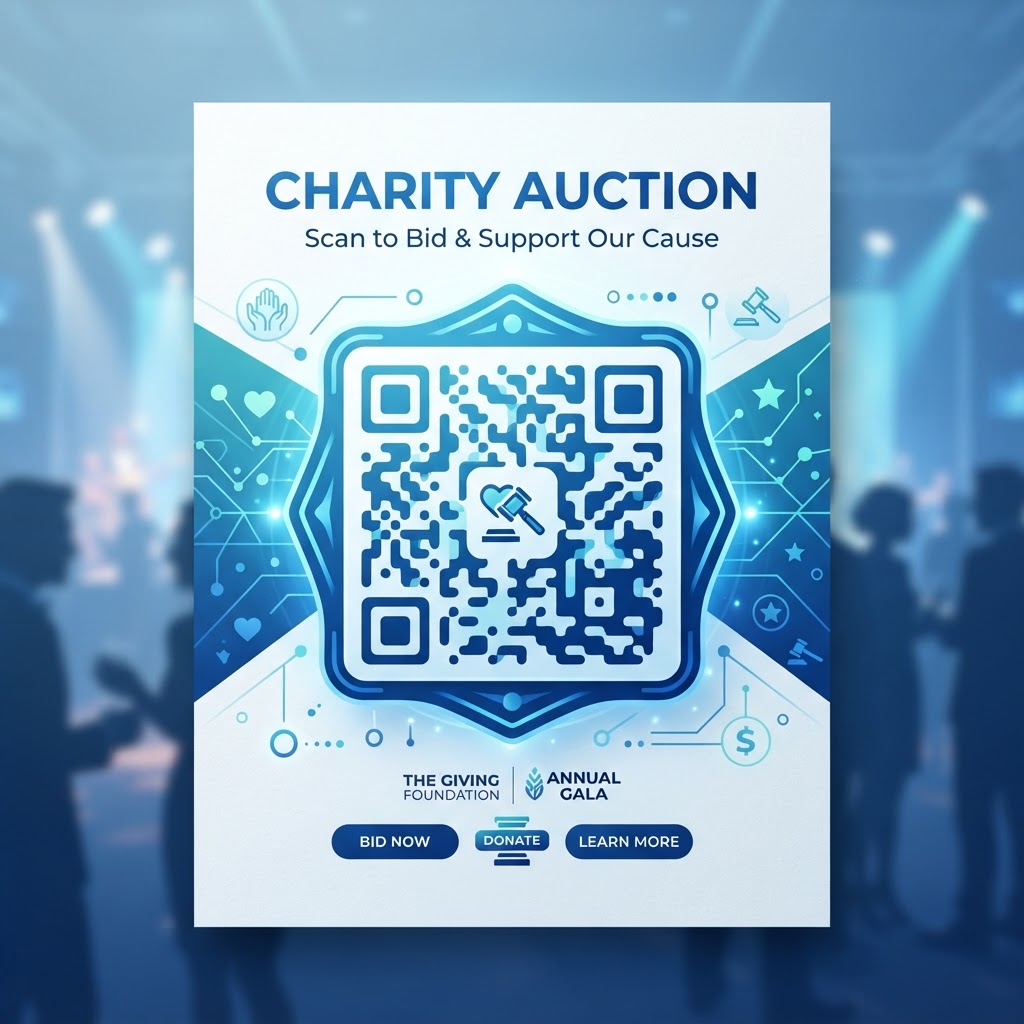
Using a QR code for charity auction events addresses the modern donor's demand for convenience, speed, and security. When an attendee stands in front of a silent auction item, they do not want to fill out a paper form; they want to scan, view the current bid, and participate instantly.
This speed is critical for capturing excitement during the heat of an event, where spontaneous giving is at its peak. By providing a digital path, organizations remove the physical bottleneck of guests crowding around bid tables, which improves both the event flow and the overall atmosphere.
Digital integration also allows for sophisticated data collection that was previously impossible. When you deploy a QR code, you are not just providing a link; you are initiating a measurable touchpoint.
You can track which items are attracting the most attention, what time of day your audience is most active, and which demographic segments are engaging the most frequently. This data-driven approach empowers organizers to refine their strategy in real-time.
If a specific area of the auction is quiet, you can push notifications or move display materials to stimulate interest. Digital platforms also ensure that payment processing is secure and automated, minimizing the administrative burden on volunteers at the end of the evening.
As most smartphones now feature native QR scanning capabilities without the need for additional apps, the barrier to entry is effectively zero, making this the most accessible tool for non-profit growth in the modern era.
Key Points
- QR codes streamline bidding and reduce crowding around auction tables.
- Digital touchpoints provide measurable engagement data for organizers.
- Secure, automated payment processing can reduce volunteers’ administrative workload.
How It Works Technically
Technically speaking, a QR code acts as a visual interface for a URL. When you generate a QR code for your charity auction, you are embedding a specific web address into a two-dimensional matrix of black and white squares.
When a guest scans this code with their smartphone, their device interprets the visual data and automatically launches the associated URL in their mobile browser. For a charity auction, this URL typically directs the user to a mobile-optimized landing page, a real-time bidding dashboard, or a secure payment portal.
The technical beauty of this process lies in its directness; it eliminates the need for guests to manually type in long, complex web addresses, which is prone to error and highly frustrating in a crowded or dimly lit ballroom environment.
From a software perspective, the QR code relies on error correction technology. Most modern QR codes use Reed-Solomon error correction, which means that even if the code is partially obscured—perhaps by a fold in the printed material or a smudge from a beverage—the scanner can still successfully read the underlying data.
This makes the system incredibly resilient for live events. When you generate these codes via a platform like blueqrcode.com, you are essentially creating a clean, high-contrast digital gateway.
The back-end infrastructure manages the redirection logic, ensuring that the link remains active throughout the duration of your auction. This backend control is vital because it allows you to update the destination URL if needed without changing the physical code printed on your event signage.
This flexibility ensures that if a technical issue arises or a link needs to be routed to a new page, your printed materials remain valid and functional for the duration of the event.
Try it now: Generate a free Qr Code For Charity Auction →
Step-by-Step Guide Using blueqrcode.com
Creating a professional QR code for your auction is a straightforward process when using blueqrcode.com.
- Step 1: Identify the specific digital destination for your QR code. This might be a digital catalog of auction items, a live bidding page, or a donation portal.
- Step 2: Navigate to the blueqrcode.com platform and select the 'URL' option from the code generation menu, which is the standard format for linking to auction sites. Copy and paste your destination URL into the input field, then verify that it is correct so guests do not encounter a broken link or 404 error page during your event.
- Step 3: Customize the code if desired by integrating your organization's primary brand color or adding a logo to the center. This visual branding helps build trust, signaling to the donor that they are accessing an official and legitimate page.
- Step 4: Generate the code and download it in a high-resolution format such as PNG or vector SVG. Vector formats are particularly useful if you need to scale the image for large signage or banners without losing quality.
- Step 5: Perform a 'real-world' test by scanning the code with both Android and iOS devices in the actual lighting conditions of your venue. This proactive approach on blueqrcode.com ensures your digital auction infrastructure is ready for the high-traffic demands of your event night.
Best Practices for Deployment
Deployment strategy is the difference between a high-tech success and a point of confusion. Thoughtful placement, readable sizing, and clear instructions help guests engage with the auction smoothly.
- Choose visible placement: Feature a dedicated QR code on every auction item display, placed at eye level and printed on high-quality, non-glare cardstock.
- Avoid reflective materials: Glossy materials can cause light reflections, which may prevent smartphone cameras from focusing on the code.
- Use an appropriate size: A standard size of at least 2 inches by 2 inches is recommended for tabletop displays. For larger banners or stage projections, scale the code proportionately so that it can be scanned from several feet away, allowing multiple people to participate simultaneously without needing to stand directly in front of the display.
- Add clear instructions: Never assume that every guest is tech-savvy. A short, concise CTA such as 'Scan to Bid' or 'Point Your Camera to Donate' acts as a guide for less experienced users.
- Include pre-event touchpoints: Consider using the QR code in your pre-event communications. Including it in your email invitations or on your event registration page allows guests to get familiar with your digital platform before they arrive.
- Make codes accessible during the event: If your event involves a seated dinner, place a QR code on the back of the guest program or as part of the centerpieces. By placing the code in multiple touchpoints, you significantly increase the number of 'entry points' into your bidding platform, which directly correlates to higher auction participation rates.
100% Free — No signup required
Create your Qr Code For Charity Auction in seconds
Create Free QR Code →Common Mistakes to Avoid
Even with the best intentions, organizers often fall into common traps that derail their digital strategy. Check links, mobile usability, venue conditions, and display design before the event.
- Using a broken link: This often happens when a URL is changed at the last minute during the website development phase, but the printed QR codes are not updated to match. Always perform a final audit of all links 24 hours before the event.
- Ignoring mobile optimization: If your bidding platform requires a guest to pinch-and-zoom or scroll horizontally to see the 'Bid' button, they will likely abandon the process. Ensure your destination landing page is fully responsive, featuring large, clickable buttons that are easy to navigate on a small screen.
- Overlooking venue lighting: If your charity auction is held in a ballroom with moody, dim lighting, standard QR codes printed on dark paper may struggle to scan. Use high-contrast color combinations—ideally black on white—and ensure the area around the code is well-lit.
- Placing codes where they can be obstructed: Avoid placing codes near high-traffic areas that could become obstructed by crowds, such as near the bar or restrooms.
- Overcrowding the display: Too much text around the QR code can become distracting and decrease the scan rate. Keep the space around the code clean and focused on the call to action.
- Using links with long load times: Avoid using dynamic links that require long load times; in an auction environment, every second counts, and if a page takes more than a few seconds to load, you risk losing the donor’s attention entirely.
3-4 Concrete Use Cases by Industry/Sector
QR codes can support different fundraising experiences across sectors, from sharing item details to enabling immediate donations.
- Arts and culture: Museums hosting gala auctions can use QR codes to provide deep-dive information on rare items. A patron can scan a code next to a silent auction painting, which takes them to a page featuring an artist biography and the provenance of the piece. This adds value to the bidding experience, helping the donor feel more connected to the item.
- Education: Schools holding fundraisers for new equipment can use QR codes to link to videos of the students who will benefit from the donations. Watching a thirty-second video of a music student explaining how a new instrument would change their life is a powerful motivator that triggers immediate giving through the linked donation portal.
- Environmental and conservation: Large-scale benefit dinners can use QR codes to display real-time progress toward a goal. A QR code placed on a table card can link to a 'thermometer' page that updates every time a bid or donation is processed. This gamification creates a sense of collective achievement, encouraging guests to bid more to 'push the needle' further.
- Healthcare non-profit: QR codes can facilitate 'fund-a-need' sessions. During a speech, the speaker can point the audience toward a projected QR code, allowing guests to pledge specific dollar amounts toward life-saving equipment. This eliminates the need for physical pledge cards and pen-and-paper tracking, which are prone to loss and manual entry errors.
In all these sectors, the QR code serves as an instant conduit for mission-driven engagement.
Summary and Next Steps
As we have explored, the integration of a QR code for charity auction events is no longer a luxury—it is a fundamental requirement for any organization aiming to thrive in the 2026 fundraising environment. By leveraging these digital bridges, you reduce transaction friction, increase guest participation, and capture valuable data that will help you grow your impact in the future.
The transition from physical paper to digital interaction offers a cleaner, more efficient, and more professional experience that aligns with the expectations of the modern donor. Remember that your success depends not only on the technology itself but on the strategic deployment, testing, and clarity of the user experience you provide for your event attendees.
To get started, take a look at your upcoming event schedule and identify where digital interaction could replace manual processes. Visit blueqrcode.com today to experiment with different code designs and ensure your infrastructure is solid.
Whether you are generating a simple URL code for a donation portal or creating a series of tracked codes for different auction categories, the steps outlined here provide a robust framework for success. Begin by auditing your existing event materials, testing your landing pages on various mobile devices, and educating your volunteer team on how to assist guests with scanning.
By planning ahead and prioritizing the donor experience, you will not only raise more funds but also create an event that attendees remember for its convenience and modern flair. The future of fundraising is digital, and your organization is now ready to lead the way.
No watermark · No expiry · Works on all phones
Your QR code is ready in under 30 seconds.
Generate Free QR Code →