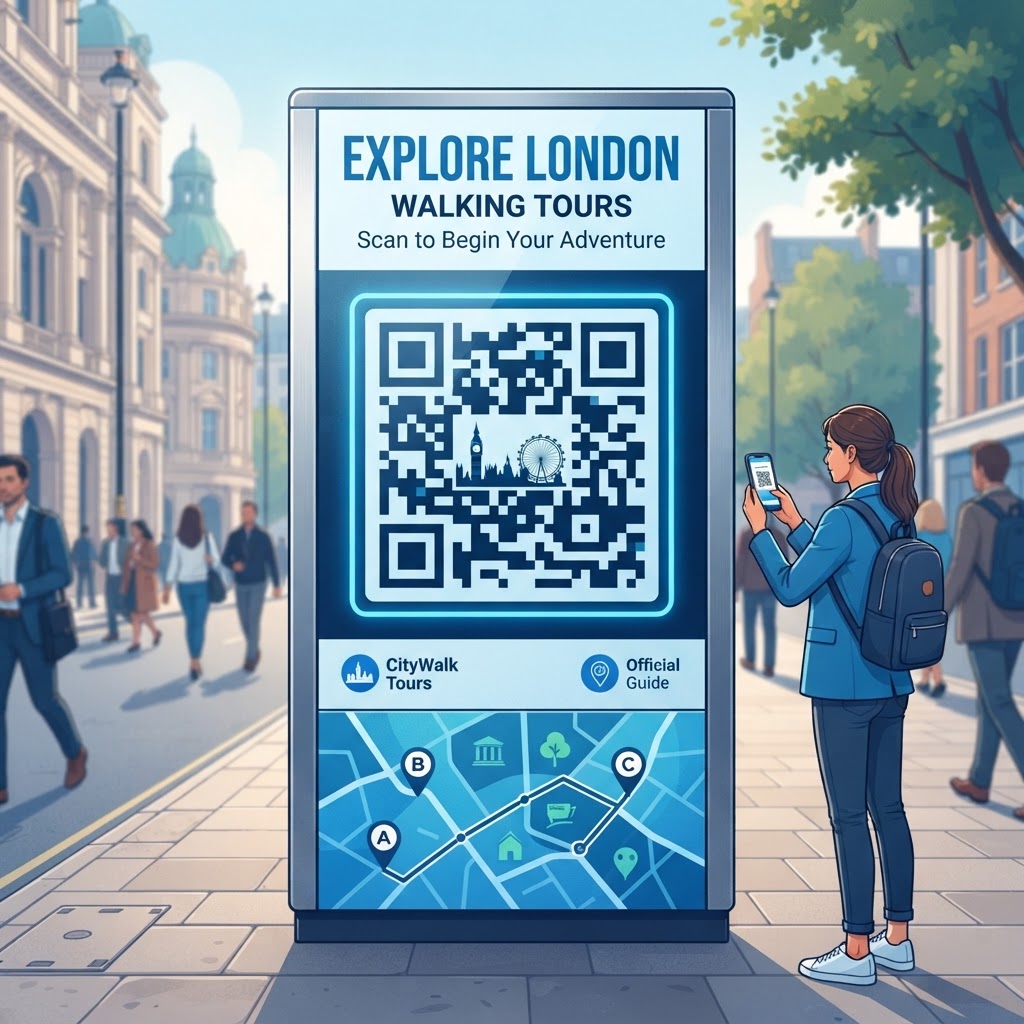
1. Why Incorporating QR Codes into City Tours Matters in 2026
The travel industry has undergone a paradigm shift, favoring autonomy and digital-first interactions. In 2026, visitors no longer wish to be tethered to strict group schedules or rely on outdated paper maps that quickly lose relevance.
A qr code for city walking tour serves as a dynamic bridge between the static physical monument and a wealth of multimedia content. This shift matters because it democratizes information; anyone with a smartphone can access historical archives, architect’s notes, or local anecdotes that were previously locked away in archives. If you are ready to modernize your route, you can use our free URL QR Code Generator to create interactive waypoints.
Furthermore, sustainability has become a critical pillar of urban planning. By moving away from printed signage that fades or litters the sidewalk, cities can utilize a single, weather-resistant plaque containing a QR code that updates its digital content as new research emerges or historical perspectives shift.
This ensures that the information remains accurate and relevant for years to come. Moreover, the immediacy of QR technology addresses the 'instant gratification' culture of modern travel.
Key Points
- QR codes provide immediate access to historical archives, architect’s notes, and local anecdotes.
- Digital content can be updated without replacing physical signage.
- Interactive information can keep visitors engaged and encourage spending at local businesses.
When a tourist stands in front of a statue or a historic building, they have immediate questions about its origin. By placing a clearly visible QR code nearby, you satisfy that curiosity instantly, reducing frustration and keeping the visitor engaged with the city's narrative for longer durations.
This engagement loop is crucial for tourism boards, as longer stay durations correlate with higher spending in local cafes, restaurants, and retail outlets. By leveraging the tools provided at blueqrcode.com, stakeholders can turn a simple sidewalk stroll into a fully immersive, multi-sensory educational journey that adapts to the needs of individual explorers.
2. How the QR Code Technology Works for Location-Based Discovery
At its core, a qr code for city walking tour functions as a highly efficient shortcut to a specific destination online. When a user scans the code with their smartphone camera, the device translates the visual matrix into a URL, which then launches the browser and directs the user to your curated landing page.
The technical elegance of this process lies in its simplicity and ubiquity; because most smartphones have native QR code scanners built into their default camera apps, there is virtually zero friction in the user experience. You can easily generate yours here to start mapping out your digital guide.
Technology Benefits
- Scans can open video narration, high-resolution maps, or serialized articles.
- A single code can lead to a language-selection page for international visitors.
- Deep linking allows visitors to access specific chapters of a digital guidebook.
- Landing page content can be updated without replacing the physical code.
Once the scan is initiated, the web server hosting your tour content detects the user's request and delivers the tailored material. From a backend perspective, this allows for sophisticated data tracking and content management.
This technical flexibility makes QR codes the most cost-effective solution for long-term urban infrastructure, as it separates the physical signage from the intellectual property being shared, allowing for constant evolution of the tour experience.
Try it now: Generate a free Qr Code For City Walking Tour →
3. A Comprehensive Step-by-Step Guide to Using BlueQRCode
Creating a professional QR code for your city walking tour is a straightforward process when using the tools at blueqrcode.com.
- Step 1: Prepare your digital content by identifying the specific URL that tour participants should visit, such as a mobile-optimized website, video documentary, or interactive map application.
- Step 2: Visit blueqrcode.com, navigate to the 'URL QR' section, and input the web address containing your tour information.
- Step 3: Use a shortened or manageable URL to keep the QR code clean and simple to scan.
- Step 4: Customize the code and select a higher error correction level for outdoor environments where signs may become dirty, scratched, or partially obstructed.
- Step 5: Ensure high contrast between the dark elements and the background.
- Step 6: Test the code with multiple smartphone models under different lighting conditions, including direct sunlight and low-light evening settings.
- Step 7: Download the verified code in a high-resolution format, such as PNG or SVG, for large-scale signage.
- Step 8: Place the code at eye level and ensure it is accessible to the public.
4. Best Practices for Deployment: Size, Placement, and Material
Successful deployment of a QR code for a city walking tour relies heavily on physical placement and readability. A common mistake is to print a code that is too small for the environment.
- Use a code at least two to three inches square for a pedestrian-facing plaque.
- Avoid areas that are perpetually in deep shadow.
- Avoid reflective surfaces that create excessive glare.
- Use UV-resistant inks and anti-graffiti coatings for long-term durability.
- Use non-invasive attachment methods on historic landmarks.
- Place the code in a safe zone where pedestrians can stop without blocking traffic.
Include a brief call to action near the code, such as 'Scan to hear the story of this building' or 'Unlock the audio tour here.' This simple text prompt sets expectations and increases the scan rate.
The surrounding context and placement should foster a positive and stress-free user experience while respecting the integrity of the architecture and the safety of pedestrians.
5. Common Mistakes to Avoid During Implementation
Even with the best intentions, many businesses stumble by failing to account for the technical and behavioral nuances of urban QR code implementation.
- Broken or expired links can produce a '404 Not Found' error and damage trust in the digital tour.
- Overcomplicated destination pages can frustrate tourists with limited data, poor reception, or tight schedules.
- Heavy graphics, auto-playing videos, and excessive tracking scripts can slow down the mobile experience.
- Overly complex patterns or low-contrast color palettes can make the code unreadable to older smartphones.
- Content available only in the local language limits accessibility for international visitors.
Use a URL redirect service or a stable, permanent domain that you control. The landing page should load in under three seconds, be fully responsive for mobile devices, and not require users to download a specific app.
Stick to high-contrast colors, ideally dark patterns on a light background. If your city has an international visitor base, provide an easy toggle to switch between major languages.
6. Concrete Use Cases: From Historic Districts to Local Business Districts
The applications for city walking tour QR codes are as diverse as the cities themselves. One primary use case is in the preservation of historic districts.
- Historic districts can provide archival photos, architectural blueprints, and historical diary entries through discreet plaques.
- Business improvement districts can link popular pedestrian routes to curated 'Shop Local' directories.
- Retailers and restaurants can offer exclusive 'day-of-tour' discounts or share the history of shop owners.
- Municipal arts programs can provide artist interviews, material information, and maps to nearby installations.
These applications transform walls, storefronts, and public artworks into interactive experiences. Each use case illustrates how a simple, cost-effective digital tool can support historical storytelling, economic development, and public art engagement.
7. Summary and Next Steps: Transforming Urban Exploration
In conclusion, the deployment of QR codes for city walking tours is a sophisticated, low-cost investment that yields high dividends in visitor satisfaction, engagement, and accessibility. By moving toward a digital-first model of exploration, cities and businesses can provide a modern, flexible, and sustainable experience that meets the expectations of travelers in 2026.
Begin by identifying key locations, auditing physical spaces for optimal code placement, and drafting mobile-optimized content. Once your content strategy is solidified, utilize the tools at blueqrcode.com to generate and thoroughly test your QR codes in real-world conditions.
Remember that the value of these codes lies in their ability to evolve. Keep destination URLs managed in a system that allows updates so your tour content remains fresh and exciting for return visitors.
Start by visiting blueqrcode.com to generate your first set of tour codes and begin your journey toward a truly interconnected and modern urban experience.