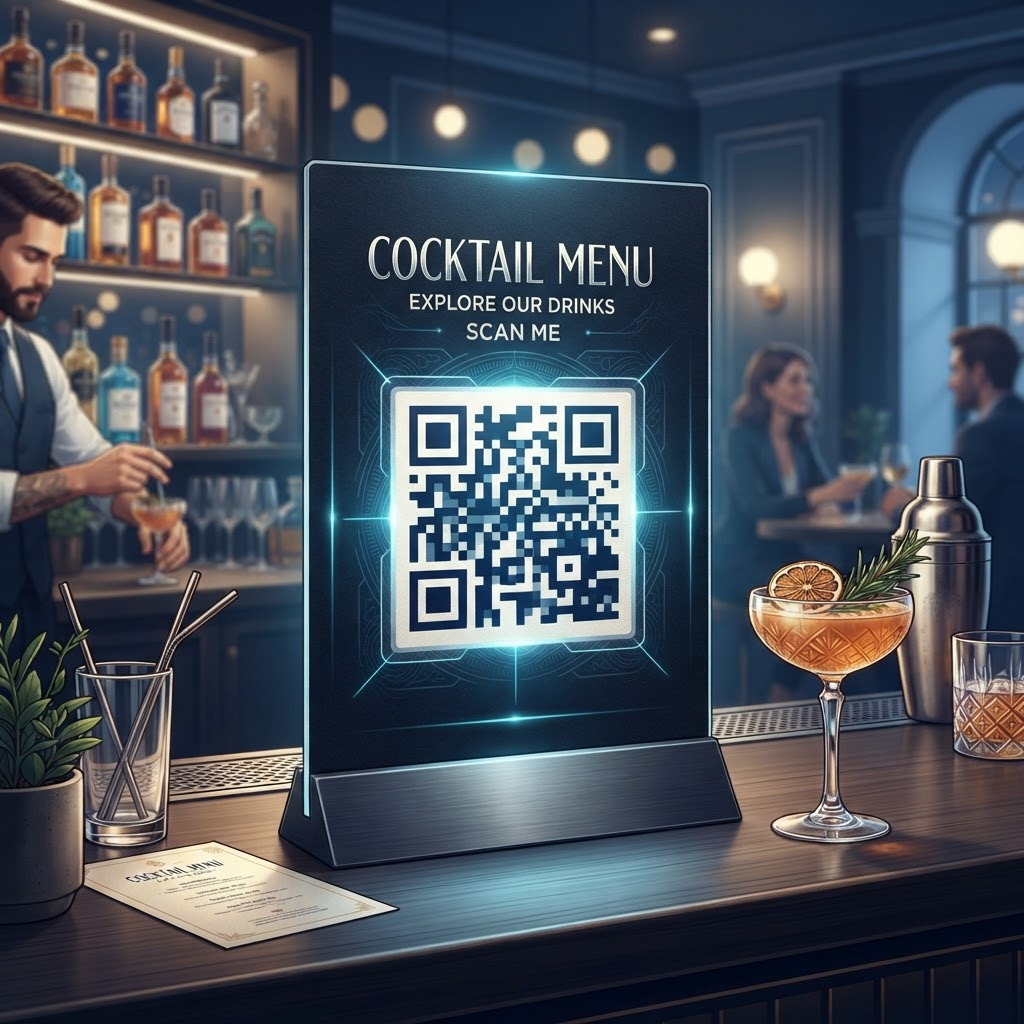
Why Integrating a Digital QR Code for Cocktail Menus Matters in 2026
In the hospitality landscape of 2026, speed, agility, and hygiene are the pillars of operational success. A digital cocktail menu accessed via a QR code allows owners to instantly edit pricing, availability, and descriptions without the recurring cost of printing high-quality menus.
This agility is crucial when dealing with fluctuating supply chain costs or the sudden arrival of limited-batch spirits. When guests scan a code, they are greeted by an interactive experience that can include photos of the drinks, allergen information, and even background stories about the mixology process, creating a deeper emotional connection with the brand.
Key Benefits
- Instantly update pricing, availability, and drink descriptions
- Provide photos, allergen information, and mixology stories
- Improve table turnover rates and average check sizes
- Gain insights into which drink descriptions are viewed most frequently
- Maintain a clutter-free bar top and reduce printed menu replacements
Furthermore, the reliance on most smartphones means that no app installation is required, removing friction for the user. By streamlining the path from intent to selection, venues can improve table turnover rates and increase average check sizes through effective visual merchandising within the digital interface.
The transition to digital platforms also facilitates data collection; businesses can gain insights into which drink descriptions are viewed most frequently, allowing for data-driven decisions regarding menu engineering. As patrons become increasingly accustomed to scanning codes for various purposes, the act of accessing a cocktail menu through a digital portal has become the standard for modern bars and restaurants.
This transition allows establishments to maintain a clutter-free bar top, as printed materials are often prone to wear, tear, and staining, necessitating frequent replacements. By adopting a QR code strategy, you are investing in a sustainable and scalable infrastructure that positions your venue as forward-thinking and responsive to the needs of the modern, tech-savvy consumer who values efficiency and clear communication above all else.
The Technical Mechanics Behind Your Cocktail Menu QR Code
The technical foundation of a QR code for a cocktail menu is remarkably efficient, relying on the translation of a specific URL—the location of your digital menu—into a matrix of modules. When a customer uses the camera app on most smartphones to scan the code, the device interprets the pixel pattern, extracts the encoded URL, and automatically redirects the browser to that landing page.
This process happens in milliseconds, ensuring a friction-free experience. For cocktail menus, it is essential that the underlying file or webpage is optimized for mobile viewing.
Technical Requirements
- Use responsive design so the menu adjusts to different screen sizes
- Choose a lightweight PDF or dedicated web page that loads quickly
- Ensure the hosting server can handle concurrent requests during peak hours
- Use a static or dynamic QR code based on your update requirements
This means using responsive design principles so that the menu layout adjusts gracefully to different screen sizes, whether a guest is using a small handset or a larger tablet. Technically, your menu should ideally be a lightweight PDF or a dedicated web page that loads quickly even on slower cellular networks, as lag time can lead to customer frustration.
We recommend utilizing a tool like the url-qr generator on blueqrcode.com to create codes that are not only reliable but also aesthetically pleasing. Behind the scenes, these codes can be either static or dynamic.
A static code directly encodes the URL and cannot be changed, whereas a dynamic code acts as a redirect, allowing you to update the destination URL later without needing to print new codes. This is a critical technical advantage for cocktail bars that frequently update their seasonal offerings, as it allows for maintenance without changing the physical printed material.
Proper implementation also involves ensuring the server hosting the menu can handle concurrent requests during peak hours, preventing 404 errors or slow load times during the Friday night rush. A robust digital presence is built on these technical foundations, ensuring that your patrons have consistent, high-speed access to your cocktail catalog regardless of when or where they choose to visit your establishment.
Try it now: Generate a free Qr Code For Cocktail Menu →
A Comprehensive Step-by-Step Guide Using BlueQRCode
Creating your digital cocktail menu solution begins with selecting the right generator. Start by visiting blueqrcode.com, where the interface is designed for simplicity and efficiency.
- Step 1: Finalize your cocktail menu and prepare the correct URL or host your PDF on a stable cloud service.
- Step 2: Visit blueqrcode.com and navigate to the URL QR code feature.
- Step 3: Paste your URL exactly and test it in a separate browser tab to confirm it loads correctly.
- Step 4: Customize the QR code to match your branding while maintaining strong contrast between the foreground and background.
- Step 5: Generate a preview and perform physical test scans using multiple iOS and Android devices.
- Step 6: Download the verified code in a high-resolution format such as SVG or PNG.
The SVG format is particularly useful if you are having the QR code printed on larger items like acrylic stands or custom menu holders, as it allows for infinite resizing without pixelation. By following this meticulous workflow, you eliminate the risk of broken links or unreadable codes, ensuring that your customers have a professional, reliable experience every time they engage with your digital offerings at their table or the bar counter.
Best Practices for Deployment: Size, Placement, and Format
Deploying a QR code for your cocktail menu requires more than just printing the image on a piece of paper; it requires a strategic approach to physical placement and user experience.
- Print the code between two and three inches square on most printed assets
- Place it on acrylic stands, coasters, or bar-top stickers
- Avoid heavy shadows, glare, and reflective surfaces
- Use matte materials in dim bars to prevent light reflection
- Standardize the code location across all tables
- Include a clear call to action such as “Scan to View Our Seasonal Cocktails”
- Keep the digital menu free of excessive pop-ups and unoptimized images
The size of the code is paramount; it must be large enough to be scanned from a distance of at least twelve to eighteen inches. If a code is too small, customers struggle to focus their camera, leading to a negative perception of your service.
Regarding placement, consider the guest journey. Positioning the code in a prominent spot—such as a small, high-quality acrylic stand at each table, a coaster, or an adhesive sticker on the bar top—ensures visibility without intruding on the dining space.
Avoid placing codes in areas that are heavily shadowed or covered by glare, as high-intensity lighting or reflections can confuse the smartphone camera sensor. Furthermore, consider the environment of your venue. If your bar is dim, ensure the material the QR code is printed on is matte rather than glossy to prevent light reflection.
Consistency is also key; the location of the QR code should be standardized across all tables so that repeat customers know exactly where to look. Beyond the physical sticker or stand, include a small call-to-action (CTA) text beneath or above the code, such as "Scan to View Our Seasonal Cocktails."
This provides the user with clear instructions, increasing the likelihood of interaction. Finally, ensure that your digital menu landing page is clean, avoiding excessive pop-ups or large, unoptimized images that may delay the loading process.
Common Mistakes to Avoid When Using QR Codes
Even with the best intentions, many businesses fall into common traps when implementing QR codes for cocktail menus. Avoiding these issues helps protect the customer experience and keeps the digital menu reliable.
- Failing to maintain the link can produce a broken link or a “404 Not Found” error
- Using a menu that is not mobile responsive forces users to pinch, zoom, or scroll horizontally
- Failing to provide a physical backup can leave guests unable to order when they lack a phone or have a dead battery
- Adding excessive branding or busy backgrounds can make the QR code unreadable
This is why utilizing dynamic QR codes through platforms like blueqrcode.com is so essential, as it allows you to fix errors or update menus without having to re-print your physical assets. Always ensure your menu is designed as a vertical, single-column web page that is easy to navigate with one hand.
Additionally, many venues make the mistake of failing to provide a physical backup. While most customers have smartphones, some do not, and others may have dead batteries. Having a small supply of paper menus, or at least a printed list of daily specials, ensures that no guest is left unable to order.
Lastly, avoid overcrowding your QR code with too much branding or busy backgrounds. The integrity of the QR pattern depends on the contrast between the dark modules and the light background. If the code is 'decorated' to the point where the scanner cannot distinguish the pattern, it will fail to read.
Concrete Use Cases by Industry and Sector
The application of a QR code for a cocktail menu extends far beyond standard sit-down restaurants. Different hospitality settings can use digital menus to support faster service, flexible updates, and richer guest experiences.
- Nightclubs can place codes on high-traffic pillars or entry points so guests browse while waiting
- Hotels can use codes in room service apps or on poolside cabana signage
- Craft cocktail bars can provide mixologist biographies and ingredient descriptions
- Catering businesses and pop-up events can update offerings without reprinting physical menus
- Stadium concessions, jazz bars, and rooftop lounges can modernize their guest experience
For instance, in the nightclub sector, speed is everything. By placing a QR code on high-traffic pillars or entry points, guests can browse the cocktail menu while they wait in line or make their way to the bar.
This pre-selection process significantly shortens the time the bartender spends waiting for a customer to decide, leading to faster service and higher revenue during peak hours. In the hotel industry, where guests often enjoy cocktails by the pool or in the lobby lounge, a QR code can be integrated into the room service app or printed on pool-side cabana signage.
This allows for a seamless, contactless ordering experience that integrates with the hotel’s existing room-charge system. Another use case involves high-end craft cocktail bars that feature rotating, seasonal menus.
These venues can use the QR code to provide a 'Deep Dive' experience. Upon scanning the code, the customer is not just shown a list of drinks, but also a brief biography of the guest mixologist or a description of the rare, artisanal ingredients used in a particular infusion.
This adds a layer of 'storytelling' that justifies premium pricing and builds brand loyalty. Even for catering businesses or pop-up events, QR codes printed on small display cards allow for easy updates to offerings on the fly without needing to print expensive, limited-use physical menus.
Whether it is a bustling stadium concession, an intimate jazz bar, or a high-end rooftop lounge, the flexibility provided by digital menus ensures that the business can remain responsive to customer preferences while keeping operational costs contained and modernizing the overall guest experience.
Summary and Next Steps: Modernizing Your Bar Today
Transitioning to a digital cocktail menu via QR code is a strategic move that aligns your venue with the technological expectations of 2026. As we have explored, this shift offers unparalleled flexibility, allows for rich, interactive storytelling about your beverages, and streamlines your operational overhead by removing the need for constant printing.
By using reliable tools like those found at blueqrcode.com, you ensure that your code is not just a graphic, but a robust entry point for your customers. Remember that the success of this transition relies on the balance between technical precision—such as ensuring fast load times and mobile responsiveness—and physical deployment, where placement and clarity are paramount.
Next Steps
- Step 1: Audit your current cocktail menu.
- Step 2: Identify the platform where your digital version will live.
- Step 3: Visit blueqrcode.com to generate your unique code.
- Step 4: Test the code rigorously and design a clean, professional display.
- Step 5: Integrate the code into your staff’s workflow.
Do not fear the transition; embrace the opportunity to gather data, refine your menu engineering based on real-time feedback, and provide a superior, modern experience that encourages repeat visits. By making this investment now, you are securing a more efficient, profitable, and engaging future for your business.
The technology is accessible, the setup is straightforward, and the benefits to your bottom line are clear. Take the step today to move your menu from the printed page to the palm of your customer’s hand, and watch as your venue reaps the rewards of a smarter, more dynamic cocktail program.
No watermark · No expiry · Works on all phones
Your QR code is ready in under 30 seconds.
Generate Free QR Code →