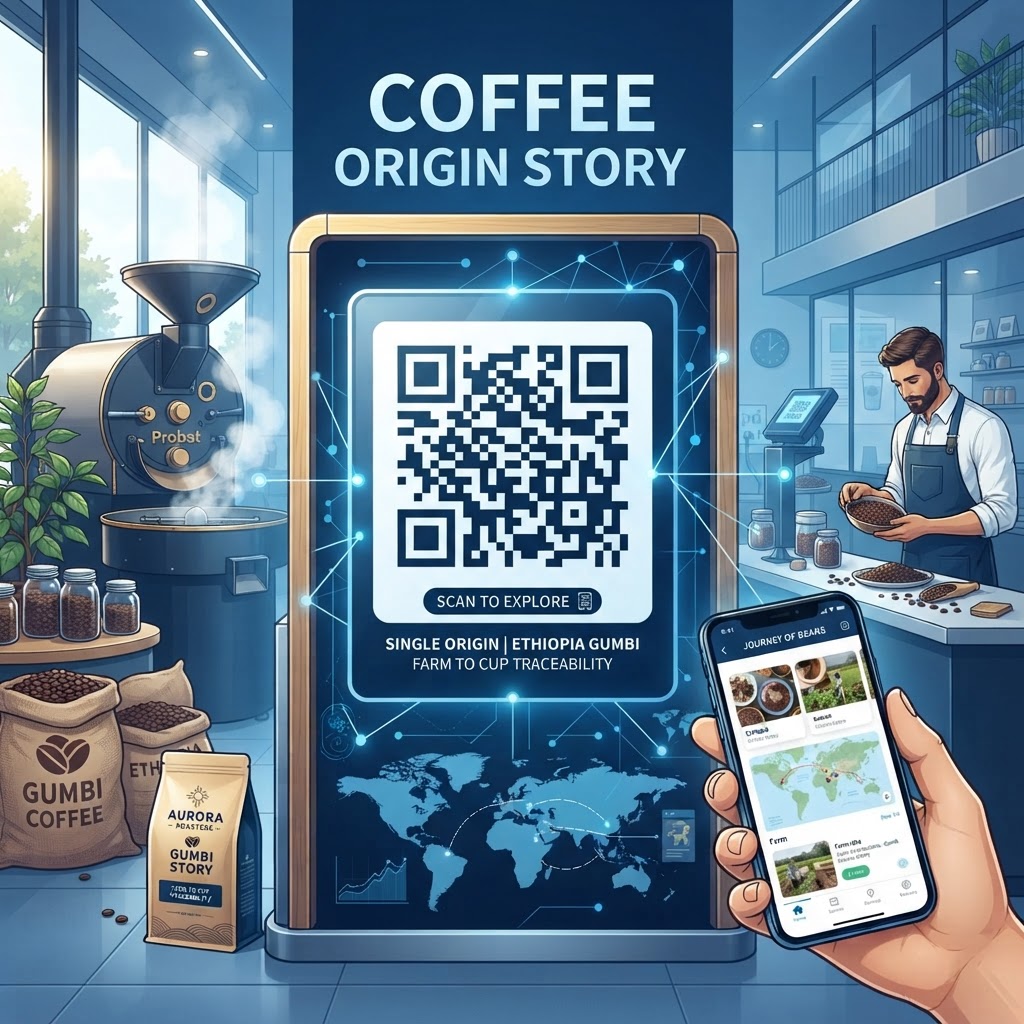
Why Integrating Origin Stories Matters in 2026
In the evolving landscape of the 2026 specialty coffee industry, information transparency has shifted from a niche preference to a core consumer demand. Many businesses recognize that the value of coffee lies not just in its flavor profile, but in the integrity of the supply chain that produced it.
When you implement a QR code for coffee origin stories, you acknowledge that your customers view themselves as participants in a global ethical movement. By providing a digital window into the farming process, you humanize the supply chain, turning anonymous commodities into tangible relationships.
Key Points
- Digital origin stories foster trust and humanize the coffee supply chain.
- Detailed information can justify higher price points and encourage repeat purchases.
- blueqrcode.com helps small-scale roasters present a professional, global-standard narrative.
How It Works Technically for Brand Storytelling
The underlying technology of a QR code for coffee origin stories is deceptively simple yet remarkably powerful. Essentially, a QR code acts as a graphical index or a bridge that links the physical world to a specific web resource.
When you generate a URL QR code through our platform, you embed a destination address, such as a specific landing page or hosted PDF document, into a two-dimensional matrix of black and white modules. When a camera scans this matrix, the smartphone interprets the pattern and routes the device's web browser to the designated URL.
This process requires no additional applications, as most smartphones have integrated this functionality into their standard operating systems. Once the link is established, you can provide high-resolution photographs of the coffee estate, interactive maps showing the micro-lot location, or video interviews with the head farmers who processed the harvest.
Because the URL associated with the QR code is dynamic or fixed depending on your configuration, you can update your origin story as new harvests arrive without needing to reprint your physical coffee labels. By utilizing our platform, you can ensure that the link is optimized for mobile responsiveness across premium and budget devices.
Technical Considerations
- Use high-contrast designs to support reliable scanning.
- Link to mobile-responsive content that loads smoothly and quickly.
- Update digital content without reprinting physical coffee labels.
Try it now: Generate a free Qr Code For Coffee Origin Story →
Step-by-Step Guide Using BlueQRCode
Creating your digital origin portal via BlueQRCode is a streamlined, user-friendly process designed for efficiency.
- Step 1: Curate your story content by creating a dedicated landing page, a publicly accessible Google Drive folder, or a hosted document outlining the journey of your beans.
- Step 2: Navigate to the blueqrcode.com dashboard, select the option to create a 'URL QR code,' and enter your target link.
- Step 3: Verify that the URL is correct and secure before continuing.
- Step 4: Customize the visual appearance of your QR code to align with your brand identity while maintaining sufficient contrast.
- Step 5: Test the code using several devices to ensure rapid recognition.
- Step 6: Download the high-resolution file, preferably in a vector format or as a high-quality PNG.
- Step 7: Print the code at an appropriate size and integrate it into your existing packaging design.
When printing, check that the code is at least one inch square for optimal scanning at a distance. Placing the QR code near the brewing instructions or roast date creates a logical flow for consumers.
The process is fully repeatable, allowing you to generate unique codes for every single roast batch you produce.
Best Practices for Deployment: Size, Placement, and Format
The effectiveness of a QR code for coffee origin stories relies heavily on its physical implementation. Many businesses print their codes too small, making them difficult for smartphone autofocus mechanisms to read.
- Print the code at a minimum size of 1.25 inches, or roughly 3 centimeters.
- Place the code on a flat surface and avoid crinkled or folded areas.
- Consider placing the code on the back label near the roast date or prominently on the front.
- Use a black QR code on a white background whenever possible.
- Avoid background patterns that compete with the code’s modules.
- Ensure the landing page is optimized for mobile users and loads quickly.
- Use compressed images that remain clear while supporting web speed.
- Keep linked content evergreen or frequently updated.
- Add a call to action such as 'Scan to meet your farmers' or 'Discover the journey of these beans.'
By treating the QR code as a high-value piece of marketing real estate rather than an afterthought, you ensure it serves its primary purpose effectively.
Common Mistakes to Avoid
Even with the best intentions, several common pitfalls can derail your digital storytelling efforts. Avoiding these oversights protects your brand reputation and helps ensure that your investment in digital storytelling pays off.
- Neglecting mobile-friendliness, which can make the destination page difficult to use on a smartphone.
- Providing a generic 'about us' page instead of content specific to the beans in the bag.
- Using links that require an account login or password, which creates unnecessary barriers to engagement.
- Failing to future-proof links when domains or website structures change.
- Testing the code on only one device before sending it to print.
Concrete Use Cases by Industry and Sector
Beyond the specialty coffee roaster, the utility of a QR code for coffee origin stories extends to various sectors that prioritize traceability. Each sector benefits from the bridge that BlueQRCode creates between the physical product and digital information.
- Hospitality: Boutique hotels and cafes can use codes on table tents or menus to provide a coffee passport experience detailing the coffee’s history and recommended brewing method.
- Grocery Retail: Private-label coffee lines can link to farmer sustainability reports or community impact projects.
- Corporate Gifting: Companies can add QR codes to coffee gifts to communicate thoughtful, transparent, and ethically sourced product information.
- Education: Coffee cooperatives and agricultural training programs can link bulk bags of green coffee to technical data, including moisture content reports, defect analysis, and detailed cupping scores.
By tailoring the content, whether it is a video story for a retail consumer or a technical spreadsheet for a professional buyer, you maximize the utility of the technology.
Summary and Next Steps
In conclusion, integrating a QR code for coffee origin stories represents a critical evolution in how brands communicate with their customers. By leveraging the accessibility of most smartphones and the interface of blueqrcode.com, you can foster deeper connections, demonstrate transparency, and increase brand value.
Start by identifying the most compelling story behind your next roast, gathering high-quality imagery, documenting farmer profiles, and ensuring your landing pages are mobile-responsive. Once your content is ready, visit our platform to generate your first professional-grade QR code, test it rigorously, and integrate it into your design.