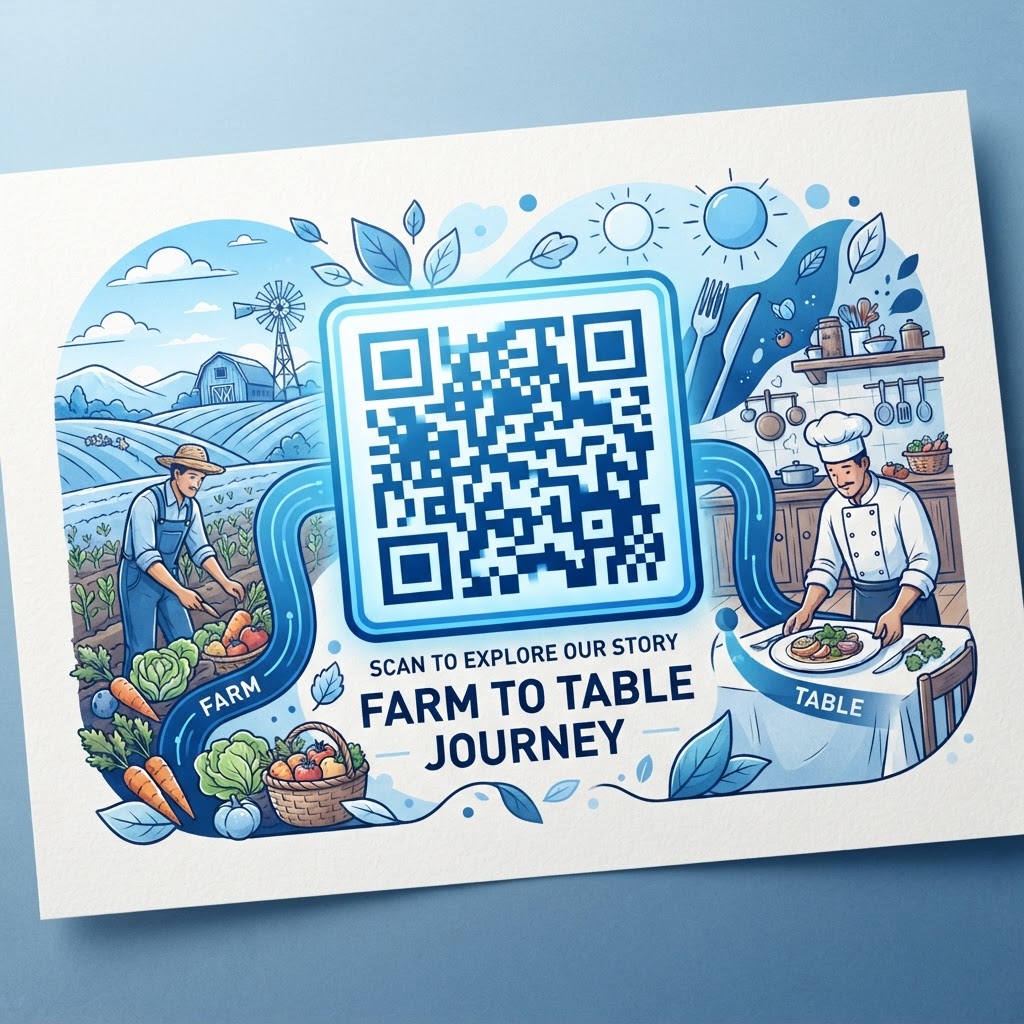
The Importance of Farm-to-Table Transparency in 2026
As we move deeper into 2026, the digital divide between rural producers and urban consumers has effectively vanished, replaced by a sophisticated demand for traceability. Transparency is the new currency of the food industry.
Many businesses now recognize that customers are willing to pay a premium for products when they have verifiable proof of origin, humane farming practices, or regenerative agricultural techniques. A QR code acts as the ultimate digital passport for your food product, allowing you to bypass the limitations of small physical packaging or menu space to provide a rich, multimedia storytelling experience.
By offering a window into the farm, you humanize the supply chain, turning a commodity into a crafted work of passion. Modern shoppers use their smartphones to conduct real-time research while standing in grocery aisles or waiting for their meals at restaurants.
If your business cannot offer immediate access to the history of the ingredients on the plate, you risk being overshadowed by competitors who do. Using a tool like blueqrcode.com, you can ensure that this connection is seamless and instantaneous.
Key Points
- Customers increasingly value verifiable proof of origin and ethical production.
- A QR code for farm to table story connects physical products with rich digital content.
- Farm stories, harvest videos, and ingredient histories can build trust and encourage repeat business.
How It Works Technically: From Scan to Story
Technically speaking, a QR code for a farm-to-table story is essentially a gateway that maps a physical object to a specific digital destination. At its core, the process involves generating a URL-based QR code that points to a landing page, a video documentary, or a detailed PDF report housed on a web server.
When a smartphone camera scans the code, the device interprets the pattern of squares as a specific instruction to open a browser window to that URL. This solution requires no app installation, as most smartphones are equipped with native QR scanning technology.
When you create your code via blueqrcode.com, the platform maps the visual code to a secure URL. Behind that link, you should host content optimized for mobile viewing, including fast-loading images, responsive page design, and high-quality video content that does not consume excessive data.
By using a dynamic QR code system, you can update the destination link periodically, allowing your farm-to-table story to evolve as seasons change or as new harvests come in. This ensures your technical implementation remains sustainable and cost-effective over years of operation.
Step-by-Step Guide to Creating Your Code with BlueQRCode
Creating a functional and professional QR code for your farm-to-table initiative is a streamlined process when using blueqrcode.com. Follow these steps to prepare, generate, and validate your code.
- Step 1: Curate the destination content by preparing a dedicated webpage, a clean PDF infographic about your farm, or a video showcase, and have the URL ready.
- Step 2: Navigate to the blueqrcode.com dashboard and select the option to generate a URL-based QR code.
- Step 3: Copy and paste your target URL into the designated field so the platform can generate the corresponding matrix pattern.
- Step 4: Customize the foreground and background colors to match your packaging palette, and potentially add your logo to the center of the code.
- Step 5: Generate the QR code and download it in a high-resolution format like SVG or PNG. SVG is useful for print design because it can be scaled without losing quality.
- Step 6: Test the code across multiple devices and lighting conditions to confirm that the link loads correctly.
Best Practices for Deployment: Size, Placement, and Format
Deployment is where your strategy moves from digital to physical reality. Several best practices will determine whether your QR code successfully captures attention and remains easy to scan.
- Consider the size-to-distance ratio. Product labels can use smaller codes, while farmers market signs and murals require larger codes for scanning from farther away.
- Avoid highly reflective surfaces such as glossy metallic foil, as glare can make the pattern difficult for smartphone sensors to resolve.
- Position the QR code where it is naturally visible without interfering with the product’s core function or branding.
- Use a clear call to action such as “Scan to meet the farmer” or “Watch our story.”
- Keep the area surrounding the code free from visual clutter or competing designs.
100% Free — No signup required
Create your Qr Code For Farm To Table Story in seconds
Create Free QR Code →Common Mistakes to Avoid in QR Marketing
The most frequent error businesses make when deploying QR codes for farm-to-table storytelling is neglecting the user experience at the destination. A beautiful, custom-branded QR code can fail if it links to a generic, non-mobile-friendly website that takes too long to load.
- Linking to a slow or non-mobile-friendly website can cause users to exit immediately.
- Failing to update the link can leave customers viewing outdated seasonal content.
- Over-designing the code with excessive gradients or imagery can obscure the finder patterns and make it unreadable.
- Low contrast can reduce scan reliability; dark colors on a light background are the gold standard.
- Failing to test across multiple operating systems can cause compatibility issues between iPhones and Android devices.
Your storytelling content must be purpose-built for mobile, featuring vertical video, large readable fonts, and simple navigation. Regular testing and content updates are the difference between a high-performing engagement tool and an ignored graphic.
Concrete Use Cases by Industry and Sector
The application of QR codes for farm-to-table storytelling spans various food sectors, each with unique opportunities for engagement. In the craft coffee industry, roasters can use a QR code on the bag to lead customers to a video interview with the specific co-op or smallholder farmer who harvested the cherries.
In the dairy sector, a QR code on a carton of milk or a wheel of artisan cheese can display a map of the pasture where the cattle graze, including information about the farm’s regenerative grazing practices.
- Craft coffee: Link customers to farmer interviews and information about the growing region.
- Dairy: Display pasture maps and details about regenerative grazing practices.
- Restaurants: Connect menu items with videos of chefs sourcing ingredients or profiles of suppliers.
- Artisan bakeries: Share the story of a sourdough starter or a time-lapse of the fermentation process.
These use cases show that the farm-to-table narrative is not limited to raw produce. It applies to any food product where history, craft, and origin are distinct selling points.
Summary and Next Steps
Integrating QR code technology into your farm-to-table storytelling is a potent strategy for building brand authority, consumer trust, and market differentiation in 2026. By bridging the physical product with a digital narrative, you empower customers to make informed, value-driven purchases while honoring the work that goes into production.
Begin by auditing your current storytelling assets, including photos, videos, and narratives that capture the essence of your brand. Once these assets are ready, map them to a mobile-friendly landing page and generate your custom QR code using blueqrcode.com.
Remember to test, iterate, and refine your approach based on customer feedback. A well-executed farm-to-table QR strategy is a living extension of your business values that grows and changes with every season.
No watermark · No expiry · Works on all phones
Your QR code is ready in under 30 seconds.
Generate Free QR Code →