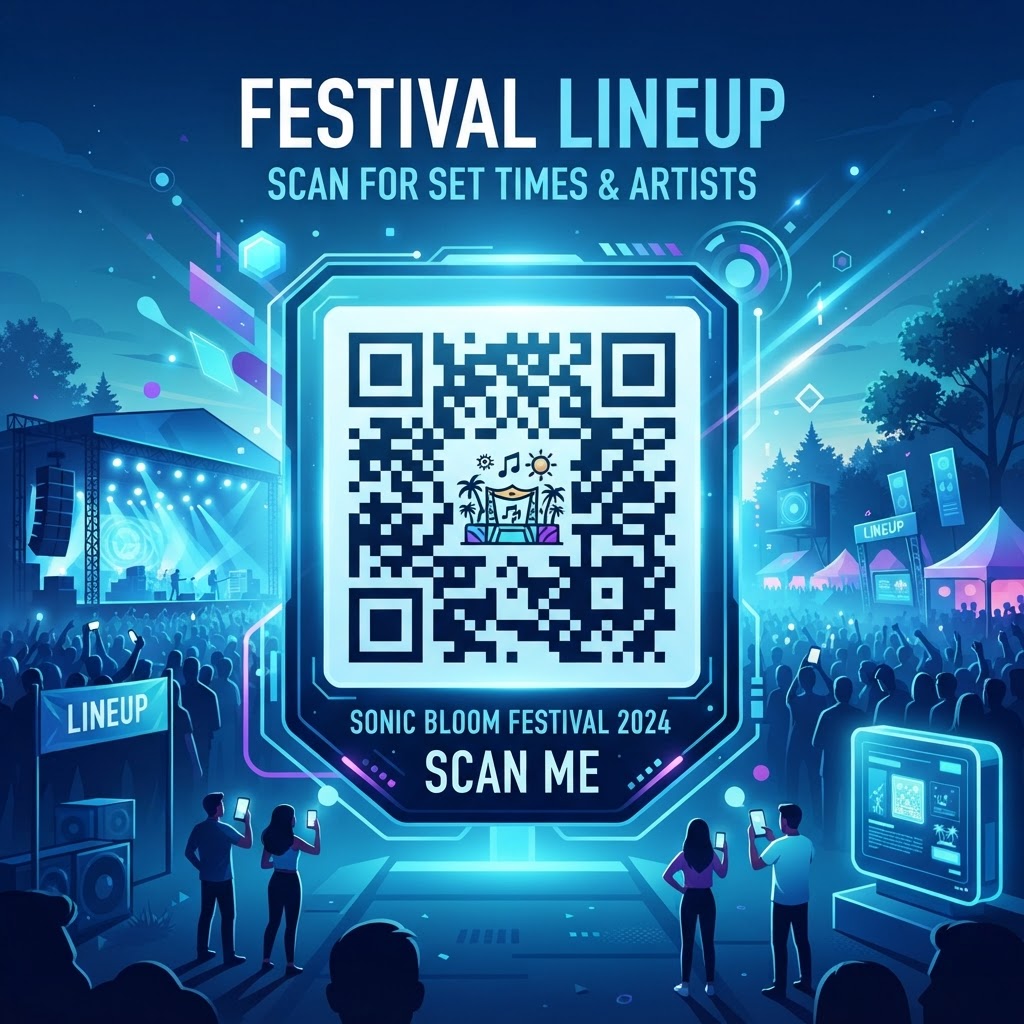
Why Integrating a QR Code for Festival Lineups Matters in 2026
As we navigate the mid-2020s, the expectation for instant access to information has reached an all-time high. Most smartphones today come equipped with native QR scanning capabilities, meaning that the friction once associated with downloading external apps or navigating complex mobile websites has largely vanished. When you integrate a QR code for your festival lineup, you are essentially providing an open door to your event's itinerary. In 2026, many businesses and event planners have recognized that speed is the most valuable currency; if a fan has to search through a bag for a printed map or fumble with a slow-loading event app, they become frustrated and disengaged. By placing a scannable code at entry points, near stages, or on social media channels, organizers ensure that the lineup is visible regardless of the time of day or light conditions.
Furthermore, sustainability is a major driving force for modern event organizers. The cost and environmental impact of printing tens of thousands of paper pamphlets, which often end up discarded on the grass by the end of the day, are significant. A digital-first approach using QR codes aligns with the growing demand for green event management. Moreover, these codes provide a layer of dynamic flexibility that paper simply cannot match. If a headliner experiences a delay or a last-minute schedule shift occurs, you can update the destination URL behind the code without having to reprint a single piece of paper. This agility allows organizers to manage crowds more effectively by pushing live updates to attendees. The reliance on digital infrastructure over static print materials marks a transition toward smarter, more responsive event planning that benefits both the environment and the overall logistical operation.
The Technical Mechanics Behind QR Codes and Digital Lineups
At its core, a QR code functions as a visual gateway that encodes a specific string of data—most commonly a URL—that a device can translate into a navigable link. When a visitor scans a QR code for a festival lineup, their smartphone processor uses its camera and software to decode the matrix of pixels, identifying the embedded web address. This technical process happens in milliseconds, launching the mobile browser automatically. For event organizers, the magic lies in how this data is handled. By using a platform like https://blueqrcode.com, you are creating a link between a physical asset (the code itself) and a digital resource (the webpage or PDF containing your festival schedule). This technical bridge is robust, reliable, and requires almost no technical expertise to maintain or deploy across various media.
Behind the scenes, the QR code acts as a redirect. When the user scans the code, they are directed to a server that then sends them to your landing page. The primary advantage of this architecture is that the target URL can be changed or updated on the backend without changing the actual graphic of the code. This is essential for festivals where the lineup might evolve throughout the event. Technically speaking, you are managing a URI (Uniform Resource Identifier) embedded within the QR matrix. Because the code is essentially just a visual representation of text, it remains accessible even in areas with lower signal strength, provided the landing page is optimized for mobile performance. A well-constructed mobile page—often a lightweight landing page or a compressed PDF—ensures that even in crowded environments with high network traffic, the lineup loads promptly. Understanding this technical simplicity is key to deploying successful campaigns that work flawlessly for every single guest.
Try it now: Generate a free Qr Code For Festival Lineup →
Step-by-Step Guide to Creating Your Lineup QR Code with BlueQRCode
Creating a professional QR code for your festival lineup is a straightforward process when using https://blueqrcode.com. To begin, gather your lineup information. This could be a link to a dedicated web page on your site, a Google Drive folder containing a PDF, or a social media post where the schedule is hosted. Once your destination URL is ready, navigate to the BlueQRCode platform. Select the option to create a 'URL' QR code. Paste your target link into the provided field. This tool is designed to be user-friendly, allowing you to generate the code instantly without complex coding requirements or heavy software installations.
After you have input your URL, the next phase involves customization to fit your event's branding. BlueQRCode offers various aesthetic options, allowing you to adjust the colors, shapes, and patterns of your QR code to ensure it stands out while remaining scannable. Once you are satisfied with the design, you can download the image file in a high-resolution format, such as PNG or SVG, which ensures that it remains crisp when printed on large banners or small signage. Before moving to mass production, always perform a 'scan test' with multiple devices. Test the code in both bright sunlight and lower light conditions to ensure it is easily readable by standard camera apps. Once verified, you are ready to distribute your code across your festival's marketing materials. By following these structured steps, you create a professional-grade asset that enhances the attendee experience and demonstrates a high level of preparedness for your upcoming event, ensuring that your digital lineup is always accessible to your audience.
Best Practices for Deployment: Size, Placement, and Format
The success of your festival lineup QR code depends heavily on how it is presented to your audience. Size is the first critical factor. A common mistake is printing the code too small, which forces attendees to get uncomfortably close to a banner or wall to get a scan. For signage that will be viewed from a distance, such as entry gate posters or stage backdrop banners, the code should be at least 4 to 6 inches square. If the code is meant for smaller items like wristbands or pocket guides, ensure it is at least 1 inch across. Always prioritize high contrast; a black code on a white background is the gold standard for readability. If you choose to incorporate brand colors, ensure there is enough contrast between the foreground and the background so that mobile cameras can distinguish the individual modules within the matrix.
Placement is equally important. Think about where your attendees are standing when they would most likely need to check the lineup. High-traffic areas like entrance gates, near food vendors, or at the perimeters of main stages are ideal. Avoid placing codes in areas that are prone to glare from the sun or near busy thoroughfares where crowds might block access to the signage. It is also wise to include a clear 'Call to Action' (CTA) near the code. A simple line of text such as 'Scan for Full Lineup' or 'Get the Schedule Here' significantly increases the likelihood of engagement. Furthermore, consider weather-proofing your print materials; if your festival is outdoors, laminating your signs or using UV-resistant vinyl will prevent fading or water damage, ensuring your codes remain functional throughout the duration of your event, regardless of changing weather conditions.
100% Free — No signup required
Create your Qr Code For Festival Lineup in seconds
Create Free QR Code →Common Mistakes to Avoid When Using QR Codes
Even with the best intentions, organizers often fall into traps that hinder the effectiveness of their QR strategy. One of the most frequent errors is using a 'dead' or broken link. Before printing thousands of fliers or putting up massive banners, double-check that your URL is correct and that the page it points to is live and mobile-responsive. Another common mistake is 'over-designing' the code. While it is tempting to heavily customize a QR code with logos, colors, and complex frames, doing so to an extreme degree can interfere with the scanner's ability to decode the data. Keep the central 'quiet zone' of the code clear of obstructions. If you add a logo to the center of the code, ensure the error correction level is high enough to accommodate the interference.
Another issue is ignoring the speed of the destination page. A QR code is only as good as the link it opens. If your landing page is a 20MB PDF file, attendees in a crowded stadium with spotty cellular data will likely give up before it finishes loading. Instead, host your lineup on a lightweight, mobile-optimized webpage. Furthermore, do not assume everyone knows how to use a QR code. Even in 2026, including a tiny icon of a smartphone or a small label identifying the code as a 'QR Code' helps guide less tech-savvy users. Lastly, avoid the mistake of creating too many different codes for different areas of the festival. This can confuse attendees. If possible, use one main code that leads to a hub where all scheduling information is contained. Keeping the experience simple and consistent will lead to much higher adoption rates among your guests.
Concrete Use Cases by Industry and Sector
While music festivals are the most obvious application, the utility of a QR code for a lineup extends to many different industries. In the culinary sector, a 'Food Festival' can use QR codes at each vendor stall to display a menu, ingredient list, or the specific timing of cooking demonstrations. This prevents long lines of people asking questions at the counter and helps dietary-restricted guests find suitable options quickly. In the professional trade show sector, a QR code displayed at the entrance to a convention hall can direct attendees to a dynamic schedule of panel discussions and keynote speakers. By allowing attendees to sync these events to their personal calendars, organizers can significantly increase the turnout for individual sessions throughout the day.
Cultural and heritage festivals also benefit immensely from this technology. By placing QR codes near various art installations or historic markers, organizers can provide a 'lineup' of information—audio guides, artist biographies, and historical context—that turns a standard walkthrough into an educational, self-guided tour. Even corporate events and team-building retreats utilize these codes to distribute agendas, workshop sign-up links, and emergency contact information. In every one of these cases, the primary goal is the same: to remove friction. By digitizing the information flow, these industries are finding that they can handle larger crowds, provide more depth of content, and offer a smoother, more sophisticated experience that meets the high expectations of modern event participants. The ability to pivot from static print to dynamic digital access is universally applicable across almost all event-based operations.
Summary and Next Steps for Your Event Planning
As you have seen, implementing a QR code for your festival lineup is a strategic move that elevates your event's professionalism and efficiency. By leveraging the tools available at https://blueqrcode.com, you are not just providing a schedule; you are ensuring that your attendees are informed, engaged, and able to enjoy your festival with minimal logistical stress. Throughout this article, we have covered the technical foundations, the deployment best practices, and the common pitfalls that can undermine even the most well-planned event. Remember that in 2026, attendees prioritize convenience, and a well-placed QR code is one of the easiest ways to provide it. The move toward digital signage and mobile-first information delivery is not just about keeping up with trends—it is about respecting your attendees' time and ensuring they have the best possible experience at your event.
Your next steps are simple. First, finalize your schedule and ensure the landing page is perfectly optimized for mobile devices. Next, visit the BlueQRCode generator to create your custom code, ensuring you choose a design that balances aesthetics with readability. Print your signage, test your codes in multiple environments, and place them strategically throughout your venue. Once the festival begins, monitor the traffic to your landing page if possible, as this data can help you understand which areas of your event are attracting the most interest. By embracing this technology, you are positioning your festival as a modern, forward-thinking event that is prepared for the digital-first habits of today's participants. Start generating your codes today and take the first step toward a more seamless, sustainable, and successful festival experience.
No watermark · No expiry · Works on all phones
Your QR code is ready in under 30 seconds.
Generate Free QR Code →