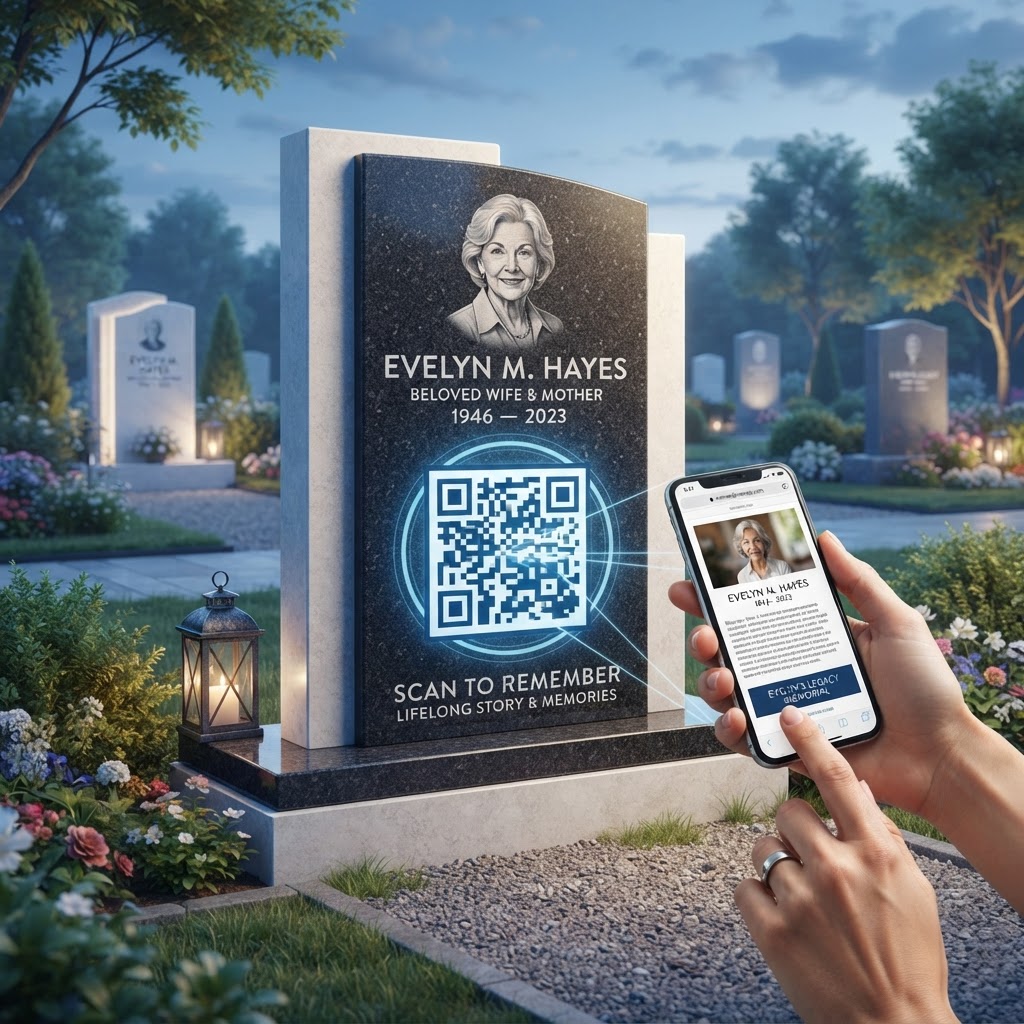
1. The Significance of Digital Memorials in 2026
In the modern era of 2026, the concept of a cemetery has expanded beyond a physical burial ground into a space of digital interaction. For many families, the desire to convey the depth of a person's life—their hobbies, professional achievements, favorite music, or family history—exceeds the space provided by a traditional granite headstone.
A qr code for gravestone memorial solves this limitation by acting as a gateway to an expansive digital footprint. When a visitor scans the code with their smartphone, they are transported from the quiet stillness of a cemetery to a curated collection of memories that provides context to the life that was lived.
This evolution represents a shift toward more personalized, storytelling-based funeral practices, where the memorial becomes a living testament rather than a static marker. The permanence provided by high-quality QR engraving combined with modern cloud hosting means that these digital legacies can be maintained and updated with new family additions or historical findings.
Key Points
- A digital memorial expands beyond the limited space of a traditional gravestone.
- A QR code creates a respectful portal for distant relatives, historians, and visitors.
- Modern hosting and durable engraving can help preserve memories for decades.
2. The Technical Framework of Memorial QR Codes
Technically, a qr code for gravestone memorial acts as a specialized URL shortener that directs a user's mobile browser to a specific web page or online repository. When you generate a code via a service like blueqrcode.com, you are creating a unique pattern of data encoded in a matrix format.
Most smartphones produced in 2026 feature built-in cameras capable of reading these matrices instantly, requiring no secondary application downloads. The process begins when the user scans the physical code, which triggers a request to the server housing the memorial content.
Durability and Hosting
The reliability of this system depends on the stability of the hosting platform and the quality of the engraving on the stone. For memorial purposes, it is essential to use a static or dynamic URL that points to a secure, long-term hosting environment.
From a hardware perspective, the integration involves etching the code into stone or metal, which necessitates a high-contrast design. Laser engraving is the industry standard because it creates the deep, crisp contrast required for scanners to distinguish between the background and the data modules.
Using a shortened, clean link ensures that the QR code density remains lower, making the code easier to engrave and more resistant to minor damage or weathering. Our platform provides the high-resolution output files necessary for stonemasons to work with, guaranteeing that the technical requirements are met with precision and accuracy.
3. Step-by-Step Guide Using BlueQRCode.com
Creating a professional memorial QR code through blueqrcode.com is a straightforward process designed for those who may not have extensive technical experience.
- Step 1: Gather the digital assets you wish to include, such as a dedicated memorial page, a cloud storage folder containing family photos, or a video biography hosted on a video sharing site.
- Step 2: Navigate to blueqrcode.com, select the URL-based QR code generator, and paste the URL of your chosen memorial destination into the input field.
- Step 3: Choose a design that fits the tone of the memorial, preferably using a classic black-and-white look for gravestone engraving.
- Step 4: Download a high-quality format such as SVG or high-resolution PNG for the laser engraving process.
- Step 5: Print the QR code on standard paper and scan it with several different smartphone models to verify that the data is correctly routed.
- Step 6: Provide the verified file to a professional stonemason and request laser etching or deep sandblasting.
If you are updating an existing gravestone, consider a durable, weather-resistant metal plaque that can be affixed to the stone rather than attempting to etch onto existing, aged material.
4. Best Practices for Deployment and Placement
When incorporating a QR code onto a headstone, the physical placement and material choice are as significant as the digital content itself. A memorial is intended to last for generations, so the QR code must be treated with the same regard for durability as the stone material.
- Have the code laser-engraved directly into a polished granite surface.
- Use a high-quality bronze or stainless steel plaque securely mounted to the monument.
- Avoid stickers, decals, and plastic because they can degrade under ultraviolet light and temperature fluctuations.
- Use a size of two to three inches square to balance scanability and appearance.
- Keep the primary memorial text, names, and dates as the central focus.
Placement should also consider the orientation of the stone and the typical light conditions. Avoid areas where the QR code will be permanently shaded or exposed to direct, blinding glare for most of the day.
A location near the bottom or side of the stone is usually best. The QR code area should also remain clear of dirt, moss, and lichen to ensure functionality.
5. Common Mistakes to Avoid During Implementation
The most common and catastrophic mistake when setting up a gravestone QR code is relying on a temporary or unstable URL. If the hosting site shuts down or the link expires, the QR code becomes a dead end.
- Unstable URLs: Use a permanent destination backed by a reliable service provider.
- Overly dense codes: Long URLs create complex patterns that are difficult for a stonemason to replicate accurately.
- Skipping testing: Perform a real-world scan test before permanently engraving the code.
- Poor maintenance: Dirt, grime, moss, and biological growth can make the modules unreadable.
- Slow landing pages: Ensure the destination is mobile-friendly, loads quickly, and is easy to navigate.
Educate family members on the need to gently clean the monument to keep the technology functional. By avoiding these pitfalls, you ensure that the QR code remains a helpful, functional, and dignified part of the memorial.
6. Concrete Use Cases by Sector and Industry
The application of QR codes in memorials extends beyond private families and into public historical and organizational spheres. Municipal cemeteries or historical sites can use these codes to provide walking tours of notable figures.
- Historical sites can provide audio clips, archival photos, and educational information.
- Military memorials can catalog service records, awards, unit history, and documented achievements.
- Private monument companies and funeral homes can offer living memorial packages.
- Religious institutions can share homilies, sermons, or historical records.
These use cases demonstrate how the QR code serves a specific, professional, and respectful purpose. By providing context and depth, these digital gateways help keep an individual's legacy relevant and accessible to the broader community.
7. Summary and Next Steps for Your Memorial Project
Implementing a qr code for gravestone memorial is a profound way to ensure that the stories of loved ones remain vibrant, accessible, and meaningful for years to come. The technology creates a marriage of human memory and modern capability, moving the monument from a static object to a dynamic source of connection and reflection.
The next steps in your project are simple but important. Curate reliable digital content, visit blueqrcode.com to generate your specialized URL-based QR code, consult with a professional stonemason, and test the code regularly after installation.