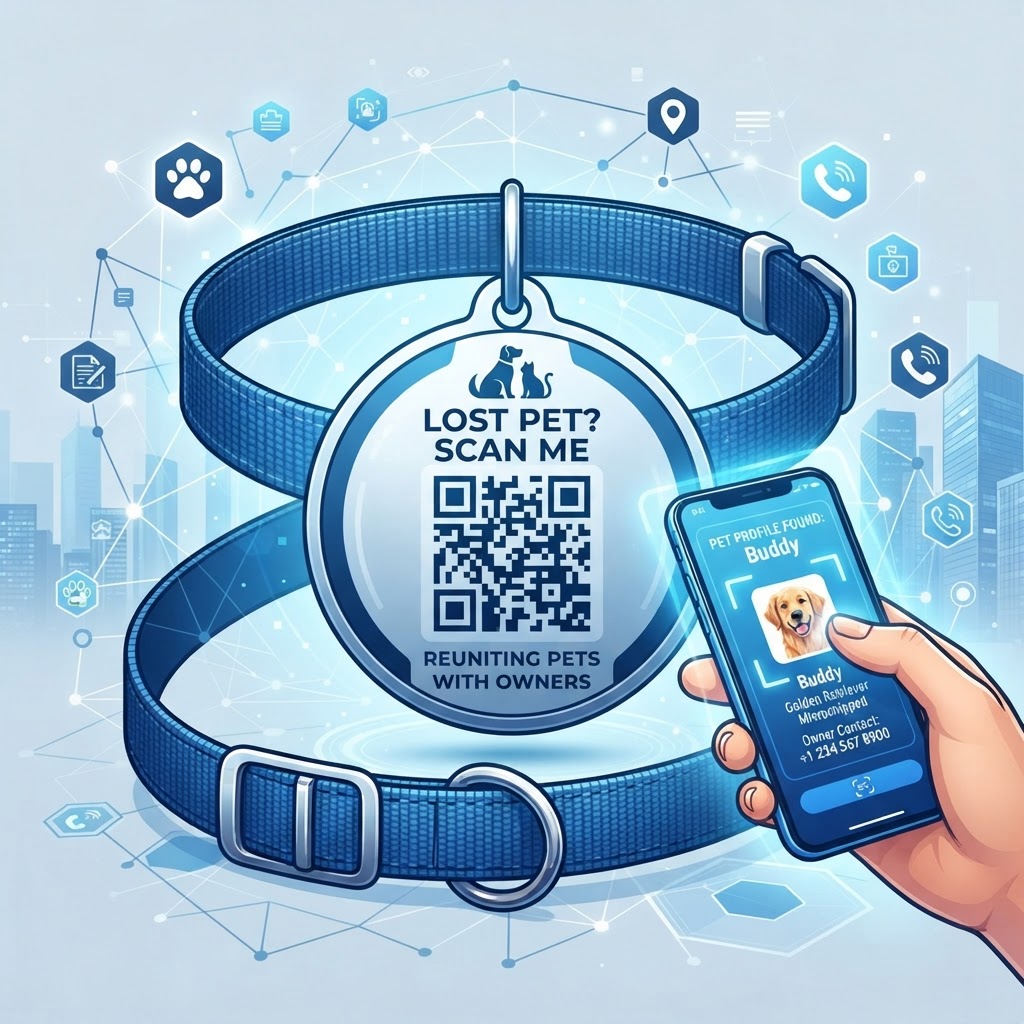
Why Integrating QR Code Technology Matters in 2026
The year 2026 marks a significant shift in how we approach pet care and recovery. Traditional metal tags have served their purpose for decades, but they are inherently limited by physical space and durability issues.
A standard tag can only hold a name and perhaps a single phone number, which is often insufficient if the owner is traveling, out of the country, or if the phone line is busy during an emergency. By leveraging the power of a qr code for lost pet tag, you move beyond these physical constraints. To get started, you can use our free vCard QR Code Generator to create a digital contact card that stores all your essential recovery details.
When a good Samaritan finds a wandering pet, they do not need specialized equipment to access information; they simply use their smartphone to scan the code. This instant connectivity provides a direct link to the owner, effectively removing the barriers that often lead to shelter intake or, worse, prolonged separation.
Key Points
- QR codes provide more information than traditional metal tags.
- Smartphone scanning gives finders immediate access to owner details.
- Digital profiles can include medication needs, dietary allergies, and behavioral warnings.
Furthermore, in 2026, the prevalence of smartphone ownership is nearly universal, meaning that almost anyone who encounters a lost pet possesses the tool required to scan a QR code. This technological ubiquitousness ensures that your pet’s digital profile is always accessible.
Beyond simple contact information, these codes can store complex data such as current medication needs, dietary allergies, and even behavioral warnings. For pets with specific medical conditions, this speed of information delivery can literally be life-saving.
Many pet owners are now choosing to supplement microchips—which require a veterinarian or shelter to scan—with QR codes that offer a DIY solution for the public. By adopting this technology through platforms like BlueQRcode.com, you are effectively creating an emergency broadcast system that puts the power of recovery directly into the hands of those most likely to find your companion.
How QR Code Technology Works for Pet Safety
At its core, a qr code for a lost pet tag acts as a digital bridge between a physical object and a web-based information portal. When a user generates a QR code at BlueQRcode.com, they are creating a unique, machine-readable matrix of black and white squares that encodes a specific URL.
When this code is scanned by a camera, the device immediately translates that visual data into a request for a web browser to open the associated link. This link leads to a hosted profile containing all the vital information you choose to display.
Unlike static text that can be scratched or worn away, the QR code, when properly protected, remains scannable even if the tag suffers minor wear. The beauty of this system lies in its ability to be updated; if you change your phone number or move to a new address, you can update your digital profile without ever having to order a new engraved tag.
How Scanning Supports Recovery
- Smartphones can open the associated link through the native camera application.
- The link leads to a hosted profile with the pet’s vital information.
- The profile can be updated without replacing the physical tag.
Technically, the security and reliability of these codes depend on the quality of the redirect and the hosting infrastructure. By using a reputable generator like BlueQRcode.com, pet owners ensure that their links are stable and optimized for mobile viewing.
Most smartphones today support direct scanning through the native camera application, removing the need for third-party software installations that might deter a helpful stranger. When the code is scanned, the server records the interaction, and in some advanced setups, can even provide a notification to the owner about the scan location.
This creates a powerful layer of transparency that static metal tags can never achieve. By understanding that a QR code is simply a shortcut to an internet-accessible database, pet owners can feel confident in the robustness of the system, knowing that their pet's critical information is housed in a secure, digital environment that is available 24/7, anywhere with a mobile data connection.
Try it now: Generate a free Qr Code For Lost Pet Tag →
Step-by-Step Guide to Creating Your Pet's QR Code
Creating a professional, reliable QR code for your pet is a streamlined process when using BlueQRcode.com. Start by gathering all the essential information you want available for the finder.
This should include your primary contact number, a secondary emergency contact, your current home address, and any life-critical medical alerts. Once prepared, navigate to the BlueQRcode.com website and select the appropriate tool for your needs.
- Step 1: Use the vcard-qr feature if you want to create a comprehensive digital contact card that can be saved directly to a finder’s phone.
- Step 2: Input your details into the provided fields, ensuring that every digit of your phone number is correct.
- Step 3: Choose a design that balances aesthetics with scannability, using high-contrast colors such as black on white.
- Step 4: Generate the code and download the image file in a high-resolution format like PNG or SVG.
- Step 5: Test the code using several different smartphone models to confirm that the link works correctly and the landing page loads instantly.
- Step 6: Print the code onto a waterproof sticker, have it laser-engraved onto a metal tag, or insert it into a protective silicone holder designed for pet collars.
- Step 7: Keep a record of the URL associated with the QR code so you can log back into BlueQRcode.com at any time to modify the information.
Best Practices for Deployment: Size, Placement, and Format
The effectiveness of a qr code for a lost pet tag is heavily dependent on how the code is physically deployed. If the code is too small, the camera may struggle to focus; if it is placed in a high-friction area, it will quickly degrade.
The industry-recommended minimum size for a QR code on a pet tag is at least 15mm by 15mm. Anything smaller creates a risk that a smartphone with a lower-resolution camera will be unable to resolve the individual squares.
- Use a tag made of a non-reflective, matte material.
- Avoid highly polished metal or clear plastic covers that create glare.
- Make the tag double-sided or prevent it from constantly flipping over.
- Keep the code at least 15mm by 15mm.
Placement is equally vital. A tag hanging from a collar is standard, but some owners opt for QR codes embedded directly into the collar material or printed on a silicone sliding tag.
Sliding tags are particularly effective because they do not dangle, which reduces the chance of the code being snagged on branches or chewed on by the pet. Regardless of the form factor, durability is the primary metric for success.
Many pet owners now use epoxy domes over their printed QR codes to provide an extra layer of scratch resistance and water protection. It is also wise to include a small, legible text prompt near the code, such as "Scan me to help me home," as this encourages people who might be unfamiliar with QR codes to take action.
Finally, regularly inspect the tag during your pet's grooming sessions to ensure the surface is clean and the pattern remains intact, as mud or hair can easily obscure the code and delay the reunion process.
Common Mistakes to Avoid When Using QR Pet Tags
Even with the best tools, users often fall into common traps that render their QR codes ineffective. The most frequent error is failing to test the code across multiple devices.
- Failing to test the code across multiple devices can cause compatibility problems.
- Relying entirely on the QR code leaves no backup if the internet connection is poor or the smartphone runs out of battery.
- Failing to update the digital profile can leave owners with outdated contact information.
- Overly complex or artistic designs can sacrifice contrast and structural clarity.
- Requiring a finder to log into a platform or install an application creates unnecessary friction.
What works on a flagship smartphone may fail on a budget device with a lower-quality camera sensor. Another critical mistake is relying entirely on the QR code without providing any secondary, static information.
While QR codes are excellent for detail, the tag should ideally still have a phone number engraved in case the internet connection is poor or the smartphone runs out of battery. By providing both digital and physical redundancy, you ensure that the pet can be identified regardless of the circumstances.
Another significant oversight involves the digital profile itself; owners often create a link but never check if the content is still accurate after a move or a change in primary phone numbers. Keeping your BlueQRcode.com profile updated is just as important as the initial setup.
Furthermore, avoid using overly complex or artistic designs for the code itself. While custom colors or circular markers might look attractive, they often sacrifice the contrast and structural clarity required for rapid scanning.
In an emergency situation, a finder might be rushing or stressed; if the code is not instantly readable, they may give up and take the pet to a shelter instead. Lastly, ensure that the URL behind your QR code does not require the finder to log into a platform or install an application to see the details.
A public-facing web page is the most inclusive approach, as it respects the privacy of the finder while ensuring your pet's information is immediately visible. The goal is to minimize friction, and any step that requires a user to sign up or download software is a point of failure that could prevent your pet from being returned safely.
Concrete Use Cases by Industry and Sector
The utility of QR codes for pet identification extends far beyond standard household ownership. In the shelter and rescue sector, organizations use these codes to streamline the intake process.
When a shelter finds a stray, a quick scan can immediately populate their database with the owner’s name, medical history, and temperament notes, allowing the staff to care for the animal more effectively.
- Shelters and rescues can streamline intake and access owner information.
- Dog walkers and boarding facilities can verify contact details and check severe allergies.
- Traveling pet owners can update temporary locations in real time.
- Municipal animal control departments can potentially return animals directly to owners.
For professional dog walkers and boarding facilities, QR-tagged collars are becoming a standard operating procedure. These service providers can easily scan the tags during a walk to verify the owner’s contact details or check for severe allergies before providing treats, ensuring a professional level of safety that builds client trust.
In this industry, the QR code acts as a portable medical record that provides instant accountability for the service provider. Additionally, the pet-friendly travel industry is seeing massive adoption of QR codes.
When traveling, your pet’s physical location changes frequently, making traditional address tags obsolete. A QR code allows you to update your temporary location—such as a hotel or a rental property—in real-time, providing the local community with the most relevant information should your pet escape in an unfamiliar environment.
For municipal animal control departments, the potential is even greater. By encouraging the adoption of QR tags among city residents, these departments can reduce the burden on crowded shelters.
If an officer finds a lost dog in the park, they can scan the tag and potentially return the animal directly to the owner in the field, skipping the shelter entirely. These diverse use cases demonstrate that the QR code is a versatile tool for any organization or individual involved in the welfare and management of domestic animals in the modern era.
Summary and Next Steps for Pet Owners
As we have explored, the transition to using a qr code for lost pet tags is an essential evolution in pet safety for 2026. By choosing to implement this technology, you are moving away from the limitations of legacy identification methods and embracing a solution that offers real-time updates, comprehensive medical information, and instant connectivity.
The process is straightforward, accessible, and highly effective, provided that you prioritize durability, contrast, and ease of access. As you have seen, the benefits range from providing life-saving medical data to simplifying the recovery process for shelters and Good Samaritans alike.
- Step 1: Audit your current pet tag situation today.
- Step 2: Create a free account on BlueQRcode.com and generate a dedicated profile for your pet.
- Step 3: Select a durable tag format that suits your pet’s lifestyle.
- Step 4: Test your code under different lighting conditions.
- Step 5: Confirm that the information is clear and concise.
Utilizing the tools provided by BlueQRcode.com ensures that you have a stable, secure, and user-friendly platform to manage your pet's digital identity effectively. If you are relying solely on an old, scratched metal tag with a phone number that has changed, it is time to upgrade.
By taking these proactive measures, you are not only providing a safety net for your pet but also participating in a community-wide effort to reduce the number of stray animals in our shelters. Technology is a powerful ally, and when it comes to the safety of our furry family members, it is the most reliable tool we have.
Conclusion
Start your journey today and ensure your pet is always just one scan away from coming home safely. BlueQRcode.com provides a way to create and manage your pet’s digital identity for 2026.