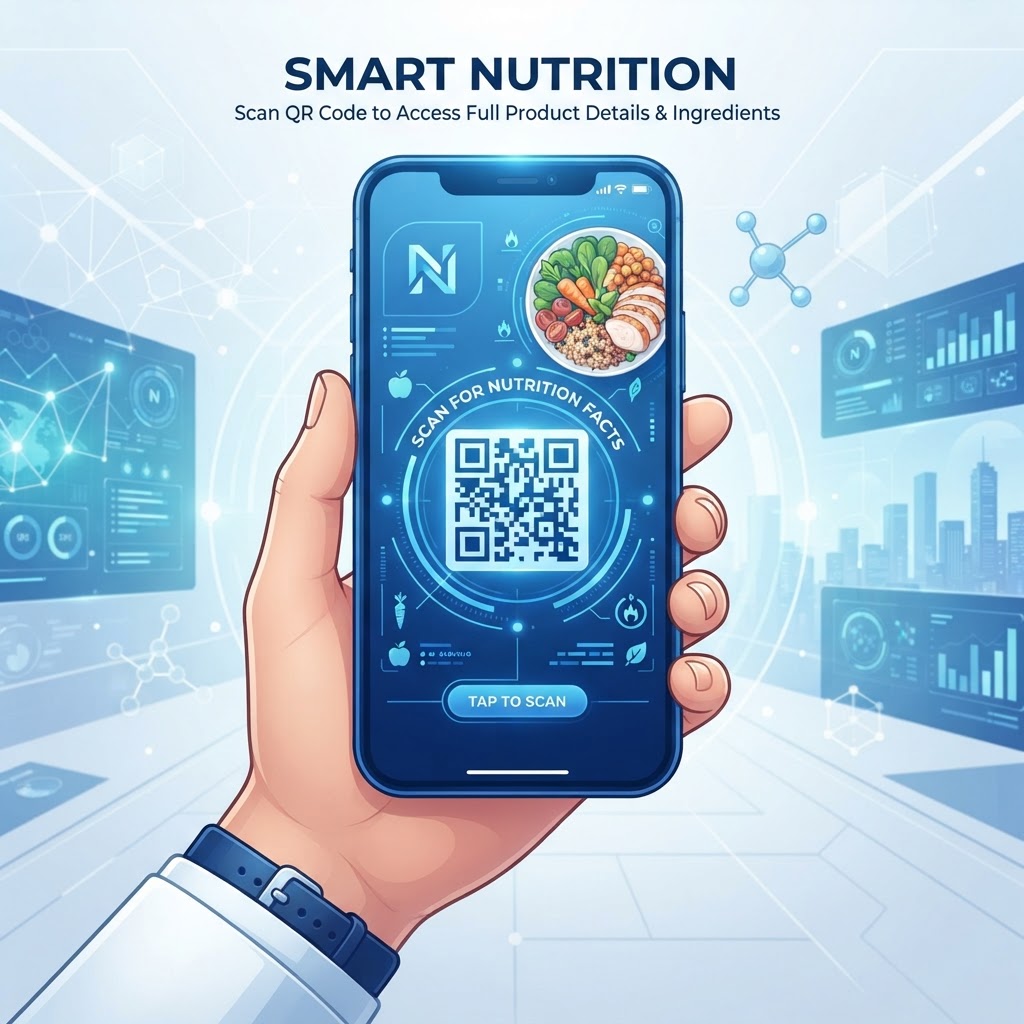
Why This Matters in 2026
In the current fiscal year of 2026, the landscape of consumer advocacy and regulatory standards has shifted significantly toward digital accessibility. When a customer stands in a grocery aisle or sits at a restaurant table, they are often overwhelmed by choice, yet simultaneously concerned about what they are putting into their bodies.
Traditional labels suffer from the physical constraints of packaging space, often forcing manufacturers to use tiny fonts that are difficult to read, especially for aging demographics or those with visual impairments. A QR code for nutritional information solves this by providing a gateway to unlimited, scalable, and highly legible information without occupying precious physical real estate on a label.
Key Points
- Digital nutritional information improves accessibility and readability.
- Businesses can reduce ink and paper waste by shifting extensive disclosures to digital formats.
- QR codes help brands provide transparency, sourcing details, and macronutrient information.
Furthermore, many businesses are adopting these digital tools to align with environmental initiatives. By shifting extensive legal disclosures, ingredient sourcing stories, and nutritional breakdown charts to a digital format, brands can reduce ink and paper waste on physical packaging.
This transition does not just benefit the bottom line; it fosters a culture of transparency that Gen Z and Millennial cohorts demand. Most smartphones now come with native QR scanners built into their camera apps, making the barrier to entry non-existent.
When you integrate a QR code from a platform like [blueqrcode.com](https://blueqrcode.com), you are essentially inviting the customer into your brand's narrative. You are moving beyond the 'what' of the food to the 'why' and 'how,' detailing everything from farm-to-table sourcing to specific macronutrient counts that assist users in tracking their health goals.
In 2026, data is as important as the product itself, and failing to provide this information digitally can result in a significant loss of market share to competitors who prioritize modern, customer-centric communication strategies.
How It Works Technically
At its core, a QR code for nutritional information acts as a sophisticated shortcut. Technically, when you create a code using the [blueqrcode.com](https://blueqrcode.com) URL-QR tool, you are generating a two-dimensional barcode that maps to a specific destination URL.
When a user points their smartphone camera at this square, the device interprets the pixel pattern, decodes it into a web address, and automatically triggers the phone's web browser to load the designated landing page. This page can be a simple mobile-responsive PDF, a dedicated webpage on your site, or a specialized nutritional calculator.
Because the underlying technology relies on standard HTTP protocols, the speed of access is almost instantaneous, assuming a basic cellular or Wi-Fi connection.
Technical Advantages
- URL-based QR codes can direct users to PDFs, webpages, or nutritional calculators.
- Destination content can be updated without reprinting physical labels.
- Responsive landing pages improve readability across different screen sizes.
- Businesses can track scans and geographic engagement metrics.
To ensure this technical process remains seamless, it is critical to use a reliable generator. When you utilize the URL-QR functionality, you are creating a link that can be updated on the backend.
This is a massive technical advantage. If your recipe changes or if a specific ingredient supplier updates their certification, you do not need to reprint thousands of physical product labels.
You simply update the destination URL or the content at that specific URL, and the printed QR code remains functional. This dynamic capability is the cornerstone of modern packaging logistics.
The browser environment also allows for additional technical enhancements, such as responsive design that adjusts the layout based on the user's screen size, ensuring that the nutritional data is always readable, whether they are on a massive desktop screen or a compact smartphone.
By maintaining this URL-based structure, businesses can also track engagement metrics, such as how many people are scanning the code and from which geographic locations, providing valuable insights into consumer behavior that were previously impossible to track via traditional, static print media.
Step-by-Step Guide Using BlueQR
Starting your journey with [blueqrcode.com](https://blueqrcode.com) is a straightforward process designed for businesses of all sizes, from artisanal bakeries to international food distributors.
- Step 1: Gather your nutritional data, including an FDA-compliant nutritional facts panel, a list of potential allergens, or a detailed breakdown of sourcing.
- Step 2: Prepare and host your digital landing page, then copy its URL to your clipboard.
- Step 3: Navigate to the BlueQR platform and select the URL-QR option from the menu.
- Step 4: Paste your link into the designated field and customize the QR code design.
- Step 5: Download the code in a high-resolution vector format, such as an SVG or high-DPI PNG.
- Step 6: Test the code using at least three different smartphone models before moving to mass production.
- Step 7: Integrate the tested code onto your packaging.
This tool is specifically designed to handle long, complex links and ensure they are converted into a clean, scannable QR code.
While the standard black-and-white look is highly functional, BlueQR allows for branding adjustments, such as adding a logo in the center or changing the colors of the modules.
This is vital for brand recognition—when a customer sees a QR code that reflects your brand’s visual identity, they are significantly more likely to trust it and scan it.
Always download your code in a high-resolution vector format, such as an SVG or high-DPI PNG, to ensure it remains sharp when printed on packaging materials like cardboard, plastic films, or menu paper.
Before moving to mass production, perform a live test using at least three different smartphone models to ensure the landing page loads perfectly under various conditions. This small step saves thousands of dollars in potential printing errors.
Best Practices for Deployment
The success of a QR code for nutritional information depends heavily on its visibility and the context in which it is presented.
Many businesses make the mistake of hiding the QR code on the back of the package or near the bottom, where it is often obscured by shelf placement or dirt.
Placement and Design
- Use a primary impact zone: Place the code where the consumer’s eye naturally lands during their initial interaction with the product.
- Position it near required information: On food boxes, place it clearly next to the mandatory nutrition label.
- Choose an appropriate size: A good baseline is at least 2cm x 2cm for smaller items, though larger sizes are better if space allows.
- Maintain strong contrast: Use a dark QR code on a light background or ensure brand colors provide enough contrast.
- Preserve the quiet zone: Leave clear white space around the code so scanners can isolate the pattern.
- Add a call to action: Use text such as 'Scan for Full Nutritional Profile' or 'Scan to See Ingredients.'
If it is a drink bottle, the neck or the upper body of the container is ideal. If it is a food box, place it clearly next to the mandatory nutrition label so that it feels like an extension of the existing information rather than an afterthought.
While modern smartphones are quite capable, a QR code that is too small will fail to focus properly, leading to user frustration.
Furthermore, consider the contrast. A dark QR code on a light background is the industry standard for a reason. If you choose to use brand colors, ensure there is enough contrast between the modules and the background; otherwise, scanners will struggle to differentiate the pixels.
Do not crowd the QR code with other text, logos, or patterns. Providing a clear buffer of white space around the code allows the scanner to isolate the pattern from the surrounding product design, leading to faster and more accurate scanning.
This simple label significantly increases scan rates, as it sets a clear expectation for the user about what they will find on the other side of the link.
100% Free — No signup required
Create your Qr Code For Nutritional Information in seconds
Create Free QR Code →Common Mistakes to Avoid
In the pursuit of digital transformation, many businesses stumble into common pitfalls that render their QR code strategies ineffective.
- Using a dead link: A 404 Error page immediately damages customer trust.
- Ignoring mobile responsiveness: A desktop-only website can require excessive zooming and scrolling.
- Failing to maintain the link: Changes to hosting or website structures can make printed QR codes useless.
- Displaying inconsistent information: Digital content should remain consistent with physical labeling.
- Hiding legally required information: Use the QR code to augment required packaging information, not replace it.
- Creating unnecessary barriers: Requiring an app download or newsletter signup makes access less transparent.
Every nutritional information QR code must lead to a mobile-responsive landing page. Another critical error is failing to maintain the link over the long term.
If you use a non-dynamic, static generator, and the hosting for your website changes, the QR code on your printed packaging becomes a permanent, useless relic.
This is why using a dedicated service like [blueqrcode.com](https://blueqrcode.com) is so important; the platform ensures that the routing logic remains robust even if your internal server structures change.
Nutritional information is highly regulated in most regions. Ensure that the information provided through the digital channel is consistent with the physical labeling.
Transparency should be frictionless. If a user has to jump through hoops to see the ingredients, they will assume you are hiding something.
Concrete Use Cases by Industry
The application of QR codes for nutritional data spans across diverse sectors, each finding unique utility for this technology.
- Hospitality: Restaurants and cafes can display caloric content and allergen information on digital menus.
- Grocery and packaged goods: Food brands can communicate clean label initiatives, ingredient origins, maps, and harvest dates.
- Fitness and supplements: Brands can provide amino acid profiles and videos explaining ingredient efficacy.
- Beverages: Craft beer and specialty health juice brands can share pairing guides and information about fruits and botanicals.
In the hospitality industry, particularly for restaurant chains and cafes, QR codes on menus are now standard. A diner can scan a code to see not just the caloric content, but also cross-reference ingredients for common allergens like nuts, soy, or gluten.
This empowers customers with dietary restrictions to dine safely without having to wait for a server to return from the kitchen with answers.
The hospitality sector benefits from reduced labor time and improved customer safety protocols, as the digital information is updated instantly when a recipe or ingredient source changes.
In the grocery and packaged goods sector, food brands utilize these codes to communicate their 'clean label' initiatives. For example, a company specializing in organic snacks can use a QR code to display the specific origin of each ingredient, providing a map and harvest date.
This adds a layer of provenance that consumers are willing to pay a premium for. Similarly, within the fitness and supplement industry, brands provide deep-dive analytics for their products.
Users can scan a tub of protein powder to see a comprehensive amino acid profile or watch a video explaining the efficacy of specific ingredients.
In the beverage industry, QR codes are frequently found on craft beer or specialty health juice labels. These codes often lead to 'perfect pairing' guides or information about the specific fruits and botanicals used in the fermentation process.
Summary and Next Steps
We have covered the imperative role that QR codes play in the modern food and beverage landscape. Implementing a QR code for nutritional information is not just a trend for 2026; it is a fundamental requirement for businesses that value transparency, efficiency, and customer engagement.
Through this article, you have learned about the importance of mobile accessibility, the technical mechanics of dynamic URL-QR codes, and the strategic placement required to ensure high scan rates.
- Audit current product packaging for cramped or limited nutritional information.
- Use the tools provided at [blueqrcode.com](https://blueqrcode.com) to generate professional QR codes.
- Start with a pilot run on a single product line.
- Test user engagement and gather feedback.
- Expand the program to the entire catalog after evaluating the results.
Remember, the digital space is flexible; if you discover that your customers are interested in a different type of information, such as recipe ideas or environmental impact reports, you can easily pivot your landing page content without needing to redesign your physical packaging.
As the food industry continues to evolve toward a more transparent future, your commitment to providing accessible, digital-first information will set your brand apart as a leader in the eyes of the conscious consumer. Start today, and build a more transparent connection with your audience.
No watermark · No expiry · Works on all phones
Your QR code is ready in under 30 seconds.
Generate Free QR Code →