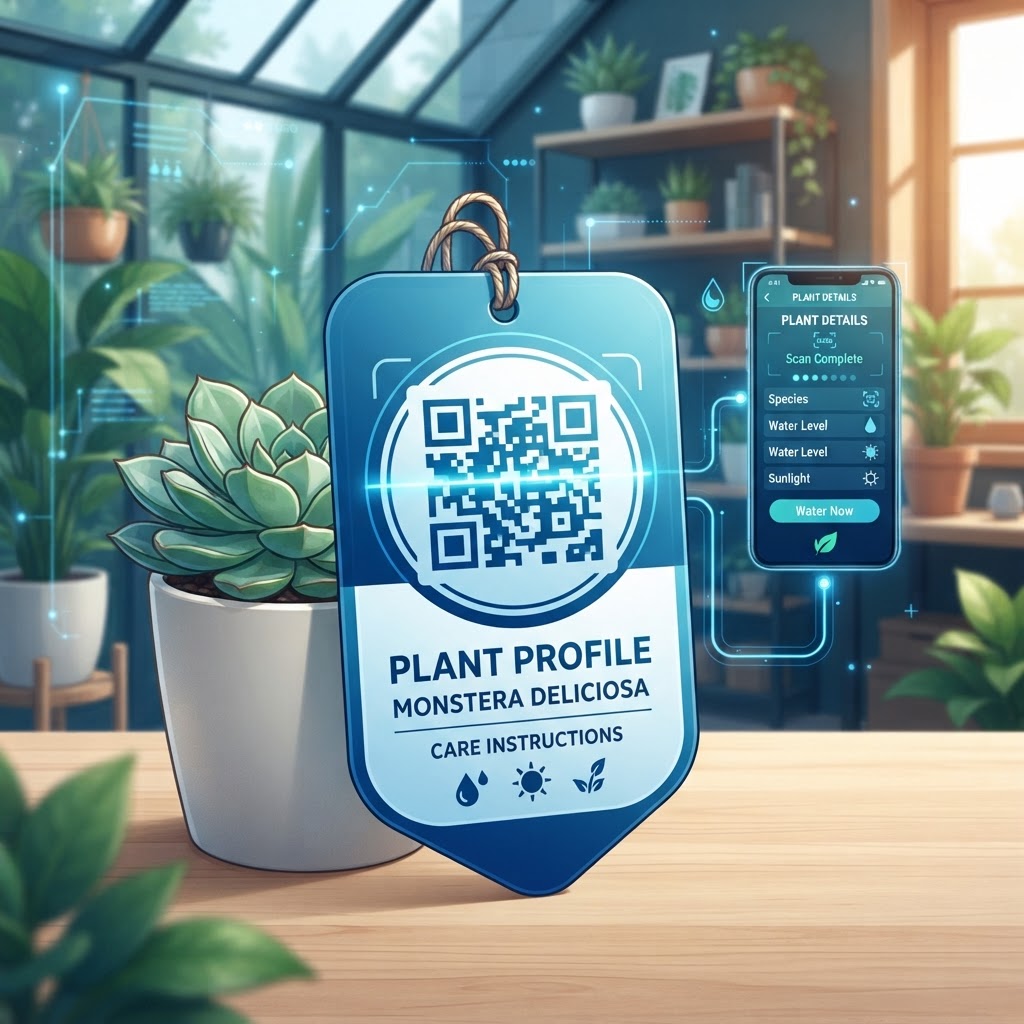
Why QR Codes for Plant Labels Matter in 2026
The year 2026 represents a paradigm shift in how we interact with the natural world, specifically within commercial nurseries and residential landscaping. With the rapid normalization of digital information access, plant labels have evolved from simple paper or plastic slips displaying a species name into comprehensive digital gateways.
A qr code for plant label allows a nursery to provide a depth of information that would physically be impossible to print on a small stake. By simply scanning a code, customers can view high-definition care videos, seasonal growth charts, and even integrated social media updates about the plant's history.
This transition is not merely a novelty; it is a response to the growing expectation for transparent and detailed consumer information regarding biodiversity, origin, and ecological impact. QR codes also reduce the need to reprint labels when information changes, helping reduce waste and labor costs.
Key Benefits
- Provide detailed digital care information without overcrowding physical labels
- Update plant information dynamically without reprinting physical assets
- Support nursery operations, botanical education, and customer engagement
- Reduce administrative work, waste, and long-term labeling costs
How QR Code Technology Works for Botanical Applications
Technically, a QR code serves as a high-density, machine-readable optical label that stores data as a matrix of black modules on a white background. When a user scans a qr code for plant label using the native camera app found on most smartphones, the device decodes the URL pattern embedded within that matrix and directs the browser to a specific digital landing page.
For horticultural applications, these codes are typically generated as “dynamic” URLs, meaning the destination can be altered remotely without changing the physical QR code itself. This ensures that a durable label made of metal or UV-resistant plastic can remain on a plant for years while the digital content evolves.
Technical Considerations
- Dynamic URLs allow digital destinations to change without replacing physical labels
- Server-side redirects connect scans to relevant mobile-friendly content
- Error correction helps codes remain scannable despite dirt, water, or wear
- URL-based QR codes support modern Android and iOS devices
The underlying infrastructure relies on robust server-side redirects. When a user initiates a scan, the request hits a URL shortener or a dedicated platform like blueqrcode.com, which instantly directs the user to the relevant content.
Because these platforms are optimized for mobile, the loading times are near-instantaneous, even in garden settings with varying cellular signal strength. This technical reliability supports large-scale deployment in greenhouses and other environments where humidity and environmental variability are constant factors.
Try it now: Generate a free Qr Code For Plant Label →
Step-by-Step Guide Using BlueQRCode.com
Creating a functional and effective qr code for plant label using blueqrcode.com is a streamlined process designed for efficiency and ease of use.
- Step 1: Identify the URL you wish to link to, such as a dedicated plant care page or a video guide.
- Step 2: Navigate to the generator tool, select the option for URL-based QR codes, and input your destination address carefully.
- Step 3: Customize the code with colors that contrast well, such as dark green or black against a light background.
- Step 4: Add a short call-to-action near the code, such as “Scan for Care Instructions” or “Learn About This Species.”
- Step 5: Generate and download the high-resolution file in PNG or SVG format.
- Step 6: Test the code with multiple Android and iOS smartphones before printing.
- Step 7: Print the QR code on weather-resistant labels or stickers and attach them firmly to plant stakes or pots.
Best Practices for Deployment: Size, Placement, and Format
The physical deployment of a qr code for plant label requires attention to detail to ensure longevity and usability in outdoor settings. The minimum size for a readable QR code is generally one inch by one inch, but slightly larger sizes are safer when light reflection can occur on laminated tags.
Material and Format
- Keep a clear “quiet zone” around the code so scanners can isolate it
- Use UV-resistant lamination or laser-etched metal tags for long-term applications
- Choose SVG when resizing is important because vector files maintain sharpness
- Use black-on-white contrast whenever possible for reliable scanning
Placement and Accessibility
- Position the code toward the path or the customer’s typical approach angle
- Avoid the soil line, where mud and water could obscure the code
- Use a taller support stake for delicate, low-growing plants
- Place codes consistently across plants in the same category
- Avoid low-contrast color combinations that may frustrate visitors
Concrete Use Cases by Industry
In the commercial nursery industry, QR codes are revolutionizing the point-of-sale experience. By linking a plant tag to a landing page containing current pricing, stock quantity, and shipping options, nurseries can offer an “endless aisle” experience and allow customers to order larger specimens directly to their homes.
Botanical gardens use QR codes to provide educational depth. A user can scan a code at a rare tropical fern and be instantly transported to a video tour of the fern’s native habitat, complete with audio narration.
Industry Applications
- Commercial nurseries can share pricing, stock quantity, shipping options, and care information
- Botanical gardens can provide videos, audio narration, and educational content
- Landscape architects and city arborists can maintain planting and pruning records
- Specialty plant boutiques can connect customers with communities and social media groups
For landscape architecture and urban forestry, QR codes serve as critical maintenance logs. City arborists can scan a code on a public tree to view its planting date, last pruning session, and fertilizer history.
At specialty plant boutiques, QR codes can lead customers to a private social media group for owners of a specific rare plant species. This creates a lasting connection between the retailer and the buyer, turning a one-time purchase into a long-term relationship.
Common Mistakes to Avoid
Even with the best intentions, many businesses stumble when implementing QR code strategies for their plants. A mobile-friendly experience, an adaptable destination, and reliable testing are essential for avoiding visitor frustration.
- Ignoring mobile responsiveness: Desktop-optimized PDFs and websites can be difficult to read on mobile devices, causing high bounce rates.
- Using a static destination: A long, direct URL prevents you from changing the destination later without reprinting physical tags.
- Overcrowding the tag: Long paragraphs distract from the QR code and make the physical label difficult to use.
- Skipping device testing: A code that works on a high-end phone may fail on a budget-friendly device because of poor image quality or contrast.
- Testing in only one environment: Direct sunlight, overcast conditions, dirt, and moisture can affect scanning performance.
Summary and Next Steps for Your Strategy
The journey toward digitizing your plant collection through QR codes can improve operational efficiency and customer satisfaction. By adopting dynamic QR codes, you can keep information relevant, labels uncluttered, and visitors connected to up-to-date care instructions.
Begin with a small-scale pilot program in one garden section or plant inventory group. Use analytics tools often provided by platforms like blueqrcode.com to monitor scan volume and user behavior, then refine your landing pages and expand the implementation.
No watermark · No expiry · Works on all phones
Your QR code is ready in under 30 seconds.
Generate Free QR Code →Conclusion
A qr code for plant label bridges physical plants with digital information, helping nurseries, gardens, and landscape teams deliver richer experiences while keeping labels current and efficient. Start with a focused pilot, test the experience carefully, and expand as your system develops.