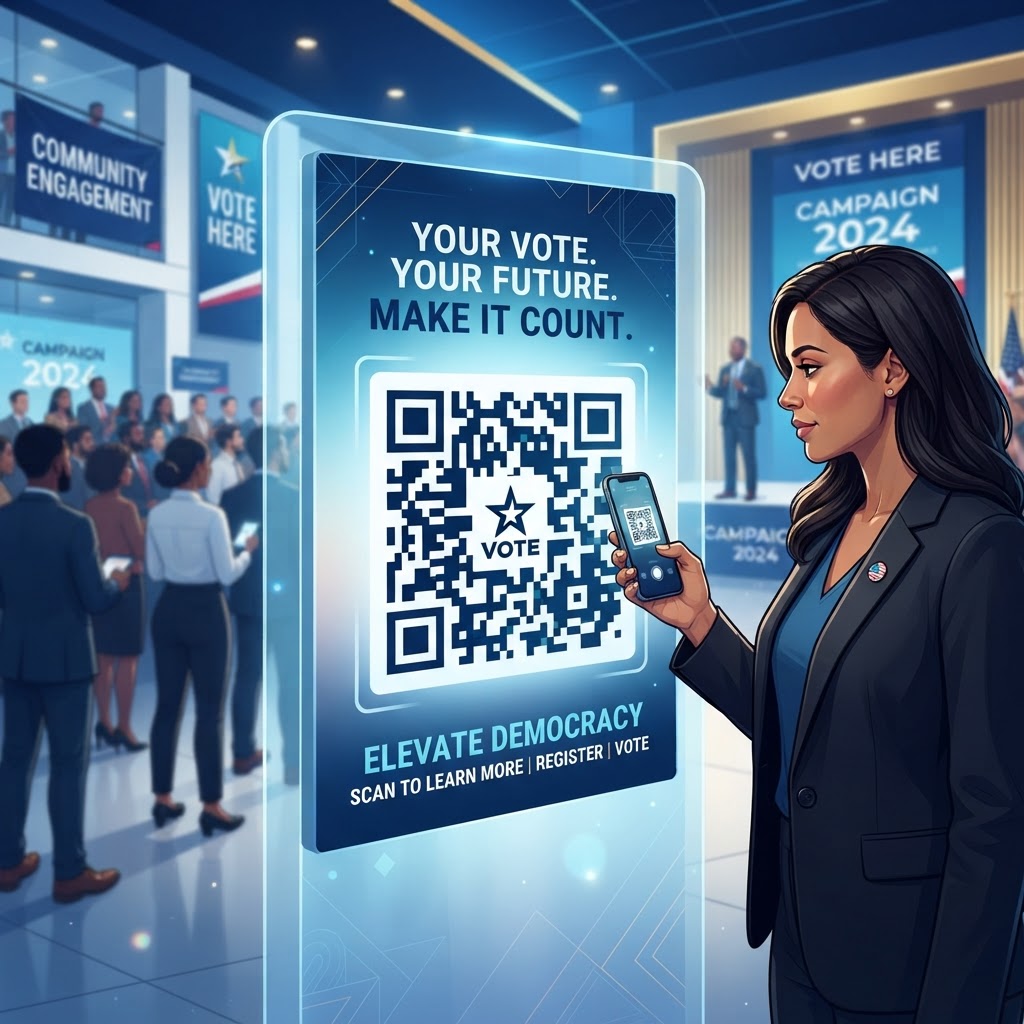
Why Integrating a QR Code for Political Campaigns Matters in 2026
In the digital-first environment of 2026, voter attention spans are shorter than ever, making the rapid transition from physical visibility to digital engagement a top priority for campaign strategists. A qr code for political campaign serves as a high-speed conduit that transforms passive observation into active participation.
When a voter sees a flyer, a billboard, or a lawn sign, their immediate inclination is rarely to manually type a complex URL into their mobile browser. By providing a scannable QR code, you eliminate the cognitive load and potential for error associated with manual data entry, ensuring that your campaign website, voter registration tool, or volunteer signup page is only a second away from the voter's screen.
Furthermore, the ubiquity of smartphone technology means that most voters are already familiar with the scanning process, having interacted with these codes in retail, dining, and transit settings for years. This familiarity reduces the barrier to entry, allowing campaigns to capture interest at the exact moment of peak engagement.
Beyond convenience, the strategic deployment of QR codes allows for sophisticated data collection and analytical insights that traditional marketing methods often miss. By utilizing dynamic QR codes, campaign managers can track specific engagement metrics based on the physical location or the type of material where the code was placed, such as a door-knocker versus a direct mail piece.
This allows for an unprecedented level of campaign optimization, where underperforming messaging or placement strategies can be pivoted in real-time. In an election season, where every day and every outreach dollar counts, the ability to iterate based on real-world interaction data is a massive advantage.
Using a platform like blueqrcode.com provides the necessary foundation for managing these digital assets, enabling campaigns to focus their resources on candidates' platforms rather than troubleshooting broken links or inaccessible content.
Key Points
- QR codes connect physical campaign materials to digital resources with minimal effort from voters.
- Dynamic QR codes can provide engagement insights based on the material or location where they appear.
- Platforms like blueqrcode.com help campaigns manage their QR code assets.
How QR Code Technology Works in a Political Context
At its core, a qr code for political campaign is a two-dimensional matrix barcode that acts as a visual shortcut for digital information. When a smartphone camera scans the pattern of black and white modules, the device interprets this data as a specific URL, vCard, or SMS trigger.
For political candidates, this technology is powerful because it supports both static and dynamic functionality. A static QR code encodes the destination URL directly into the image, meaning the destination can never be changed.
While this is reliable, dynamic codes offered through services like blueqrcode.com allow the destination URL to be updated without needing to reprint physical marketing materials. This is an indispensable feature for political campaigns, where platform details, event schedules, or donation links might shift as the election cycle progresses or as new policy positions are announced.
Technical implementation is further enhanced by error correction levels within the QR code design, which allow the code to remain scannable even if part of it is obscured, smudged, or damaged. This resilience is vital in outdoor settings, such as lawn signs exposed to rain, wind, or dirt.
When properly formatted, these codes maintain their functional integrity while providing a seamless user experience. On the software side, the backend of a QR code generator manages the redirection of the user's mobile device to the desired digital asset.
By using a reputable generator, campaigns ensure that the redirection process is lightning-fast and secure. Most modern mobile operating systems handle the decoding natively, meaning voters do not need to download third-party applications to interact with your campaign.
This friction-free integration is precisely why the QR code has become the industry standard for bridging the physical and digital campaign divide, offering a reliable, scalable, and highly effective way to distribute information to a diverse electorate.
Try it now: Generate a free Qr Code For Political Campaign →
Step-by-Step Guide to Creating Codes Using blueqrcode.com
To begin creating a professional qr code for political campaign, head over to blueqrcode.com, where the interface is designed for maximum efficiency, a must for busy campaign staff.
- Choose your goal: Determine whether you want to drive traffic to your campaign website, register voters, or facilitate a donation.
- Select an input type: Choose the appropriate input type; the URL-QR option is the most versatile for campaigns.
- Enter your URL: Paste your target URL into the designated field. It is best practice to use a tracking link, such as one generated by a URL shortener or your campaign's analytics platform, to gain better insights into user behavior.
- Preview the code: Once the URL is set, the tool will generate a preview of your QR code, allowing you to visualize how it will appear in your campaign materials.
- Customize the design: Align the code with your campaign’s branding. You can typically adjust foreground colors, but maintain high contrast between the code modules and the background to ensure reliable scanning in all lighting conditions.
- Download the code: Download your QR code in a high-resolution vector format like SVG or a high-quality raster format like PNG. Vector files are preferred for large-scale printing, such as banners or billboards, as they prevent pixelation.
- Test the experience: Before finalizing your campaign materials, perform a test scan on multiple different smartphone models to ensure the landing page loads correctly and that the user experience is optimized for mobile viewing. This simple verification step saves thousands of dollars in potential reprint costs if a configuration error is caught early.
Best Practices for Deployment: Size, Placement, and Format
The success of a qr code for political campaign is highly dependent on its physical deployment. If a voter cannot easily scan your code because it is too small, placed in an awkward position, or printed on a material that causes glare, the effort is wasted.
- For most printed materials like flyers or brochures, make the QR code at least 1.5 inches by 1.5 inches to ensure quick detection by smartphone cameras.
- For a lawn sign or a larger banner, increase the size significantly to maintain visibility from a distance.
- Place the code at eye level or in an area where a person can comfortably stand and scan without obstruction.
- Avoid placing codes near the bottom of a large sign or in a crowded area where movement might hinder a steady scan and lead to user frustration and abandonment.
The environment in which the QR code exists matters greatly. Avoid placing codes on surfaces with excessive reflection or glare, as this will prevent the phone from reading the contrast properly.
If you are using glossy paper for direct mailers, ensure the printing process minimizes sheen in the area of the code. Always include a clear call to action (CTA) next to the QR code, such as "Scan to View Our Platform" or "Scan to Volunteer."
Without this context, many voters may overlook the code entirely. By keeping the design clean and surrounding the code with enough whitespace, you help the smartphone's camera focus exclusively on the pattern, resulting in a much faster and more reliable scan experience for the voter.
100% Free — No signup required
Create your Qr Code For Political Campaign in seconds
Common Mistakes to Avoid in Political QR Code Campaigns
One of the most common pitfalls when using a qr code for political campaign is failing to optimize the landing page for mobile users. A beautiful, desktop-centric website will often be difficult to navigate on a phone, leading to high bounce rates.
- Ignoring mobile optimization: Ensure your destination URL directs users to a responsive, mobile-first page that loads instantly. If a voter has to pinch and zoom to read your policy positions, they will likely exit before they get the information they need.
- Using a broken or outdated link: Nothing undermines a campaign's credibility faster than a "404 Not Found" error on a voter's phone. Dynamic QR codes let you update the destination from the backend without needing to discard existing marketing inventory.
- Over-cluttering the code: Avoid excessive design elements, such as placing a logo directly in the center that compromises the code’s ability to be read. Branding is important, but the primary function of the code is to be scanned.
- Skipping testing: Android and iOS devices can sometimes interpret links differently, and cellular signal strength can affect page loading times. Test the code in a simulated environment, perhaps in a high-traffic area with poor connectivity, to ensure your site is lightweight and accessible.
- Replacing readable information with a QR code: A QR code is an enhancement, not a substitute for your campaign's core branding or contact information. Print your URL and social media handles in text format as an alternative for voters who may not be comfortable with or able to use QR scanning technology.
3-4 Concrete Use Cases by Sector and Application
The versatility of a qr code for political campaign allows for its application across various touchpoints.
- Voter Registration Drive: Print QR codes on stickers, buttons, or informational cards handed out at public events to lead voters directly to a secure state-sponsored voter registration portal. This removes the mystery from the process, especially for first-time voters.
- Donation Portal: For campaign rallies or town halls, display a QR code on a large screen or a printed sign at the exit that leads directly to a donation landing page. Making the act of donating as simple as two taps can capture the momentum of the crowd while their engagement is at its peak.
- Policy Education and Video Messaging: Direct voters from a traditional mailer to a short, engaging video of the candidate explaining their stance on a specific issue. This adds a personal human touch that static text simply cannot achieve.
- Volunteer Sign-ups: During door-to-door canvassing, a volunteer can carry a card with a QR code that, when scanned by the resident, instantly populates their information into the campaign’s volunteer database. This digitizes the intake process, eliminating manual data entry and preventing the loss of valuable volunteer contacts.
In each of these cases, the QR code acts as the catalyst for immediate action, proving its worth in a fast-paced election environment.
Summary and Next Steps for Your Campaign
Integrating a qr code for political campaign is a strategic decision that pays dividends in accessibility, data tracking, and user engagement. Throughout this article, we have explored the essential nature of this technology in the 2026 political cycle, the technical mechanics of dynamic versus static codes, and the critical importance of mobile-first landing pages.
By leveraging platforms like blueqrcode.com, you ensure that your campaign remains agile, professional, and accessible to every voter. Remember that technology is only as effective as the strategy behind it; therefore, always pair your QR codes with clear calls to action, thorough testing protocols, and a commitment to maintaining a mobile-optimized digital experience.
As you move forward, start by auditing your existing campaign materials to identify where a QR code could simplify the voter journey. Whether it is adding a donation link to your direct mail pieces or a policy video to your lawn signs, the goal is to reduce friction and increase participation.
Your next steps should involve creating a central hub for all your QR code assets. Maintain a spreadsheet of every code, its destination URL, and its physical location to keep your data organized.
Regularly monitor your analytics to see which placements are driving the most engagement and be prepared to update your landing pages as your campaign evolves. Do not wait for the heat of the campaign to implement these tools; setting them up now will allow you to focus on the message during the final stretch of the election.
By embracing these digital tools, you are not just keeping pace with the competition; you are setting a standard for modern, efficient, and voter-focused campaigning that will resonate long after the polls close.
No watermark · No expiry · Works on all phones
Your QR code is ready in under 30 seconds.