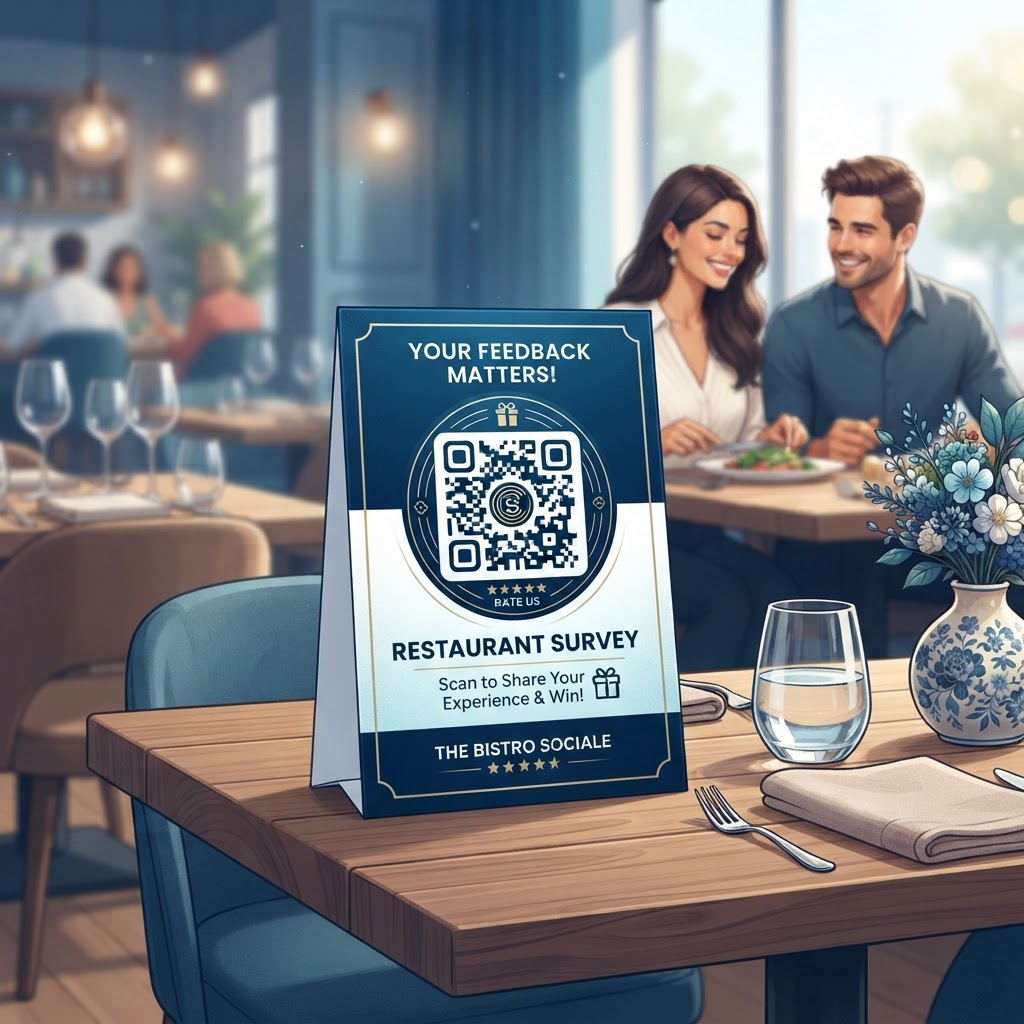
Why Implementing a QR Code for Restaurant Surveys Matters in 2026
As we navigate through 2026, the intersection of digital convenience and personalized service has never been more critical for the hospitality industry. A qr code for restaurant survey programs serves as a vital bridge, allowing managers to gather data at the exact moment a guest’s experience concludes.
Unlike legacy methods, such as paper surveys or email follow-ups sent hours later, QR codes allow for high-intent feedback capture while the memories of the meal are fresh. This immediacy is the primary driver of data quality; when a guest scans a code at their table, they are providing a snapshot of their mood and satisfaction before they even walk out the door.
Furthermore, the reliance on smartphones is now universal, making the scan-and-complete flow the most accessible mechanism for a diverse customer base. By removing friction, businesses ensure a higher response rate, which provides a more statistically significant representation of the customer experience.
Key Benefits
- Capture feedback while guests’ dining experiences are still fresh.
- Gather praise for high-performing staff and identify service bottlenecks.
- Transform every table into an active focus group using blueqrcode.com.
This is not just about collecting complaints; it is about gathering praise for high-performing staff and identifying subtle bottlenecks in kitchen throughput or table service. In 2026, consumer data is the currency of growth, and failing to solicit this information leaves restaurant operators flying blind.
By using a robust platform like blueqrcode.com to facilitate these connections, owners can transform every table into an active focus group, gaining insights that were previously locked away in the minds of diners. The shift towards this digital feedback loop is not merely a trend; it is a fundamental requirement for any establishment that intends to thrive in an increasingly data-driven, customer-centric marketplace where reviews directly impact the bottom line.
How It Works Technically: From Scan to Insight
At its core, a qr code for restaurant survey purposes is a bridge between a physical location and a cloud-based digital infrastructure. Technically, the QR code functions as a two-dimensional barcode, encoded with a specific URL that points to a landing page or a hosted survey form.
When a smartphone camera scans this pattern, the device's operating system decodes the visual data into a character string, which triggers the phone's web browser to navigate to the destination link. This is a seamless process for the end-user, but behind the scenes, it involves several layers of interaction that ensure data integrity and security.
Technical Features
- Generate a code through blueqrcode.com with a unique survey URL.
- Use dynamic parameters to identify a specific table or restaurant section.
- Collect responses through responsive web forms that adapt to mobile devices.
When you generate a code via blueqrcode.com, the system maps your unique survey URL to a standardized, high-density pattern that is optimized for reliable scanning, even under less-than-perfect lighting conditions often found in dimmed dining rooms.
Once the user reaches the target page, they interact with web elements—checkboxes, text areas, and rating stars—which then transmit the response data securely to the survey provider’s database. By leveraging this technical infrastructure, restaurant owners eliminate the middleman, ensuring that the feedback pipeline is direct, encrypted, and immediately ready for analysis by the management team.
Try it now: Generate a free Qr Code For Restaurant Survey →
Step-by-Step Guide Using BlueQRCode.com
Getting started with a professional qr code for restaurant survey deployment is straightforward when using a reliable tool like blueqrcode.com.
- Step 1: Create your survey using a dedicated feedback platform or a simple form builder.
- Step 2: Copy the live survey URL and navigate to the blueqrcode.com interface.
- Step 3: Select the URL category and paste your survey link into the designated field.
- Step 4: Customize the code by adjusting colors or incorporating a logo to match your brand.
- Step 5: Download the high-resolution image file in SVG or high-quality PNG format.
- Step 6: Test the code on iOS and Android devices before printing a large batch.
- Step 7: Integrate the verified QR code into table tents, menu inserts, or other physical marketing collateral.
If you find that the survey takes too long to load, consider compressing the images on your landing page. Once you have verified the flow, integrate the QR code into your physical marketing collateral.
Best Practices for Deployment: Size, Placement, and Format
The success of your survey initiative is heavily dependent on how effectively the QR code is presented to the guest. Even the most perfectly generated qr code for restaurant survey purposes will fail if it is difficult to find or hard to scan.
- Use a printed code at least 1.5 inches by 1.5 inches for table tents or menu inserts.
- Place the code on menus, branded cards alongside the check, or stickers on the table edge.
- Avoid uneven surfaces, highly reflective glass, and areas covered by condiments or drinkware.
- Use a high-contrast color scheme, such as a black code on a white background.
- Include a clear call to action near the code to encourage participation.
Placement is equally vital; the code should be positioned in a location that is naturally part of the guest’s environment. Furthermore, the context matters; provide a clear call to action nearby.
Use a brief, inviting message like "Scan here to tell us how we did and win a chance at a monthly discount," or "We value your feedback—scan to share your thoughts." This adds a layer of motivation that turns a passive visual element into an active invitation to engage.
100% Free — No signup required
Create your Qr Code For Restaurant Survey in seconds
Create Free QR Code →Common Mistakes to Avoid
While the utility of a qr code for restaurant survey campaign is undeniable, many businesses stumble by failing to account for user behavior or technical pitfalls.
- Using a non-mobile-optimized link can force guests to zoom and scroll, causing them to exit.
- Insufficient contrast, glossy finishes, and poor lighting can prevent scanners from capturing the code.
- Asking too many questions can discourage guests from completing the survey.
- Failing to provide simple instructions may leave some guests unsure how to scan.
- Ignoring collected data wastes the guest’s effort and prevents operational improvement.
Always ensure your destination URL leads to a responsive landing page, test the code across different lighting environments, and keep the survey short, focused, and punchy.
Establish a weekly rhythm for reviewing the insights gathered from your BlueQRCode-linked survey and actually act on them. By avoiding these common traps, you ensure that your feedback initiative remains a helpful tool for improvement rather than a source of guest annoyance or operational frustration.
Concrete Use Cases by Industry and Sector
The versatility of a qr code for restaurant survey strategy is evident when applied across various segments of the hospitality sector. Each environment can use targeted questions that reflect its service model.
- Fine dining: Ask about wine pairing recommendations and the pacing of multi-course service.
- Fast casual: Capture feedback about meal timing and dining-area cleanliness.
- Hotel dining: Integrate the code into room service menus or breakfast buffet tabletops.
- Catering and events: Place the code at buffet lines or on individual place settings.
For fine-dining establishments, the survey can be highly personalized. This helps the maitre d' fine-tune a premium experience.
In the fast-casual segment, the focus is on speed and cleanliness. Within the hotel dining sector, surveys focus on reliability and service standards, while catering and events teams can gather real-time feedback on menus and staff performance.
Whether you are running a high-volume cafe or an exclusive white-tablecloth restaurant, the deployment of targeted survey QR codes allows you to pivot your strategies based on actual guest sentiment rather than guesswork or intuition.
Summary and Next Steps
In conclusion, deploying a qr code for restaurant survey initiative is one of the most effective ways for a modern business to capture the voice of the customer in 2026. By choosing a reliable, easy-to-use platform like blueqrcode.com, you are choosing to prioritize clear, actionable data over traditional, ineffective feedback collection methods.
Start small: choose a single high-traffic area of your restaurant, generate your first QR code, and attach it to a simple, three-question feedback form. Monitor the response rate over the next thirty days and observe the quality of the insights you collect.
Once you see the value, iterate by expanding the program to include incentives, more detailed questioning, or even segment-specific surveys based on your service models. Visit blueqrcode.com today to generate your codes, and take the first step toward a more responsive, guest-focused restaurant business that thrives on data-backed excellence and sustained customer loyalty.
No watermark · No expiry · Works on all phones
Your QR code is ready in under 30 seconds.
Generate Free QR Code →