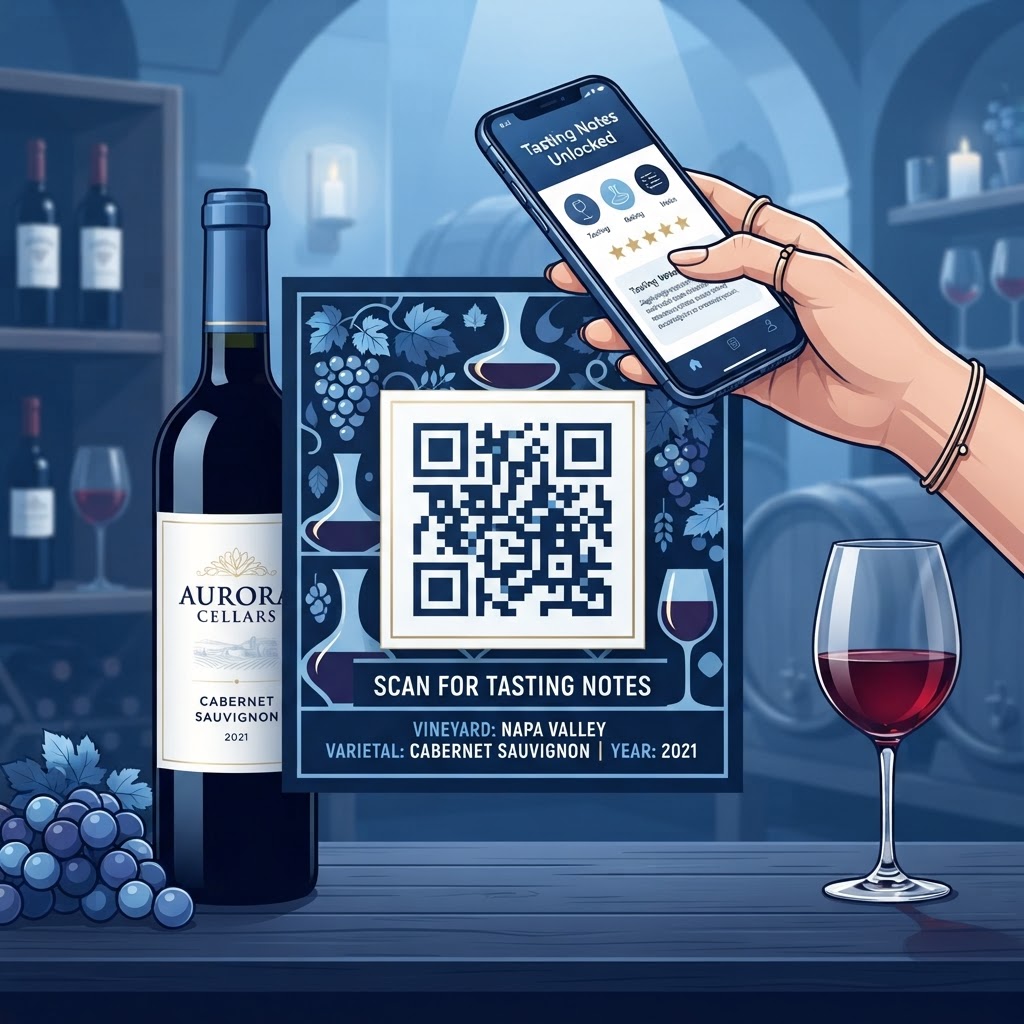
Why Integrating QR Codes Matters for Modern Wine Tasting in 2026
As we navigate the landscape of 2026, the retail and hospitality industries have undergone a profound shift. Consumers no longer accept a wine label as the sole source of truth; they demand digital verification, environmental impact stories, and expert-level tasting profiles at their fingertips.
The use of QR codes for wine tasting notes has become the standard for wineries that want to maintain a competitive edge. By providing a scan-to-view interface, businesses ensure that the narrative of a wine remains consistent from the vineyard to the dinner table.
Key Benefits
- Dynamic updates for awards, vintage-specific nuances, and environmental certifications
- Immediate access to tasting information through smartphones
- Localized language options that improve inclusivity and sales potential
- Consistent storytelling from the vineyard to the dinner table
Unlike a printed back label that cannot be changed once the wine is bottled, a digital tasting note accessed via a URL QR code can be updated in real-time. This agility is vital for maintaining an authentic connection with the consumer base.
Furthermore, the accessibility of smartphones ensures that almost everyone in a tasting room or wine shop can instantly access this repository of data. By removing friction from the information-gathering process, wineries can engage potential buyers more effectively.
In an era where attention spans are limited, providing an immediate, deep-dive resource through a simple code scan is not just a luxury—it is a functional requirement for any brand positioning itself as transparent, modern, and consumer-centric.
How the Technology Behind Wine Tasting QR Codes Functions
The technical architecture of a QR code for wine tasting notes is remarkably efficient and designed for universal compatibility. At its core, the system utilizes a standard URL-based QR code generated through platforms like BlueQRcode.
When a user points their smartphone camera at the code, the device interprets the pixel matrix and extracts a specific URL. This URL directs the user to a mobile-optimized webpage containing the tasting notes.
How Scanning Works
- Smartphone cameras interpret the QR code’s pixel matrix
- The extracted URL opens a mobile-optimized tasting notes webpage
- Native camera software eliminates the need for third-party applications
Because most smartphones in 2026 come equipped with native QR scanning capabilities embedded directly into their camera software, there is no need for customers to download cumbersome third-party applications. This frictionless process is crucial for conversion rates.
The backend of these pages is generally built using responsive web design principles, ensuring that regardless of screen size or device operating system, the tasting profile, sensory breakdown, and food pairing suggestions display correctly.
Technically, these landing pages can also incorporate metadata that allows wineries to track scan metrics—such as geographic location, time of day, and frequency—without invading user privacy.
By using a secure link generated at blueqrcode.com, the winery ensures that the redirection is fast and reliable. The code itself can be dynamically updated on the server side, meaning that if a winery decides to change their suggested serving temperature or add a new recipe pairing, the QR code printed on the physical label remains identical, saving significant costs on reprints and packaging.
This separation between the physical print and the digital content is the fundamental strength of modern QR code deployment in the beverage industry, offering a blend of traditional permanence and digital flexibility.
Try it now: Generate a free Qr Code For Wine Tasting Notes →
Step-by-Step Guide to Creating QR Codes with BlueQRcode
Creating a QR code for your wine tasting notes is a straightforward process when you utilize the tools provided by BlueQRcode.
- Step 1: Prepare your digital tasting notes as a blog post, dedicated landing page on your winery’s website, or PDF document.
- Step 2: Navigate to blueqrcode.com and select the 'URL' category in the generator.
- Step 3: Copy your content URL and paste it into the designated field.
- Step 4: Customize the design by incorporating your winery logo or adjusting the colors to match your bottle’s label design.
- Step 5: Generate a test QR code and verify that it links correctly to your content.
- Step 6: Test the scan on multiple devices and under different screen resolutions and lighting conditions.
- Step 7: Download the code in a high-resolution format, such as PNG or SVG.
- Step 8: Integrate the image onto your back label or neck hanger design, ensuring there is enough white space around the code.
SVG files are particularly useful for professional printing, as they can be scaled to any size without losing sharpness. By following this systematic approach at blueqrcode.com, you ensure a professional outcome that enhances, rather than detracts from, your product’s physical branding.
Best Practices for Deployment: Size, Placement, and Format
Successful deployment of a QR code for wine tasting notes relies heavily on technical placement and visibility. The most common mistake is creating a code that is too small for a consumer to scan in a dimly lit retail environment or a restaurant setting.
- Use a minimum size of 2cm by 2cm so smartphone cameras can resolve the pixels quickly.
- Place the code on the back label at eye level or on a decorative neck tag.
- Avoid placing the code on the bottom of the bottle or near high-friction areas.
- Prioritize high-contrast designs, such as a dark QR code on a light background.
- Use a high-quality, water-resistant adhesive and protective coating.
- Include a simple Call to Action (CTA), such as 'Scan for Tasting Notes' or 'Discover the Story.'
Placement is equally critical because wine bottles are often displayed in refrigerated cabinets, which can lead to condensation. Proper planning of these elements ensures your digital investment pays off in user engagement.
100% Free — No signup required
Create your Qr Code For Wine Tasting Notes in seconds
Create Free QR Code →Common Mistakes to Avoid When Using QR Codes
Even with the best intentions, several common pitfalls can sabotage the efficacy of a QR code campaign. Avoiding these technical and user-experience blunders helps maintain the professional reputation of your wine brand.
- Linking to a page that is not mobile-optimized can force users to pinch and zoom, causing them to abandon the page.
- Allowing link rot can result in a 404 error when a customer scans the bottle.
- Requiring newsletter signups or registration before showing the tasting notes can reduce conversions.
- Cluttering the area around the QR code with competing graphical elements can make scanning difficult.
- Neglecting performance testing can cause users to leave if the landing page takes longer than two seconds to load.
Always use persistent URLs that you control, keep the information accessible, and prioritize fast-loading content, simple imagery, and clear, concise text. These are the markers of a well-executed QR code strategy.
Concrete Use Cases by Industry and Sector
The application of QR codes for tasting notes is not limited to just one segment of the beverage industry; it has diverse utilities across several sectors.
Key Applications
- Large-scale wineries and distributors can use landing pages for inventory management, marketing, and cross-selling.
- Restaurants and hospitality businesses can provide technical data about soil composition, harvesting methods, and aging processes.
- Independent wine shops can offer tasting notes, user reviews, and food pairings for shoppers.
- Tasting rooms and festivals can help visitors save notes for their favorite pours directly to their phones.
For large-scale wineries and distributors, the technology serves as an efficient inventory management and marketing tool. By directing users to a landing page, they can feature a carousel of different wines from the same collection, effectively cross-selling other products after the user has engaged with the tasting notes of the bottle in their hand.
In the restaurant and hospitality sector, sommeliers use these codes as a 'digital sommelier' resource. Customers can access technical data without requiring the waiter to hover over the table to explain every detail.
For independent wine shops, the QR code acts as a force multiplier. Shop owners cannot personally engage every customer, but a scan-to-view interface allows shoppers to browse information independently and make an informed purchase.
Finally, in the tasting room or at festivals, these codes bridge the physical event and the future retail moment. Visitors can save notes for their favorite pours and later recall which bottle they enjoyed during their visit.
Summary and Next Steps for Winery Marketing
In conclusion, integrating QR codes for wine tasting notes is a strategic move that aligns perfectly with the technological expectations of 2026. By providing immediate, high-quality, and mobile-friendly information, wineries can deepen customer relationships, provide essential product context, and drive sales through informed decision-making.
The next steps for your winery should be to audit your current digital presence to ensure your tasting notes are mobile-optimized and then begin integrating custom QR codes onto your packaging. Start small by updating the labels on your most popular vintages, track engagement metrics over the course of a quarter, and use those insights to refine your storytelling.
No watermark · No expiry · Works on all phones
Your QR code is ready in under 30 seconds.
Generate Free QR Code →