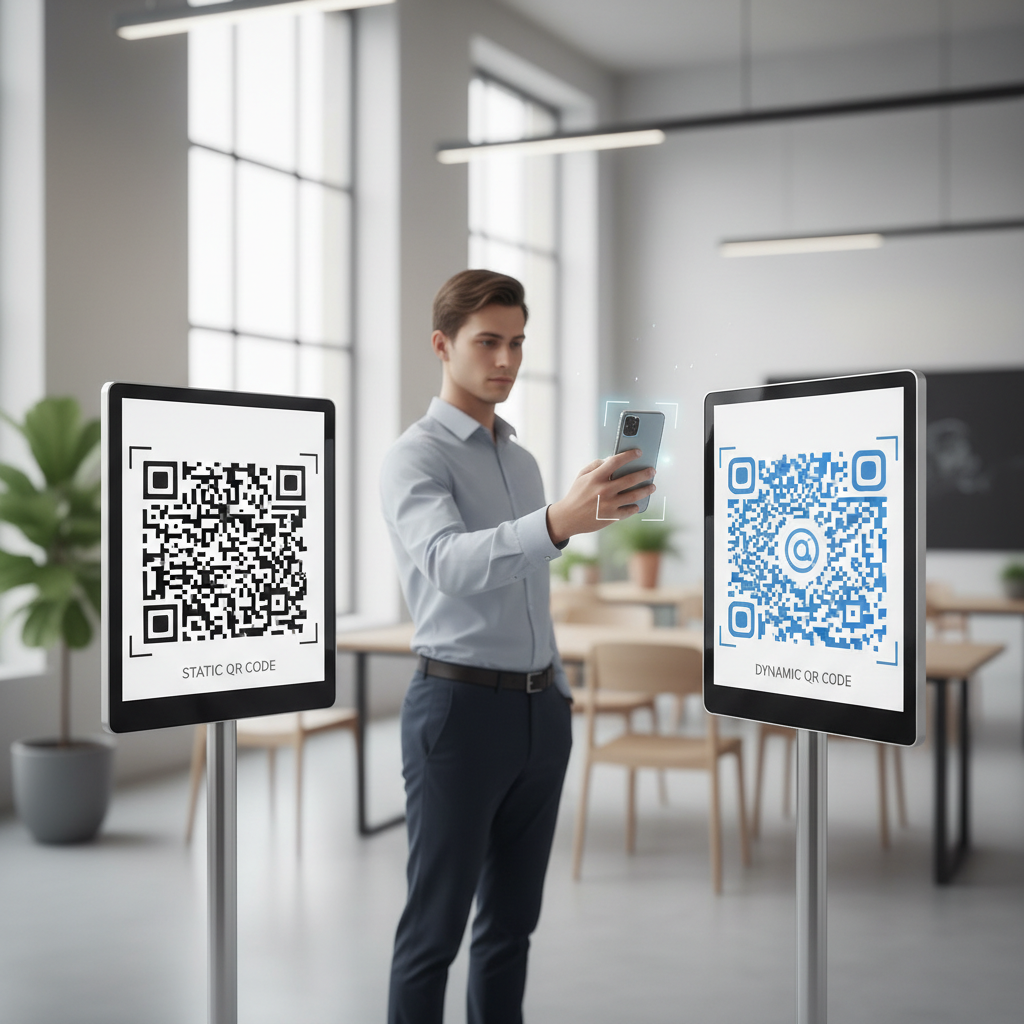
Static QR Code vs Dynamic QR Code: The Complete Guide for 2026
QR codes have become one of the most versatile and widely used tools in modern marketing, business operations, and everyday communication.
As we move through 2026, the global QR code market continues to expand rapidly, with billions of scans recorded every year across retail, hospitality, healthcare, education, and beyond.
A static QR code is one where all the information is permanently encoded into the pattern of the code itself.
Once generated, the data inside a static QR code cannot be changed. If you encode a website URL, a phone number, or a Wi-Fi password into a static QR code, that information is fixed forever.
The only way to update the destination or content is to generate an entirely new QR code and replace all printed or published materials that feature the old one.
Static QR codes are simple, reliable, and require no backend infrastructure to function — they work completely offline and will never expire as long as the physical code remains scannable.
A dynamic QR code, on the other hand, encodes a short redirect URL that points to a server.
The actual destination content can be changed at any time from a dashboard without ever touching the printed or published QR code.
This means you could print thousands of flyers today with a dynamic QR code, and six months later update the destination link, swap out a PDF, or change the landing page entirely — all without reprinting a single sheet.
Dynamic QR codes also come with powerful tracking features, allowing you to monitor how many times the code was scanned, from which device, in which geographic location, and at what time of day.
In 2026, both types of QR codes have their rightful place in a well-rounded digital strategy.
The choice between static and dynamic is not about which one is universally better — it is about matching the right tool to the right use case.
Why the Static vs Dynamic QR Code Decision Matters for Businesses
For small businesses, entrepreneurs, and marketing teams, choosing between static and dynamic QR codes directly impacts operational efficiency and budget.
Consider a restaurant that prints its menu QR code on laminated table tents.
If the menu changes seasonally — as most menus do — a static QR code becomes a liability.
Every menu update requires new printed materials, which means design costs, printing costs, and distribution labor. A dynamic QR code eliminates this entirely.
The restaurant manager simply logs into their QR code dashboard and updates the linked PDF or webpage, and every scan from that point forward delivers the updated menu.
This single change in approach can save hundreds or even thousands of dollars per year for a busy establishment.
For larger enterprises and marketing agencies, dynamic QR codes unlock a level of campaign intelligence that static codes simply cannot provide.
Imagine running a nationwide product launch where QR codes appear on billboard ads, packaging inserts, magazine spreads, and social media posts.
With dynamic QR codes, your marketing team can track exactly which channel drives the most scans, which cities are most engaged, which devices your audience uses, and at what times engagement peaks.
This data feeds directly into audience segmentation, retargeting strategies, and future campaign planning.
Static QR codes leave you completely in the dark — you know the code exists, but you have no idea how often it is being used or whether it is generating any meaningful engagement at all.
100% Free — No signup required
Create your Static Qr Code Vs Dynamic Qr Code in seconds
Create Free QR Code →Why This Topic Matters
Choosing between a static QR code vs dynamic QR code affects cost, flexibility, analytics, and long-term usability for any QR strategy.
Understanding these differences helps you avoid unnecessary printing costs and unlocks campaign insights when you need them.
Key Points
- Static QR codes contain permanent data and require reprinting to change destinations.
- Dynamic QR codes use a redirect URL, allowing edits and analytics from a dashboard.
- Pick the type that matches your use case, budget, and need for tracking.
Step-by-Step Guide
Follow these basic steps to choose and implement the right QR code type for your project.
- Step 1: Determine whether your content will remain fixed or require future updates.
- Step 2: If you need editability or analytics, select a dynamic QR code provider with dashboard tracking; otherwise, generate a static QR code.
- Step 3: Create the code, deploy it on your materials, and use the dashboard or direct link as required to manage or monitor scans.
Best Practices
Match the QR code type to your goals and account for lifecycle costs and tracking needs.
- Use static QR codes for permanent, unchanging content to avoid subscription costs.
- Use dynamic QR codes when you need the ability to update destinations or collect analytics.
- Consider printing and distribution costs when selecting static over dynamic.
Common Mistakes to Avoid
Be mindful of the trade-offs so you don't incur avoidable costs or miss out on insights.
- Choosing a static QR code for content that changes frequently, leading to repeated reprints and extra costs
- Using static codes for marketing campaigns that require performance data, which leaves you without analytics
Conclusion
Static and dynamic QR codes each serve clear purposes; the right choice depends on whether you value permanence or flexibility and analytics.
Match your selection to your use case to optimize costs and campaign effectiveness.
No watermark · No expiry · Works on all phones
Your QR code is ready in under 30 seconds.
Generate Free QR Code →