Why This Matters in 2026
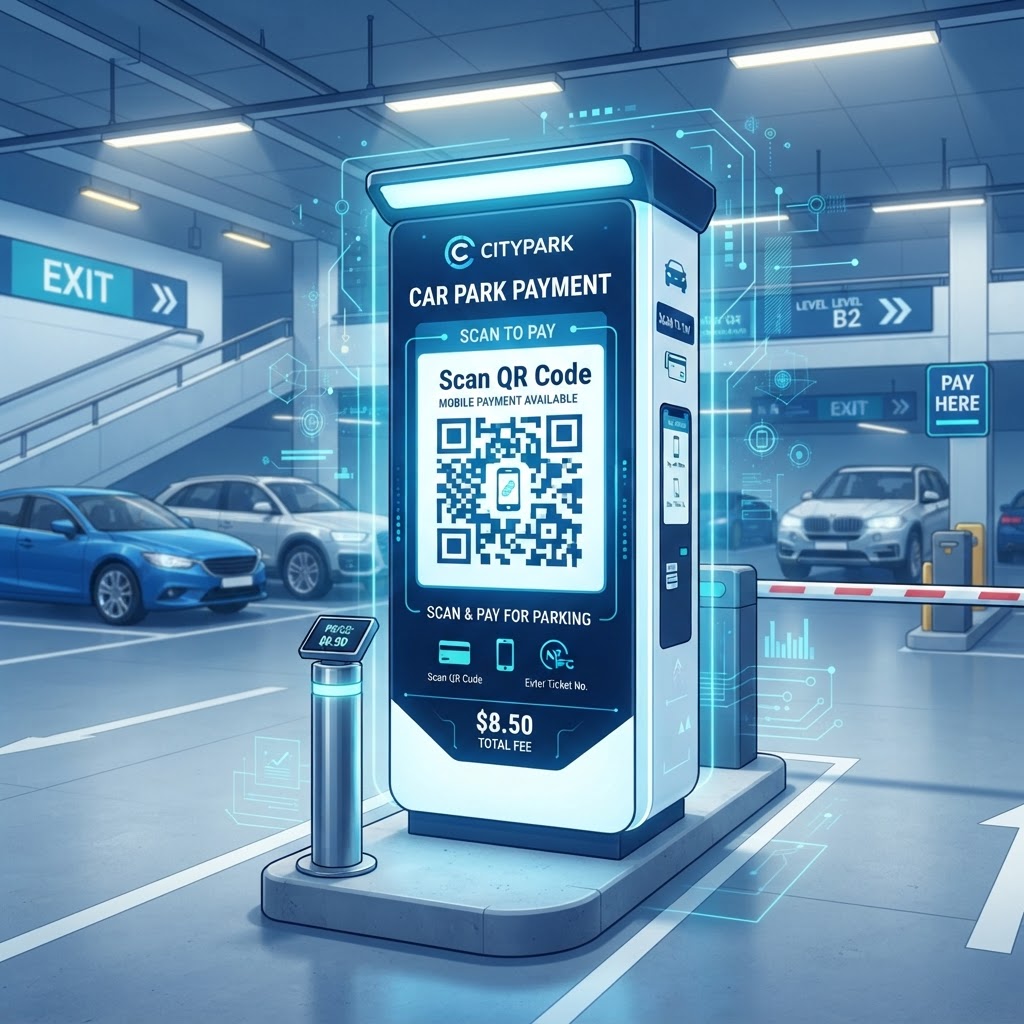
In the current technological landscape of 2026, the expectation for instant, self-service solutions is the standard for most consumers. Parking facilities often represent the first point of contact between a visitor and a destination, making the efficiency of the parking process a significant factor in user satisfaction. Traditional payment kiosks are prone to mechanical failure, require expensive maintenance, and often cause congestion during peak exit times. Conversely, a QR code for car park payment enables a distributed payment model where visitors can settle their fees directly from their own devices without the need for specialized hardware installations at every stall.
Many businesses have realized that leveraging the camera functionality of most smartphones is the most accessible way to reach a broad demographic. Because no specific app download is usually required to scan a standard QR code, the barrier to entry for the user is virtually non-existent. This simplicity encourages higher compliance with parking payment policies, as the process is less tedious than queuing at a kiosk. Furthermore, for facility operators, the overhead costs associated with upgrading electrical and data infrastructure to support complex digital systems are drastically reduced. By utilizing a static QR code that links directly to a pre-defined online payment portal, operators can achieve a high level of operational efficiency with minimal setup. This approach also integrates well with broader digital strategies, such as providing QR Code Placement Best Practices to ensure that signage is visible, safe, and effective. By minimizing the time spent in the parking loop, operators improve the throughput of their lots, allowing for higher turnover rates throughout the day without the need for extra personnel or manual oversight.
How It Works Technically
The technical operation of a QR code for car park payment is elegantly simple. A QR code functions as a two-dimensional matrix barcode that stores data, such as a URL. When a user scans the code, their device interprets the encoded string and triggers the browser to open the specific web address associated with the payment gateway. In this context, the QR code acts merely as a physical bridge between the real world and the web interface of the payment provider. Because the code is static, the information it contains is fixed; it does not change regardless of how many times it is scanned, which provides a predictable and stable experience for the end user.
From a software perspective, the payment portal destination must be configured to handle the incoming traffic from mobile devices. When a user arrives at the payment URL, they are typically presented with a form to enter their parking duration, space number, or license plate information. The server-side logic of the parking operator’s payment site then processes the financial transaction. This setup is highly secure because the payment security is handled entirely by the payment gateway platform, not by the QR code generator itself. It is critical to ensure that the URL being encoded is HTTPS-secured to protect user data. Furthermore, using a reliable tool like blueqrcode.com ensures that the QR code generated is of high visual quality and readable by standard phone cameras under various lighting conditions. Because the code is static, it can be printed in bulk and displayed on signage throughout a parking facility without fear of link expiration or redirection errors, making it a robust choice for long-term physical deployment in outdoor environments.
Try it now: Generate a free QR Code for Car Park Payment →
Step-by-Step Guide Using BlueQRCode.com
Generating a professional QR code for your parking facility is a straightforward process when utilizing the tools at blueqrcode.com. To begin, you first need to identify the exact URL of your online payment landing page or payment gateway. Ensure this URL is tested and functional on a mobile device, as this is the primary way your customers will interact with the system. Once you have the URL, navigate to the blueqrcode.com website and select the appropriate option to create a URL QR code. Enter your destination link carefully, verifying that the domain and path are typed correctly to avoid any broken links that could cause user frustration in the parking lot.
After entering the link, the generator will provide you with a preview of your QR code. It is highly recommended to test this code immediately by using your own smartphone camera to scan it; verify that it correctly opens the intended webpage. Once satisfied, download the code in a high-resolution format, such as PNG or SVG, depending on how you intend to print it. If you need to include branding or specific instructions nearby, consider placing the code on a card that includes clear, large-print instructions like "Scan here to pay for parking." You might also consider exploring resources like QR Code for Stripe Payment Link to understand how to integrate specific payment platforms effectively. Remember, because blueqrcode.com focuses on reliable, static codes, you should avoid the urge to change the destination once the signage is printed. Keep your generated files organized so that if you ever need to replace a damaged sign, you can easily reprint the exact same code without needing to generate a new one, maintaining consistency across your entire parking facility infrastructure.
Best Practices for Deployment
Deploying a QR code for car park payment requires a thoughtful approach to physical placement and environmental conditions to ensure high scan success rates. First and foremost, the placement must be at eye level or in a location where a driver can safely interact with the sign after parking their vehicle. Avoid placing codes in areas that require the driver to lean into traffic or walk into unsafe zones. The size of the print is also a significant factor; a small sticker on a tall pole is rarely effective. The QR code should be large enough to be scanned from a distance of at least three to five feet, allowing for a comfortable user experience. Consider adding a protective, non-reflective laminate to the signage to prevent glare from sunlight, which can often interfere with a phone camera’s ability to focus on the code.
Environmental durability is a top priority for outdoor parking facilities. The signage should be weather-resistant, utilizing high-quality materials that can withstand temperature fluctuations, rain, and UV exposure. If the parking lot operates at night, it is essential that the signage is illuminated either by surrounding street lighting or by integrated reflective material so that users can scan the code even after sunset. Consistency is key; place the signs in the same position relative to the parking stalls throughout the entire facility so that returning customers know exactly where to look. To further optimize your deployment, you can refer to guides regarding QR Code Placement Best Practices, which offer insights into maximizing visibility. By ensuring the sign is clear, well-lit, and placed at a logical height, you remove the guesswork for the user, resulting in a much smoother payment flow and higher customer satisfaction levels throughout the operating hours of your facility.
100% Free — No signup required
Create your QR Code for Car Park Payment in seconds
Create Free QR Code →Common Mistakes to Avoid
When implementing a QR code payment system, many businesses fall into common traps that can lead to poor adoption or technical failures. One frequent mistake is providing a destination URL that is not mobile-responsive. If the parking payment page requires a user to pinch-and-zoom or scroll horizontally to find the "Pay" button, many users will simply abandon the process, leading to loss of revenue and potential parking violations. Always test the mobile view of your payment page on various smartphone models before launching your signage. Another major error is the lack of instructional text accompanying the code. Do not assume that every visitor will intuitively understand that a QR code is for parking payments. A simple label like "Scan to Pay Parking Fee" is essential to guide the user’s intent.
Furthermore, avoid over-complicating the visual presentation of the QR code itself. While some platforms suggest adding images or heavy designs over the code, this can often lead to scanning issues. Keep the QR code high-contrast, typically black on a white background, to ensure maximum readability by a wide variety of smartphone cameras. Another oversight is failing to provide a backup payment method. While the QR code is excellent for most people, some users may not have data connectivity or a compatible device. Always ensure that there is either a physical pay-by-plate kiosk available nearby or clear signage directing users to a support contact. Finally, ensure that you are not using a temporary or test URL. Once your signs are printed, that URL must remain active. Using static, reliable URLs ensures that your parking payment system remains operational without needing frequent updates to your physical signage, saving you both time and long-term maintenance headaches.
Concrete Use Cases by Industry
The application of a QR code for car park payment is remarkably versatile, extending beyond standard commercial parking garages. For instance, in the retail sector, such as large supermarkets or shopping centers, QR codes can be used to manage time-limited parking, allowing customers to easily extend their stay via their mobile devices without needing to return to their vehicles. This creates a much more pleasant shopping experience and encourages longer visits. In the hospitality industry, particularly for boutique hotels or guest houses that share parking space with the public, a QR code can simplify guest check-outs by allowing them to pay for their parking as they head to their vehicles, eliminating the need for a front desk transaction during busy checkout times.
Educational institutions and large campus environments also benefit significantly. For visitors arriving for seminars or athletic events, finding a parking kiosk can be confusing in a sprawling layout. By placing QR codes on light poles throughout the parking lots, the university provides a convenient way for guests to register their vehicles and pay immediately upon arrival. Similarly, at large event venues or concert arenas, pre-paid or pay-on-arrival QR codes placed at the entrance to parking sectors can drastically speed up the entry process. By avoiding the bottleneck of ticket machines, the venue can manage high volumes of incoming traffic more effectively. These use cases highlight that the technology is not just for "parking lots," but for any facility where human movement and vehicle management intersect. By adapting the placement and the payment portal to the specific needs of the venue, operators can ensure that their parking services remain efficient, user-friendly, and highly effective for all visitors regardless of the specific setting or industry requirement.
Summary and Next Steps
As we have explored, the integration of a QR code for car park payment is a highly effective, low-cost strategy to modernize parking operations. By focusing on accessibility, clear signage, and a seamless mobile-responsive payment experience, businesses can significantly improve throughput and user satisfaction. The shift toward digital-first parking management is clearly a long-term trend, and adopting these simple, static solutions now positions your business to provide the kind of frictionless experience that modern visitors expect. The simplicity of using static codes ensures that your infrastructure is easy to manage and highly reliable, requiring minimal oversight once the physical signs are correctly deployed.
Your next step is to evaluate your current parking infrastructure and identify the key areas where a QR-based payment system would provide the most value. Begin by testing your payment landing page on a mobile device to ensure it is optimized for quick transactions. Once you have a reliable link, visit blueqrcode.com to generate your QR code and conduct a thorough test of the printing and scanning process. Remember to keep your documentation organized, including the original source files for your signage, so that you can easily update or replace them as needed. If you are also interested in related digital enhancements, such as digital business cards or site-specific information, you may find it helpful to explore other resources on our site. By starting small with a single test lot and refining your signage based on user feedback, you can build a robust, scalable system that grows with your needs. Now is the perfect time to streamline your parking operations and embrace the convenience of QR-driven commerce.
Related QR Code Guides
Continue exploring practical QR code guides from blueqrcode.com:
No watermark · No expiry · Works on all phones
Your QR code is ready in under 30 seconds.
Generate Free QR Code →