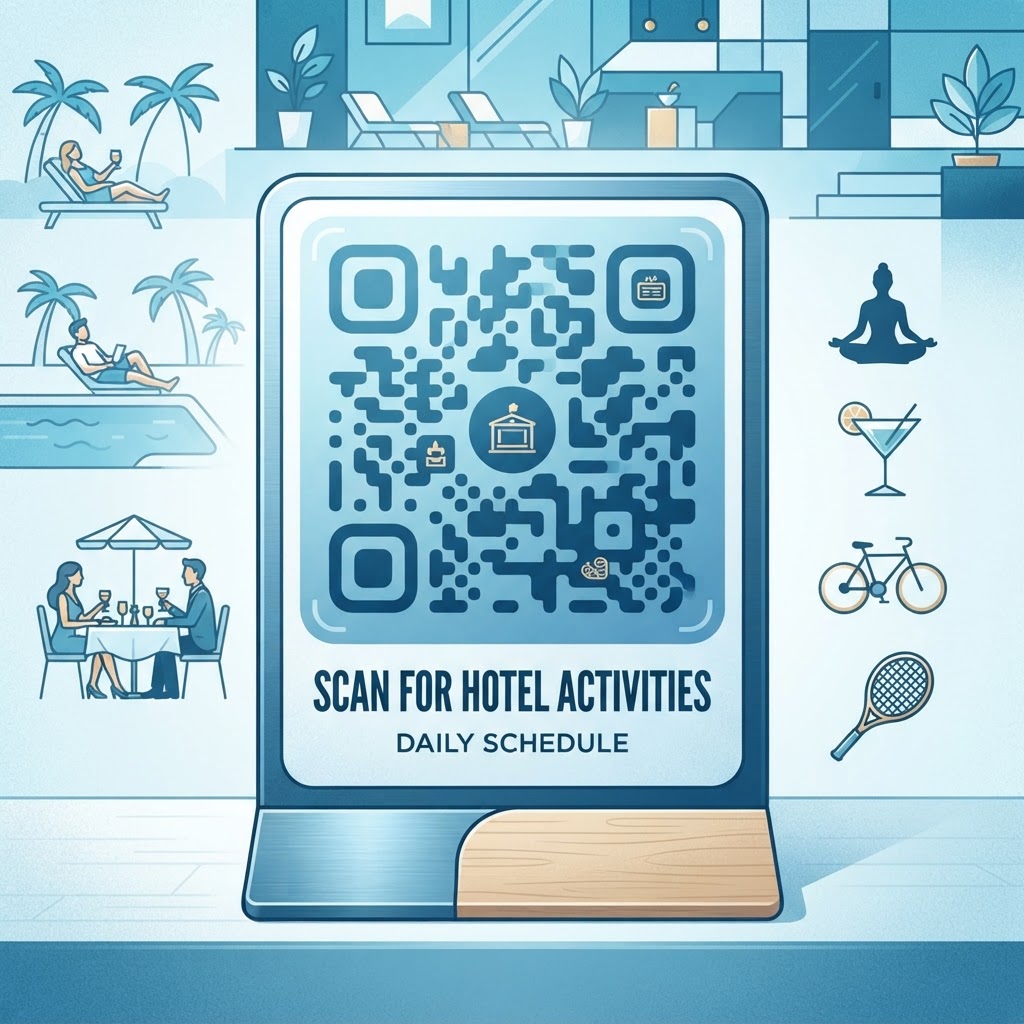
Why Integrating a QR Code for Hotel Activities Schedule Matters in 2026
As we navigate through 2026, the hospitality industry has fully embraced the digital transformation of guest services. The traditional method of relying on printed schedules placed in guest rooms or at the concierge desk has proven to be inefficient and environmentally unsustainable. When a hotel activity changes due to weather or a last-minute schedule adjustment, printing new collateral is costly and time-consuming. By adopting a digital-first approach using a QR code for hotel activities schedule, management can modify information in real-time without needing to replace physical materials. This agility ensures that guests are never misinformed, which directly correlates to higher guest satisfaction and fewer inquiries at the front desk. Furthermore, most smartphones are now equipped with native QR scanning capabilities in their camera apps, meaning no additional software is required for guests to access your offerings. This low barrier to entry makes it an ideal tool for diverse demographics, from tech-native digital nomads to families on vacation. The integration of QR technology allows hoteliers to present a sophisticated, modern image while effectively managing operational overheads. When guests can easily access the full week’s schedule, sign up for activities, and read descriptions, they are more likely to participate in hotel-led initiatives, ultimately driving additional revenue for on-site services like spas, restaurants, and guided excursions. By utilizing tools such as those found on free-qr-code-generator-no-sign-up-no-watermark, hotels can bridge the gap between static print and interactive mobile experiences effortlessly.
How QR Code Technology Works for Hospitality Information Management
At its core, a QR code serves as a gateway between the physical world and the digital landscape. Technically, a QR code is a two-dimensional matrix barcode that stores data, such as a URL, which redirects the user’s mobile browser to a specific destination. In the context of a hotel activities schedule, the QR code functions as a bridge that transports the guest directly to a landing page, a digital PDF, or an interactive calendar. When a guest scans the code using their device’s camera, the phone identifies the embedded link and opens the information in a web browser. This process is seamless and typically takes only a few seconds. The beauty of this technology lies in its ability to support dynamic content. Unlike static QR codes that point to a single file, modern implementations often use dynamic URLs that allow the hotel to update the backend content—such as the daily schedule—without changing the visual QR code itself. This ensures that the physical assets placed in hotel rooms, elevator lobbies, and dining areas remain functional indefinitely. Furthermore, the data captured from scans can provide hoteliers with valuable insights into guest behavior. By analyzing which activities are accessed most frequently, management can make informed decisions about resource allocation and programming. It is vital to understand the technical distinction between static and dynamic codes, as the latter provides the flexibility necessary for a changing hospitality environment. If you are interested in exploring how other digital assets integrate into your operations, you can learn more by checking our guide on qr-code-vs-nfc-tag-comparison, which highlights how different technologies serve unique roles in modern venue management.
A Step-by-Step Guide to Creating Your Schedule QR Code
Creating a QR code for your hotel activities schedule using blueqrcode.com is a straightforward process designed to get your digital presence up and running in minutes. First, gather all your activity information and host it on a reliable platform. This could be a PDF file, a dedicated page on your hotel’s website, or an online scheduling tool like a Google Calendar or a dynamic booking form. Once you have the destination URL for your content, navigate to the qr-code-generator-google toolset to begin the creation phase. Start by selecting the 'URL' category, which is the most versatile option for linking to schedules. Paste your web link into the designated field. The platform will then offer various customization options, allowing you to incorporate your hotel’s branding. You can adjust the colors to match your property’s palette, add a logo to the center of the code, and choose from different pattern styles. Once you are satisfied with the design, generate the code and conduct a test scan to ensure the link redirects properly. Download the final file in a high-resolution format like PNG or SVG, which ensures clarity when printed at various sizes. For hotels that offer diverse amenities, you might also consider creating separate codes for different departments, such as a dedicated schedule for the spa or the kids' club. After generating your code, keep a record of it in your content management system so that you can easily track its deployment. By following these structured steps, you ensure that your guests receive a high-quality, professional, and functional tool that adds value to their stay without compromising on technical reliability or aesthetic appeal.
Best Practices for Deployment: Size, Placement, and Format
Effective deployment is the difference between a high-adoption tool and one that goes unnoticed by guests. When it comes to size, the rule of thumb is that the QR code should be large enough to be easily scanned from a comfortable distance. For a printed table tent in a guest room, a size of at least 2cm by 2cm is recommended. However, for a poster in a lobby or by the pool, the code should be significantly larger to accommodate the distance of the average passerby. Placement is equally critical; place your codes in high-traffic areas where guests have a moment of downtime, such as on bedside tables, elevator doors, the back of room doors, or near the reception desk. Avoid placing codes in areas with poor lighting or where they may be obscured by other promotional materials. Furthermore, consider the context of the guest’s journey. A code on the breakfast table might highlight morning events, while one near the pool might highlight afternoon sports. High-quality print materials, such as matte-finish cardstock, are preferred to minimize glare, which can often hinder the scanning process. Always ensure there is a clear call to action (CTA) surrounding the code, such as 'Scan to See Today’s Activities' or 'Unlock Your Itinerary.' This clarifies exactly what the guest should expect upon scanning, increasing the likelihood of engagement. By following the tips outlined in our resource on qr-code-placement-best-practices, you can ensure your implementation strategy is optimized for maximum visibility and ease of use, making your digital information accessible to everyone, regardless of their tech-savviness.
100% Free — No signup required
Create your QR Code for Hotel Activities Schedule in seconds
Create Free QR Code →Common Mistakes to Avoid in Hospitality QR Deployment
While QR codes are highly effective, common pitfalls can undermine their success. One of the most frequent mistakes is using a dead link. Always verify your URLs before finalizing a batch of printed materials. If your content is hosted on a page that might change, ensure you are using a redirect or a dynamic QR code that allows for URL updates. Another major error is the lack of context. Simply printing a black-and-white square on a wall without any instructions will lead to low scan rates; guests are often hesitant to scan a mystery code. Always provide a clear, concise instruction that explains the value proposition of the scan. Furthermore, some hoteliers fail to ensure that their linked content is mobile-optimized. If the activity schedule directs guests to a non-responsive PDF that requires excessive zooming and scrolling, the user experience will be poor, and they will likely abandon the page. Ensure your scheduling page is formatted specifically for mobile screens with legible font sizes and intuitive navigation. Another mistake is ignoring the aesthetics of the code itself. While complex designs can be fun, they can sometimes cause scanning errors if the contrast is insufficient. Always ensure a dark foreground and a light background. Lastly, do not make the mistake of creating too many separate, disconnected codes for one property. Consolidating your information into one central, well-organized dashboard is far more effective for the guest experience than overwhelming them with a dozen different codes for every minor service. By avoiding these common errors, you create a frictionless experience that feels natural and helpful rather than confusing or cumbersome.
Concrete Use Cases by Industry and Sector
The application of QR codes for activity management extends well beyond the standard city hotel. Consider a large-scale beachfront resort; here, the activities change daily based on tides, guest occupancy, and weather. A QR code placed at the concierge desk, the beach towel kiosk, and the breakfast buffet allows the resort to push notifications or update the schedule at 6:00 AM, ensuring that families know exactly when the surf lessons or sandcastle contests are happening. In the sector of wellness retreats, the schedule is the heart of the experience. A QR code for a yoga studio or spa retreat allows guests to not only view the daily meditation and class schedule but also to link directly to a booking portal to reserve their spot, preventing overcrowding in popular classes. Furthermore, in the conference hotel sector, activities are often tied to specific business events or networking mixers. Providing an interactive, digital agenda via QR code allows organizers to push real-time changes to speakers or breakout room locations, ensuring that all attendees remain synchronized. Even in smaller boutique guesthouses, a QR code can provide a curated list of local, non-hotel activities, acting as a digital concierge. By linking to local maps, restaurant guides, and event calendars, the hotel adds value to the guest’s exploration of the city. Each of these sectors benefits from the immediacy and the ability to personalize the information provided to the guest. By adapting the content to the specific needs of the property, hoteliers can create a tailored experience that drives engagement and satisfaction, solidifying the importance of digital tools in the modern hospitality landscape.
Summary and Next Steps for Your Hotel
As we have explored throughout this guide, the implementation of a QR code for your hotel activities schedule is an essential component of modern hospitality management. By moving away from static print and embracing dynamic, mobile-first solutions, you are not only streamlining your operations but also meeting the evolving expectations of today’s travelers. The process of integrating these tools is accessible, cost-effective, and highly scalable, making it an ideal strategy for hotels of all sizes and service levels. Starting today, perform an audit of your current guest information delivery methods. Identify the pain points where guests are struggling to find information or where your staff is being overwhelmed by repetitive questions. By deploying QR codes strategically—supported by clear calls to action and mobile-optimized content—you can significantly improve the flow of information on your property. Visit blueqrcode.com to begin generating your professional QR codes and take the first step toward a more connected and efficient guest experience. The digital transition is no longer a luxury for a few; it is a necessity for all. By acting now, you position your hotel as a forward-thinking establishment that prioritizes the guest’s convenience above all else. Start small, monitor the engagement, and iterate based on the data you collect. Your guests will appreciate the effort, and your staff will benefit from a more efficient, informed guest population. The future of hotel operations is already here, and it is accessible through a simple scan of a QR code.
No watermark · No expiry · Works on all phones
Your QR code is ready in under 30 seconds.
Generate Free QR Code →