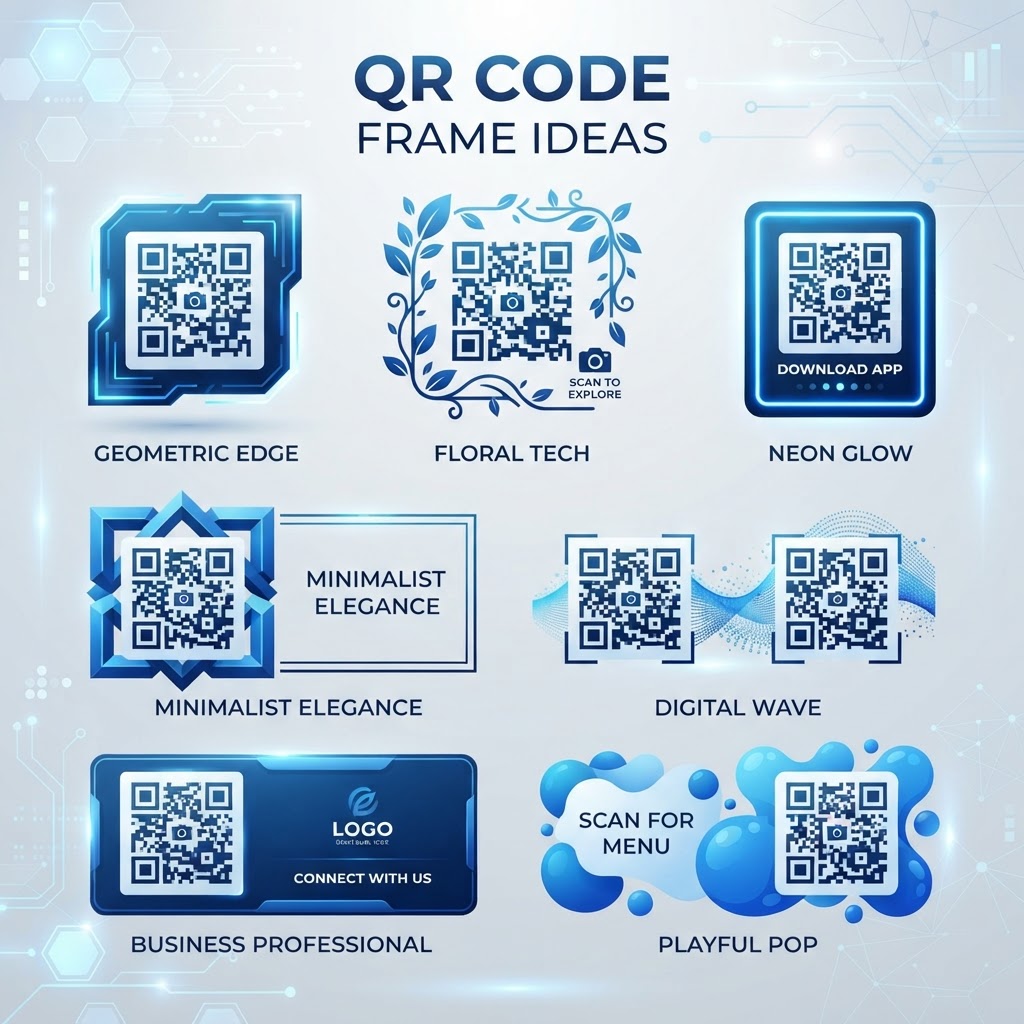
Why QR Code Frames Matter in 2026
In the digital landscape of 2026, user attention is the most valuable currency. A naked QR code floating on a page is easily ignored because it lacks the necessary context to justify the effort of reaching for a smartphone. QR code frames serve as a crucial psychological bridge, transforming an abstract geometric pattern into a recognized tool for a specific task. When a user sees a frame with a clear, concise instruction such as 'Scan to View Menu' or 'Scan to Connect,' the barrier to entry is lowered significantly. This immediate clarity provides the user with an expectation of value, which is essential for conversion.
Moreover, frames allow you to integrate QR technology into your existing brand aesthetic seamlessly. Using consistent color palettes, typography, and iconography within your frame ensures that the QR code feels like a native part of your marketing materials rather than an intrusive technical glitch. This consistency builds trust; when a user feels a QR code is 'official' and secure, they are much more likely to scan it. Conversely, un-framed codes can often appear suspicious or amateurish, which may deter security-conscious consumers. By utilizing the design tools available on BlueQRCode, you can customize your frames to perfectly match the tone of your campaign, whether that is high-end luxury or informal and friendly. As mobile device adoption continues to climb and camera software becomes more intuitive, the role of the frame remains constant: it is the primary motivator for the scan. Without a strong visual frame, you are relying solely on the user's curiosity, which is rarely enough to drive consistent engagement in a busy public space or a crowded digital document.
How QR Code Frames Work Technically
Technically speaking, a QR code frame is a graphical overlay or a surrounding boundary that exists in the visual field alongside the QR matrix. While the QR code itself must adhere to specific data density requirements—consisting of the quiet zone, finder patterns, and data bits—the frame provides the visual packaging that communicates the purpose of the code. When generating a code on our platform, the system ensures that the central matrix maintains high contrast and sufficient error correction, while the frame serves as a secondary layer of visual design. This layer does not interfere with the data density as long as there is sufficient quiet zone around the matrix.
The integration of high-quality framing does not impact the scanability of the code if best practices are followed. Most modern smartphone scanners are designed to identify the finder patterns of a QR code regardless of the framing elements, provided the frame does not overlap or obscure the critical data points. This is why it is vital to use professional tools to manage the layout. By leveraging the infrastructure at BlueQRCode, you ensure that the padding between the QR module and the frame border remains optimal. If the frame is too close, it can confuse the scanner; if it is too far, it loses its visual impact. Technically, the frame acts as a framing device for the camera lens, guiding the user's eye towards the center. Because the data is stored in the modules themselves, the frame remains purely aesthetic and communicative, which is a powerful way to handle dynamic links that may change over time without requiring you to alter the physical print of your marketing materials.
Try it now: Generate a free QR Code Frame Ideas →
Step-by-Step Guide Using BlueQRCode.com
Creating a high-converting QR code with a professional frame is a straightforward process when you utilize the tools at BlueQRCode. Begin by navigating to the dashboard and selecting the specific type of QR code you intend to create, such as a URL, WiFi credential, or vCard. First, input your destination content carefully; if you are directing users to a landing page, ensure the URL is correct to prevent broken links later. Once the base code is generated, the design phase begins where you select your frame style. We offer a variety of standard and custom frames that can be adjusted in terms of border thickness and corner radius. Selecting a frame that complements your brand identity is essential here.
After selecting your frame, the next step involves adding the call-to-action (CTA) text. This text should be short, punchy, and direct. Use action-oriented verbs like 'Scan for Access,' 'Download Now,' or 'View Full Menu.' Ensure the font choice remains legible even when printed at smaller sizes. The color contrast is equally important; avoid light-colored text on light backgrounds or dark text on dark backgrounds within the frame. Once the text is positioned, preview your QR code with a few different mobile devices to ensure the scan experience is smooth and rapid. Finally, export your code in a high-resolution format, such as PNG or SVG, depending on your intended output. Vector formats like SVG are preferred for large-scale printing to ensure the frame does not pixelate, which could otherwise degrade the professional appearance of your marketing asset and potentially frustrate potential scanners.
Best Practices for Deployment: Size, Placement, and Format
The success of your QR code campaign is heavily dictated by how and where you deploy your framed codes. Size is the most common factor that leads to failure; if a QR code is too small, it cannot be read at a distance. As a rule of thumb, the code should be at least one-tenth of the distance from which the scanner is expected to be. In crowded environments, increase the size even further to account for potential user movement. Placement is equally critical—place your code at eye level on posters or at hand level on packaging. Never place a code on a curved surface like a bottle neck or a creased flyer, as the distortion can make the code unreadable to standard smartphone camera software.
Furthermore, the environment matters. Avoid placing codes in areas with high glare, such as behind glass or under direct, harsh lighting, which can cause reflections that obscure the QR modules. In terms of format, always opt for high-contrast color schemes. A dark code on a white background is the industry standard for a reason; it provides the highest possible read success rate. If you are printing on a colored surface, ensure the background behind the code is solid and flat. For digital deployments, ensure the file is exported with enough padding (the quiet zone) to isolate the code from other page elements. Finally, always perform a 'live test' before mass printing. Print a physical sample and scan it with both iOS and Android devices to verify that the framed content loads quickly and reliably in the environment where it will be viewed.
Common Mistakes to Avoid
Many businesses fall into the trap of over-complicating their QR code frames, which leads to poor performance. One of the most common mistakes is 'crowding' the frame with excessive text or complex logos that bleed into the QR quiet zone. Remember, the QR code needs a clear, unobstructed buffer area to be processed correctly. If you try to squeeze a paragraph of text into the frame, you not only make it harder for the user to read but also increase the risk of the QR code failing to scan. Another frequent error is using poor color contrast within the frame design. A frame that is too visually busy or uses 'noisy' patterns can distract the user's eye, preventing them from realizing that they should scan the code in the first place.
Additionally, some creators fail to update their links after the initial deployment. If you have generated a static code, you cannot change the destination URL once printed. Always test your codes periodically if they are on long-term displays, such as in menus or public signage. Do not use extremely low-resolution images for your frames, as this makes the entire campaign look cheap and untrustworthy. A blurred or pixelated frame reflects poorly on the brand. Finally, ensure that your call-to-action actually matches the destination. If the frame says 'Scan for a Discount,' but the link directs to a general homepage, users will feel deceived and bounce immediately. Consistency between the frame’s message and the digital experience is the foundation of user trust and long-term engagement success.
3-4 Concrete Use Cases by Industry
In the restaurant industry, QR code frames are revolutionary for table management and ordering systems. For example, a restaurant can place a framed QR code on the table that says 'Scan to Order' or 'View Our Seasonal Menu.' This eliminates the need for physical, germ-prone menus and allows the establishment to update their offerings in real-time. By utilizing a frame, the restaurant communicates that the code is an official tool of the establishment, not a third-party advertisement. Similarly, in the retail sector, frames can be used on clothing tags to provide product details, styling advice, or even direct links to social media accounts where users can see influencers wearing the items. This adds value to the product and encourages the customer to engage with the brand long after the purchase.
In the real estate sector, 'For Sale' signs equipped with framed QR codes that read 'View Virtual Tour' allow prospective buyers to engage with the property even when the agent is not present. This immediate gratification is a massive advantage in a competitive market. Furthermore, for events or conferences, framed QR codes are perfect for registration desks. A sign with a large, clear frame stating 'Scan to Register' streamlines the check-in process and reduces waiting lines significantly. These diverse use cases demonstrate that framing is not just a design preference but a functional requirement for modern commerce, enabling businesses across sectors to guide their customers seamlessly from the physical world into a curated digital experience that drives loyalty and efficiency.
Summary and Next Steps
The journey toward mastering QR code engagement starts with a fundamental understanding of how users perceive these digital gateways. By incorporating thoughtful, clear, and branded frames, you transform a technical requirement into a sophisticated marketing asset. In this article, we have explored why frames matter in the modern digital landscape, the technical requirements for maintaining scanability, and the practical steps to generate your own designs using our platform. We also highlighted the importance of placement, the pitfalls to avoid, and the versatility of frames across various industries. Remember that the goal of every QR code is to provide a frictionless transition to valuable content, and the frame is the primary tool for creating that expectation.
Your next step should be to audit your current physical and digital marketing materials. Identify where a QR code could add value or simplify a process and begin experimenting with different frames. Do not be afraid to iterate; test different call-to-action texts to see which yields the highest engagement. Use the analytics features available on our platform to track how many scans your codes receive, and refine your approach based on real-world data. Start by creating your first professional-grade code today at BlueQRCode. By focusing on clarity, contrast, and context, you will ensure that your QR codes are not just seen, but scanned and converted, providing a measurable return on your marketing investment and creating a more connected experience for your audience throughout 2026 and beyond.
Related QR Code Guides
Continue exploring practical QR code guides from blueqrcode.com:
No watermark · No expiry · Works on all phones
Your QR code is ready in under 30 seconds.
Generate Free QR Code →