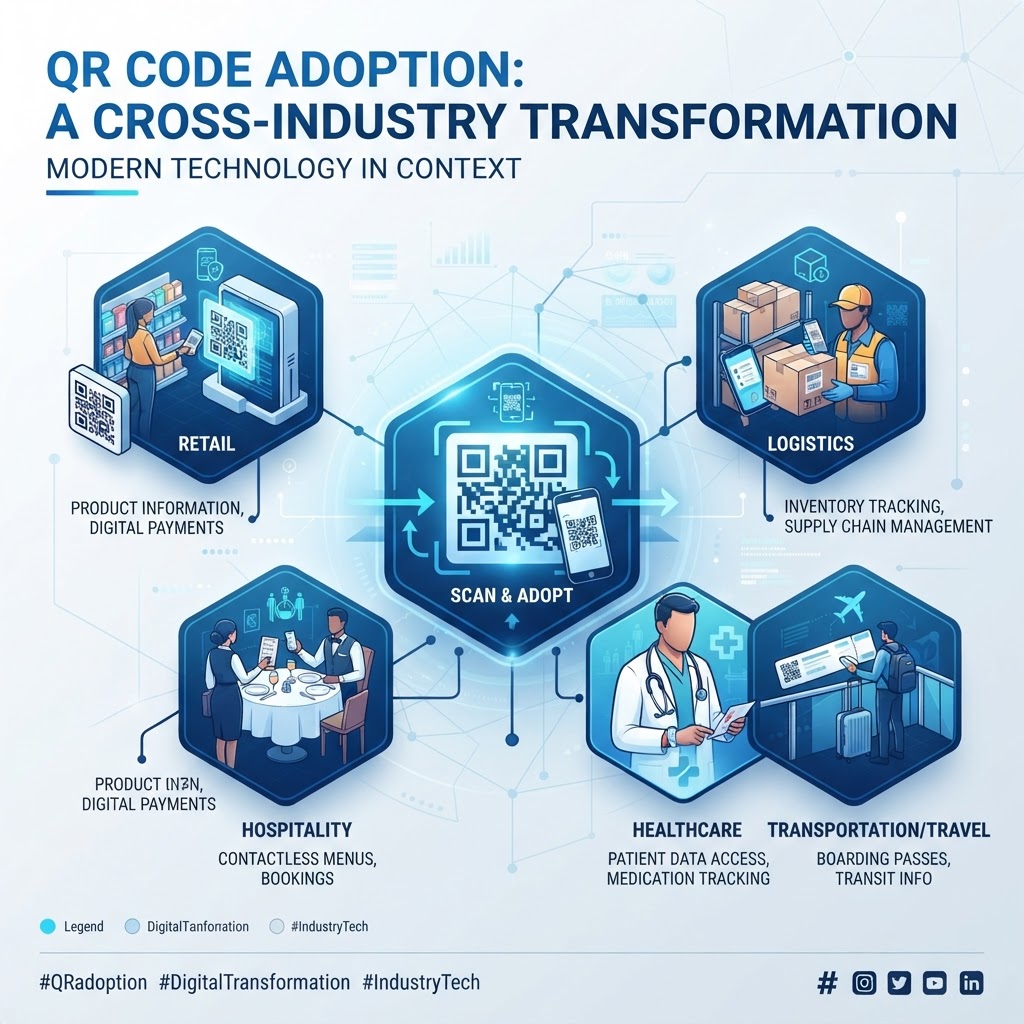
Why QR Code Adoption Matters in 2026
By 2026, the reliance on digital connectivity in the physical world has reached an all-time high. Consumers now prioritize convenience above all else, often favoring touchless interfaces and instant information retrieval. QR code adoption has become a primary driver of this trend, allowing businesses to provide immediate value without requiring users to manually search for URLs or download specific applications. The efficiency gain is substantial; a customer can scan a code to launch a task in seconds, saving time and reducing friction in the customer journey. Many businesses have moved beyond simple vanity links, instead opting for deep-linked experiences that take users directly to specific product pages, reservation portals, or instructional media.
Furthermore, the data-gathering capabilities associated with these codes have transformed marketing analytics. Businesses can track scan locations, device types, and time-of-day interactions, providing a granular view of consumer behavior that was previously difficult to obtain in physical retail environments. This shift toward data-informed decision-making is critical for operational efficiency. When companies understand how their customers engage with print media, product packaging, or in-store signage, they can allocate resources more effectively. For those interested in optimizing their own workflows, learning QR Code Placement Best Practices is an essential first step. As privacy regulations continue to tighten, the first-party data collected through controlled scanning environments becomes even more valuable. Organizations that embrace this technology early gain a significant advantage in personalization and customer retention. Ultimately, the adoption of this technology is not just about keeping up with trends; it is about building a scalable framework that supports the digital-first expectations of today’s modern consumer base.
How QR Code Technology Works Technically
At its core, a QR code, or Quick Response code, is a two-dimensional matrix barcode that stores data in a machine-readable format. Unlike traditional linear barcodes which only hold information horizontally, QR codes encode data both horizontally and vertically, allowing for a much higher capacity of information. The structure includes specific patterns, such as the three large squares in the corners known as position detection patterns, which allow the scanning device to recognize the code’s orientation and perspective regardless of the angle. Within these boundaries, the data is represented by a grid of black and white modules. The density of these modules changes depending on the amount of information stored; a simple URL creates a lower-density grid, while more complex data like a full vCard or a large encrypted string creates a more intricate pattern.
The technical robustness of modern QR codes is largely due to Reed-Solomon error correction. This feature allows the code to be partially obscured, stained, or damaged while still being readable by a camera. Different levels of error correction allow for varying degrees of durability, making them suitable for harsh industrial environments where exposure to dust or wear is inevitable. Most smartphones utilize built-in image processing algorithms that interpret the high-contrast patterns and convert them back into functional digital commands, such as opening a website, launching a WiFi QR Code for Market, or initiating a file download. By understanding these mechanics, users can better prepare their designs to ensure maximum scannability. If you are comparing your options, you might find it useful to check out our QR Code Monkey vs Blue QR Code guide to understand the technical nuances of service selection and data capacity requirements for different enterprise needs.
Try it now: Generate a free QR Code Adoption by Industry →
Step-by-Step Guide Using BlueQRCode.com
Creating a functional and professional-grade QR code is a straightforward process when using an intuitive platform like blueqrcode.com. The journey begins by identifying your specific goal—whether you want to direct a user to a webpage, share contact information, or provide a link to a document. Once the objective is clear, navigate to our generation dashboard where you will find a variety of code types tailored to your needs. Start by selecting the 'Create' function. You will be prompted to enter the destination data, such as a full URL or raw text. It is crucial to verify the accuracy of your input at this stage to ensure the user experience is seamless from the first scan.
After inputting your core data, the next phase involves customization. While a standard black-and-white pattern is sufficient for most applications, adding a brand logo or adjusting the color palette can increase brand recognition and user trust. Be mindful of contrast requirements; the foreground must remain significantly darker than the background to maintain high scannability across diverse lighting conditions. Once your code is customized, perform a test scan with multiple devices to confirm that the redirection works as intended. Downloading your code in a high-resolution format, such as PNG or SVG, is highly recommended if you plan to scale the graphic for print media like billboards or event banners. For more specialized use cases, our platform offers advanced features that allow for dynamic updates to the destination URL without requiring a change to the printed code itself. This flexibility is vital for long-term campaigns where the destination content might evolve, ensuring that your initial investment in print marketing remains relevant throughout the lifespan of your physical assets.
Best Practices for Deployment (Size, Placement, Format)
The physical deployment of a QR code is just as important as the digital content it points to. If a code is too small, printed on a textured surface, or placed in a difficult-to-reach area, the user will likely abandon the attempt to scan it. As a general rule, the size of the QR code should be proportional to the distance from which a user is expected to scan it. For brochures or business cards, a size of at least 2cm by 2cm is standard. For signage in public spaces, posters, or vehicle wraps, the size must be increased significantly to allow for scanning from a distance. The contrast is also a critical variable; always use a high-contrast combination, such as dark ink on a light background, and avoid transparent backgrounds that might inadvertently reduce the contrast against a busy surface.
Placement strategy revolves around user intent and physical ergonomics. A code placed at ankle-height on a store shelf will never get scanned, whereas a code placed at eye level near a point of sale is highly effective. Furthermore, consider the environmental factors; reflective surfaces, such as glossy glass or metal, can cause glare that blinds a smartphone camera. Matte finishes are generally preferred for print collateral to ensure consistent performance. Additionally, always provide a small amount of 'quiet zone' or white space around the perimeter of the code. This border is necessary for the scanner to distinguish the QR code from the surrounding graphic elements. By adhering to these deployment principles, organizations can maximize the scan rate and ensure that their investment in digital-physical integration yields the highest possible return on engagement and conversion metrics across all their physical marketing campaigns.
100% Free — No signup required
Create your QR Code Adoption by Industry in seconds
Create Free QR Code →Common Mistakes to Avoid
Many businesses fall into the trap of over-complicating their QR code strategy, which often leads to poor performance and user frustration. One of the most common errors is failing to provide a clear call-to-action (CTA) next to the code. A user should never have to guess what happens when they scan an image. Clearly state the benefit, such as 'Scan for a 10% discount' or 'Scan to view the product manual.' Without a compelling reason to engage, the scan rate will inevitably drop. Another frequent mistake is neglecting the mobile experience. If your QR code leads to a website that is not mobile-optimized, the resulting bounce rate will negate any efforts made to drive traffic. Always ensure the landing page is responsive, loads quickly, and is tailored for a vertical screen experience.
Additionally, using 'static' codes for marketing campaigns that might need updates is a strategic flaw. A static code encodes data directly into the pattern; if the URL changes, the code must be reprinted. Using dynamic QR codes allows you to update the destination URL or change the content on the back end while keeping the printed code identical. This is essential for long-term branding efforts or menu changes in restaurants. Another oversight is the lack of testing across different devices and scanning apps. Some older phone cameras may struggle with high-density codes, so keep the information payload as light as possible. Finally, ensure that your codes are not placed in areas with no cellular or Wi-Fi coverage. If a user cannot connect to the internet, the functionality of the code is effectively nullified, leading to a negative brand impression.
3-4 Concrete Use Cases by Industry/Sector
In the healthcare sector, QR codes are revolutionizing patient check-in and data management. Medical practices now use codes to allow patients to register for appointments securely on their own devices, reducing the need for shared kiosks or paper forms. This is part of a broader shift toward efficient QR Code for Medical Practices, which improves administrative throughput and hygiene protocols. By scanning a unique code at the front desk, patients can access their portal, verify insurance details, and update health histories in a private, touchless manner. This integration significantly reduces wait times and minimizes administrative errors associated with manual data entry at the clinic front desk.
In the retail and consumer goods space, QR codes are used to tell a brand's story and verify product authenticity. For example, a farm-to-table food brand might place a code on a produce label that, when scanned, reveals the origin of the product, the harvest date, and the specific farm practices used. This transparency builds deep consumer trust and satisfies the demand for ethical sourcing. In real estate, the property sector has adopted the use of codes on 'For Sale' signs to provide instant access to property brochures, high-quality images, and virtual tours. This enables potential buyers to explore a home exterior or look at room dimensions before they even contact an agent, fostering more qualified leads. Finally, the hospitality industry has seen massive adoption for table-side service, allowing guests to view menus and order meals directly from their smartphones, which streamlines kitchen operations and enhances the overall speed of service during busy hours.
Summary and Next Steps
As we have explored, the adoption of QR codes has become a fundamental element of the modern digital strategy. From the foundational technology to the practicalities of physical deployment and the avoidance of common strategic errors, the QR code offers an unparalleled way to connect physical objects with rich digital experiences. By leveraging platforms like blueqrcode.com, businesses across all sectors—from healthcare to retail—can implement these solutions to provide instant value to their customers while gaining valuable insights into user behavior. The ability to bridge the gap between offline and online worlds is a distinct competitive advantage that only continues to grow in importance as smartphone usage becomes more deeply integrated into our daily routines.
Moving forward, your next step should be to audit your existing marketing materials and physical environments to identify touchpoints where a QR code could improve the user experience. Start small by replacing a standard URL with a dedicated QR code on a single piece of print collateral and track the results using our analytics tools. As you grow comfortable with the technology, you can expand your implementation to include more complex integrations, such as automated registration systems, inventory tracking, or personalized customer engagement workflows. Remember that consistency and testing are the keys to long-term success. By maintaining a focus on high-quality design, clear CTAs, and optimized landing pages, you will ensure that your QR code strategy remains an effective driver of growth and operational excellence. Explore the full suite of tools at blueqrcode.com to begin your journey toward a more connected, efficient, and data-driven business model today.
No watermark · No expiry · Works on all phones
Your QR code is ready in under 30 seconds.
Generate Free QR Code →