Why This Matters in 2026
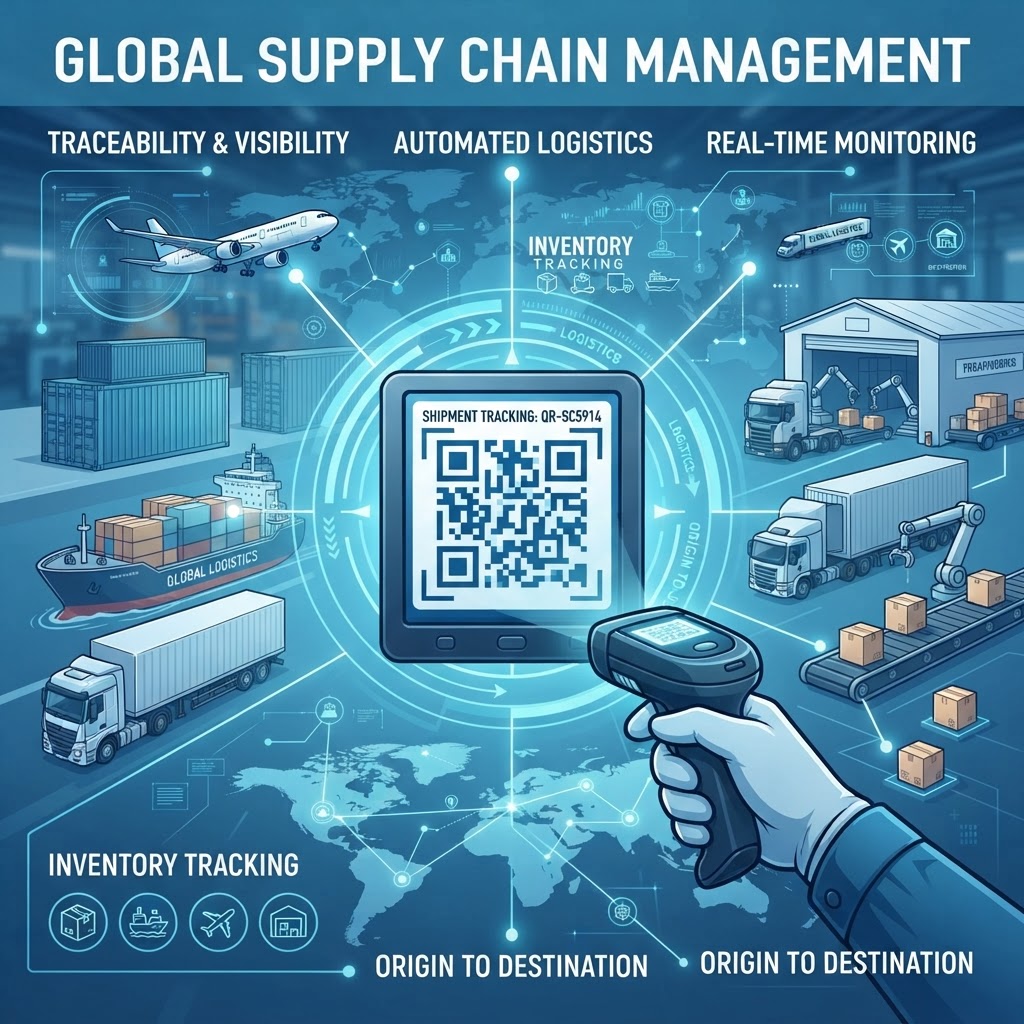
As we navigate 2026, the reliance on digital accuracy within the supply chain has never been higher. Many businesses are moving away from legacy barcode systems that require expensive, proprietary scanners, opting instead for the versatility of mobile-ready solutions. A QR code for supply chain processes acts as a bridge between the physical product and the digital documentation required to manage it. When personnel scan a code affixed to a shipping pallet or a container, they instantly retrieve the specific URL associated with that item's information. This immediacy reduces the time spent searching through folders, spreadsheets, or software dashboards, significantly lowering the potential for misidentification or lost paperwork. The resilience of the modern supply chain depends on speed, and static QR codes offer a lightweight, cost-effective way to provide that speed without requiring complex infrastructure or ongoing subscriptions.
Furthermore, the ubiquity of smartphone technology ensures that virtually any worker in a warehouse, logistics center, or retail environment can verify information instantly. Because most smartphones are equipped with native camera-based QR readers, there is no longer a training barrier for frontline staff. Organizations that adopt these tools create a culture of accountability where scanning at each handoff point is a reflexive action. By reducing the reliance on manual typing, firms can maintain leaner operations and respond to logistical challenges with greater confidence. In a year defined by high consumer expectations for transparency and speed, the integration of QR codes is no longer a competitive advantage—it is a functional necessity for staying operational and organized within the broader global trade network.
How It Works Technically
The technical architecture behind using a QR code for supply chain management is elegantly simple. A QR code is essentially a two-dimensional matrix barcode that stores binary data. When generated using a tool like How to Make a QR Code for a Product, the code translates alphanumeric text, such as a direct URL link, into a high-contrast pattern of squares. In a logistics environment, this pattern represents a fixed destination—a URL—that holds the static information regarding the shipment. When a worker scans the code, their device interprets the visual pattern, translates it into the specified web address, and opens the corresponding information page in their mobile browser. This process is entirely decentralized, meaning it does not rely on a closed-circuit hardware loop to function correctly.
From a technical standpoint, the reliability of this system relies on the "Error Correction Level" of the QR code. When a code is generated, the underlying algorithm adds redundant data that allows the image to remain scannable even if part of the surface becomes damaged or obstructed during transit. For supply chain applications, this is vital. Warehouses are environments where grease, dust, and physical impact are constant variables. By choosing a high-error-correction setting during the generation phase, you ensure that the integrity of the data transmission is maintained even if the label experiences minor wear. This makes the static QR code a remarkably robust choice for inventory tracking, providing a low-maintenance, high-availability solution that functions across varied environments without the need for expensive software integration or proprietary, locked-in scanning systems.
Try it now: Generate a free QR Code for Supply Chain →
Step-by-Step Guide Using blueqrcode.com
Generating the correct assets for your supply chain is a straightforward process when utilizing a reliable, no-nonsense tool. At blueqrcode.com, the focus is on providing a streamlined experience for creating static QR codes that serve your logistical needs. First, gather the specific URLs you intend to link to each product, bin, or shipping manifest. Ensure these URLs are hosted on your company’s internal network or a secure cloud repository accessible to authorized staff. Navigate to the generator tool and select the URL option. Paste your target link into the field provided. The system will then process this link and present you with a preview of the image. You may customize the visual aesthetic of the code by adjusting the foreground color, though it is highly recommended to maintain a high-contrast ratio—black or dark blue on a white background is the industry standard for optimal scan success.
After you are satisfied with the look, proceed to download the high-resolution file. Choosing a vector format like SVG or a high-quality PNG is recommended for printing, as these formats ensure that the code remains crisp when scaled for different label sizes. Once the file is generated, incorporate the QR code into your existing labeling software. If you need assistance with specific use cases, you might want to review our guidelines on QR Code Placement Best Practices to ensure your labels are applied in positions where they are easily reachable and protected from common handling hazards. By following this repetitive, reliable workflow, you can generate hundreds of unique identifiers for your inventory without incurring ongoing software licensing costs or managing complex, proprietary, and potentially fragile database-linked dynamic systems.
Best Practices for Deployment (Size, Placement, Format)
Strategic deployment is the cornerstone of a functional supply chain. The size of your QR code must be relative to the distance from which the scan will occur. For a warehouse worker scanning labels at arm's length, a code measuring at least two centimeters by two centimeters is usually sufficient. However, if the code needs to be scanned on a high-shelf pallet from a distance of two meters, the size must be scaled upward accordingly. Placement should always prioritize clear line-of-sight; avoid wrapping QR codes around corners or placing them on highly reflective surfaces, as the glare can interfere with the camera's ability to focus on the code pattern. For more on optimizing physical asset labeling, consider looking at resources regarding QR Code for Supermarkets, which provide insight into how high-volume environments manage complex labeling hierarchies effectively.
The physical format of the label itself is just as critical as the code design. In harsh environments, standard paper stickers will degrade quickly. Instead, look to use thermal transfer labels with an outdoor-rated adhesive or synthetic materials like polyester that resist moisture, humidity, and abrasion. For pallets that are expected to stay in storage for long periods, consider using lamination or protective clear sleeves over the label to prevent the code from fading or being scratched during frequent handling. Always conduct a test scan with multiple different mobile devices under varying lighting conditions before committing to a bulk print run. A code that scans perfectly in an office fluorescent environment may fail in the low-light conditions of a cold storage facility, so ensure your deployment testing accounts for the reality of your specific workspace layout and ambient lighting profile.
Common Mistakes to Avoid
One of the most frequent errors businesses make when integrating QR codes into their supply chain is creating overly dense, complex codes. Because we are using static QR code generators, the URL you embed defines the code density. If your URL is excessively long and contains complex parameters, the resulting QR code pattern will be very intricate, requiring a higher level of precision for a camera to resolve. To avoid this, use a URL shortener or create concise, clean directory structures on your server. A simpler, lower-density pattern is much easier to scan, especially in fast-paced environments like loading docks where a worker might be moving while attempting to capture the information. Complexity is the enemy of speed, and in the supply chain, speed is the primary objective.
Another common mistake is neglecting the "quiet zone." Every QR code requires a clear white border around it, known as the quiet zone, which provides the scanner with the necessary spatial context to identify where the code begins and ends. If this margin is cropped, covered, or filled with nearby text or graphics, the scanner will fail to process the code. Additionally, businesses often fail to standardize the labeling workflow across different facilities, leading to a fragmented system where different warehouses use different label sizes or adhesive types, leading to confusion and hardware errors. Standardize your templates and ensure that the process for generating and applying these codes is documented. This consistency ensures that any worker moving between facilities can interact with the system instinctively, without needing to relearn the scanning procedure based on the specific location's idiosyncratic labeling preferences.
3-4 Concrete Use Cases by Industry/Sector
In the pharmaceutical sector, QR codes are indispensable for ensuring chain-of-custody for temperature-sensitive materials. By placing a static code on a cold-chain box, staff can instantly access the latest handling instructions or the specific batch testing documentation linked to that shipment. This ensures that every handler knows exactly how to manage the product, reducing the risk of spoilage due to incorrect storage duration or temperature settings. In the automotive parts manufacturing sector, QR codes affixed to engine components allow workers to verify technical specifications instantly during assembly. Instead of flipping through heavy binders, the technician scans the component code, which opens a simple web page containing torque requirements, part compatibility, and installation warnings. This speeds up assembly lines and ensures the finished product meets all safety standards.
For the agricultural sector, the movement of bulk goods requires clear tracking of origin. A farm-to-table operation can utilize QR codes to log when and where a batch of produce was harvested, its weight, and its destination. This transparency is vital for quality control and batch management, allowing the business to maintain records without needing specialized tracking hardware in the field. Lastly, in the retail distribution space, QR codes are used to simplify inventory cycle counts. When a manager performs an audit, they scan the bin location and the product, effectively updating their paper-based count sheet with the exact reference needed for reordering or reallocation. By removing the need to type out serial numbers or product descriptions manually, these sectors demonstrate how static QR codes create a reliable, cost-effective framework that supports high-velocity operations across vastly different logistical requirements, ensuring information is always at the fingertips of those who need it most.
Summary and Next Steps
The integration of a QR code for supply chain management represents a logical, cost-effective step toward modernizing logistics without the burden of excessive overhead. By utilizing the static generation tools available at blueqrcode.com, businesses can achieve immediate improvements in operational accuracy and data accessibility. We have covered the fundamental technical principles, the importance of physical deployment, and the necessity of avoiding common pitfalls like code complexity and quiet zone violations. The transition to this system does not require a complete overhaul of your existing infrastructure; rather, it complements your current processes by providing a universal access point for information that previously existed only in siloed spreadsheets or paper files.
Your next steps should begin with a controlled pilot program. Identify one small area of your supply chain—perhaps a specific warehouse aisle or a single product category—and implement QR codes for tracking purposes. Observe how your staff interacts with the system, gather feedback on the scanning speed, and monitor the durability of the labels in your specific environment. Once you have validated the process, scale the implementation to cover more segments of your operation. As you expand, maintain your documentation to ensure that every label adheres to your established standards. By taking this incremental approach, you ensure a smooth adoption that delivers immediate, tangible benefits to your logistics workflow. With the right planning and consistent execution, your supply chain will become faster, more transparent, and significantly more resilient to the challenges of modern trade.
No watermark · No expiry · Works on all phones
Your QR code is ready in under 30 seconds.
Generate Free QR Code →