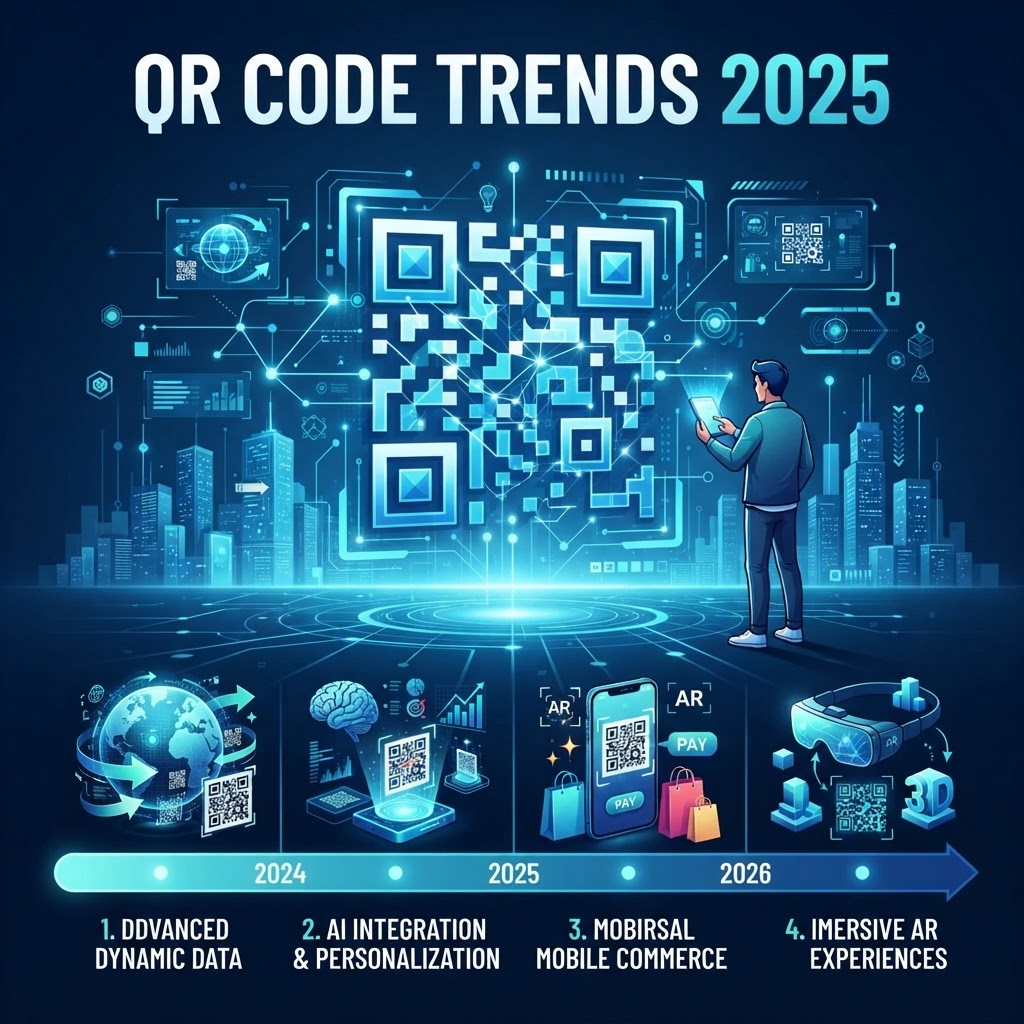
Why QR Code Trends Matter in 2026
In 2026, the digital and physical worlds are more intertwined than ever before. QR codes serve as the primary bridge, acting as the silent, efficient conduits that transport users from physical storefronts or printed materials into high-conversion digital ecosystems. Many businesses have moved past the phase of seeing QR codes as a novelty and are now treating them as core infrastructure for customer relationship management. The reliance on most smartphones to interpret these codes natively, without the need for additional software, has lowered the barrier to entry significantly. This ubiquity means that a well-placed code is one of the most effective ways to drive traffic directly to a specific action, whether it is a payment portal, an information page, or a booking system.
Furthermore, as data privacy regulations become more stringent, QR codes provide a localized and permission-based method of data exchange. Companies are finding that consumers are more willing to scan a code to unlock exclusive content or personalized services than they are to navigate through complex search engine results. By understanding these trends, organizations can pivot their marketing strategies to prioritize low-friction entry points. As we analyze the trajectory for 2026, it is clear that the focus is shifting toward personalization and dynamic updates. Gone are the days of static, unchangeable codes. Today, intelligence lies in the ability to adapt the destination URL on the fly based on user intent, time of day, or physical location. Staying ahead of these trends is not just about keeping up with technology; it is about respecting the user's time by providing the shortest possible path to the information they need.
How QR Code Technology Works Technically
At its core, a QR code—or Quick Response code—is a two-dimensional matrix barcode that stores information in a grid of black and white modules. Unlike traditional 1D barcodes that read information linearly, QR codes use a dual-axis approach, allowing them to store significantly more data in a smaller footprint. The technology relies on specific patterns, including the three large squares at the corners that serve as alignment markers. These markers tell the scanning device exactly where the grid starts, ends, and how it is oriented. Within the grid, the remaining modules represent binary data. Depending on the version and the error correction level, these codes can hold thousands of characters, including URLs, plain text, or contact information.
Error correction is a vital technical component. High-quality generators ensure that even if a QR code is partially obstructed, blurred, or damaged, the underlying data remains readable. This is achieved through Reed-Solomon error correction, which uses redundant data to reconstruct missing or damaged parts of the matrix. This is why you can often place a logo in the center or print a code on a curved surface while maintaining full functionality. When a smartphone camera scans a code, it processes the light-to-dark contrast and deciphers the internal patterns, instantly reconstructing the data. If the data is a URL, the phone’s OS triggers the browser to navigate to that address. For specialized tasks, such as QR Code vs Nfc Tag Comparison scenarios, understanding the difference in payload and triggering is essential for developers looking to optimize their deployment strategies across physical touchpoints.
Try it now: Generate a free QR Code Trends 2025 →
Step-by-Step Guide Using BlueQRCode.com
Utilizing a professional, free tool like blueqrcode.com simplifies the process of creating functional, high-resolution QR codes that are ready for any medium. The platform is designed for efficiency, ensuring that users can generate, customize, and deploy their codes in minutes. First, define the purpose of your code. Whether you are generating a code for a website, a document, or contact details, the platform provides distinct pathways. Simply navigate to the home page and select your desired output type from the menu. You will be prompted to enter the specific data, such as a URL, email address, or text, ensuring you double-check for accuracy before proceeding.
After entering the content, move to the customization stage. You can adjust the foreground and background colors to match your brand identity, though it is crucial to maintain enough contrast for scanners to operate effectively. If your business needs specific guidance on deploying these, check out the resources for QR Code Placement Best Practices to ensure your final design is professional. Once the design looks correct, perform a test scan with multiple devices to confirm that the redirection works as expected in various lighting conditions. Finally, download the code in a high-resolution format, such as PNG or SVG, which allows for scaling without losing clarity. This high-resolution file is ideal for professional printing. By maintaining this systematic approach, you minimize errors and ensure that your digital assets serve your customers reliably throughout their entire journey with your brand or business.
Best Practices for Deployment: Size, Placement, and Format
Deploying QR codes successfully requires a deep understanding of physical ergonomics and digital accessibility. The most common pitfall is printing a code too small for the user’s camera to focus on effectively. As a general rule, the minimum print size for a standard code should be at least 1 inch by 1 inch. If the code is placed at a distance, such as on a billboard or a tall window, the size must increase proportionally to the distance from which a user would typically scan it. Another critical factor is surface reflectivity. Avoid placing codes on high-gloss materials that generate glare, as the camera lens will struggle to distinguish the black-and-white grid from the reflected light of the surroundings.
Placement is equally important for user experience. A code placed at ankle level or in a high-traffic area where the user cannot stand still for a second is destined for failure. Codes should be placed at eye level or on flat surfaces that allow for a comfortable, steady interaction. Furthermore, the format should be appropriate for the intended medium. For print marketing, use high-resolution files (vector graphics like SVG are best). If the code is for a digital display, ensure the pixels are crisp. Never place a QR code in an area with poor network connectivity, as the user will be unable to load the landing page, leading to frustration. By following these refined principles, you turn a passive marketing element into an active, high-performing engagement tool that consistently bridges the gap between your physical and digital presence, ensuring a seamless user experience every time.
Common Mistakes to Avoid in 2026
In the evolving digital landscape, repeating the mistakes of the past is the fastest way to lose engagement. One of the most frequent errors is failing to use a dynamic QR code when the situation demands flexibility. A static code is permanent, meaning if you change your landing page URL, the code becomes broken and useless. Businesses should almost always opt for dynamic codes, which allow the underlying URL to be changed at any time without needing to reprint the physical asset. Another grave mistake is the lack of a clear call-to-action (CTA) surrounding the code. Users rarely scan a code just to see what happens; they need a reason, such as 'Scan to view our new collection' or 'Scan to save your seat.' An empty code with no instructions is effectively invisible to the average customer.
Furthermore, many businesses overlook the destination experience. If you send a user to a mobile-unfriendly page, a broken link, or a slow-loading site, you have wasted a prime interaction opportunity. Ensure the landing page is optimized for speed and specifically designed for the mobile screen. Additionally, testing should not be a one-time event. You should consistently perform a Test QR Code check before any major distribution. If the code is printed on thousands of flyers, a single broken link is a costly oversight that cannot be easily fixed. Finally, avoid over-cluttering the area around the code. If the code is surrounded by excessive visual noise, it becomes difficult for the camera software to isolate the grid, leading to scan failures that discourage future interactions.
Concrete Use Cases by Industry
The application of QR codes has matured significantly, with specific sectors leading the way. In the hospitality industry, restaurant operators have shifted from static menus to interactive ordering systems. This allows for real-time inventory management, where items can be hidden from the menu as soon as they run out, preventing customer dissatisfaction. In the retail sector, codes are used for 'endless aisle' shopping, where a customer can scan a physical item in a store to see the full range of colors, sizes, or related products available online, which can then be shipped directly to their home. This maximizes the utility of small retail spaces and improves sales conversion.
For the professional services sector, such as accounting or real estate, QR codes are revolutionizing the traditional business card. Instead of manually typing in a phone number, a potential client can scan a code to instantly save all contact information into their address book. This is particularly effective for real estate agents who can link their business cards to a custom virtual tour of a property. Similarly, in the events industry, codes are used for rapid check-in, where attendees scan their unique code to print badges or receive event schedules, drastically reducing wait times. Each of these cases illustrates the power of QR codes to solve specific, recurring pain points by digitizing manual tasks and providing immediate, value-added content that benefits both the business and the customer, creating a frictionless loop of engagement and utility.
Summary and Next Steps for Your Strategy
As we look forward to the remainder of 2026, it is evident that QR codes are an indispensable component of the modern digital toolkit. By adopting a strategy that prioritizes dynamic content, user-centric placement, and consistent performance testing, businesses can unlock significant value. The goal is to make every scan count. Whether you are improving customer convenience, gathering feedback, or streamlining operational logistics, the flexibility provided by dynamic QR codes ensures your efforts remain relevant regardless of how your digital strategy changes. Remember that the technology itself is neutral; its success depends entirely on how effectively you integrate it into the customer journey. Now is the perfect time to audit your current physical assets and identify opportunities for integration. Start by identifying the most frequently asked questions or the most common physical touchpoints in your business and create targeted QR code solutions to address them. Use a reliable generator like blueqrcode.com to ensure your codes are high-quality, professional, and easily trackable. By continuously analyzing the scan data and iterating on your landing pages, you will build a robust engagement framework that serves your business for years to come. Your next step is to choose one high-impact area—such as your business card, a marketing flyer, or a storefront display—and deploy a new, optimized QR code today to start measuring the impact on your conversion rates.
No watermark · No expiry · Works on all phones
Your QR code is ready in under 30 seconds.
Generate Free QR Code →