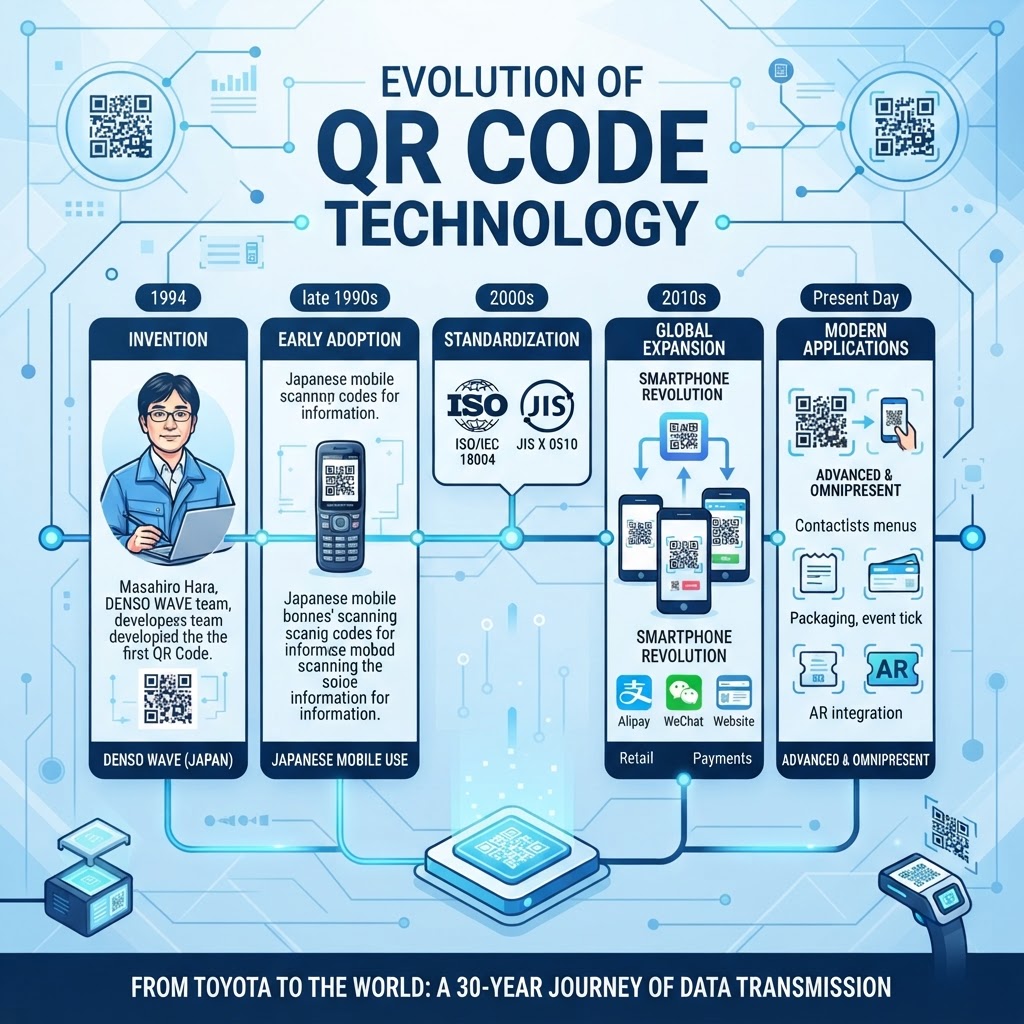
1. Why the Evolution of QR Codes Matters in 2026
In 2026, the QR code is no longer just a trend; it is an essential component of the consumer-brand relationship. The evolution of this technology reflects the broader shift toward seamless, touchless, and instantaneous information exchange. When we look at the timeline of the QR code, we see a transition from static, industrial utility to a dynamic, high-engagement marketing asset. For businesses today, the significance lies in the democratization of access. Modern users have been conditioned to pull out their smartphones to bridge the gap between a print advertisement and a digital landing page, and they expect this action to be frictionless.
As we move further into the mid-2020s, the reliance on these symbols has deepened because most smartphones now feature native camera integration that instantly recognizes and decodes them without specialized third-party applications. This widespread hardware support has transformed the QR code from a 'tech-savvy' tool into a universal language of interaction. Businesses that understand this history are better equipped to leverage current capabilities, such as tracking analytics and dynamic content updates. By utilizing a robust platform like blueqrcode.com, companies can ensure their customer journeys remain streamlined. The importance of this history is not just academic; it is about recognizing the pattern of adoption. We have moved from simple URL redirection to complex, multi-functional data packets that can trigger anything from How to Make a QR Code for WiFi setups to secure payment authentication, making them an indispensable tool in the current digital ecosystem.
2. How QR Codes Work: The Technical Foundation
At its core, a QR code—or Quick Response code—is a two-dimensional matrix barcode. Invented in 1994, it was designed to allow high-speed component scanning. Unlike traditional one-dimensional barcodes that can only be read horizontally, QR codes store information both horizontally and vertically, allowing for a significantly higher density of data. This matrix structure is composed of black modules arranged on a square, white background. The specific patterns, including the three large squares at the corners, serve as 'finder patterns,' which allow the camera software to identify the orientation, size, and perspective of the code regardless of the angle from which it is scanned.
Technical evolution has introduced various error correction levels. These levels allow the code to remain scannable even if parts of it are damaged or obscured. This is achieved through the Reed-Solomon error correction algorithm, which is a sophisticated mathematical process that enables the scanner to reconstruct missing data based on the remaining information. As the complexity of data stored within the QR code increases, the grid size expands. For example, a simple URL requires a smaller module count than a large vCard or a complex instructional document. This versatility is what allows developers and businesses to encode diverse data types, such as SMS, email addresses, or coordinates, into a single, compact image. Understanding these technical underpinnings is vital for any business attempting to optimize their own campaigns. When you use a generator, you are effectively configuring these data blocks to ensure maximum readability for the widest range of scanning devices, ensuring that your digital content is accessible to all your potential customers regardless of their hardware specs.
Try it now: Generate a free QR Code History and Evolution →
3. Step-by-Step Guide to Using BlueQRCode
Creating a functional, attractive QR code is a straightforward process when utilizing the right tools. At blueqrcode.com, we have designed an interface that simplifies the technical complexity mentioned in the previous section. First, define the purpose of your QR code. Are you directing users to a website, a PDF document, or perhaps a contact file? If you are creating a digital business card, you might want to look into QR Code vCard Business Card Digital as a specialized method for networking. Once you have identified your goal, select the appropriate input field on our platform. The system will then prompt you to enter the relevant information—this could be a full URL, a text block, or a file upload.
After entering your data, you can customize the appearance of your code. While standard black-and-white codes are the most recognizable, many businesses opt for branded designs that incorporate specific color schemes or central logos to improve brand recognition. However, be cautious with excessive customization, as extreme contrast reduction can impact scannability. Once the design is finalized, the platform generates the code in a high-resolution format, such as PNG or SVG. We recommend testing your generated code with multiple devices before a full-scale deployment. This 'sanity check' is a best practice often overlooked, but it ensures that your printed materials—whether they are flyers, business cards, or product labels—function correctly in the real world. By following these structured steps, you eliminate the guesswork and ensure a high-quality, professional result that reflects positively on your brand’s commitment to accessibility and innovation.
4. Best Practices for Deployment: Size, Placement, and Format
Deploying a QR code effectively is as much about the physical context as it is about the digital data it holds. If a user cannot scan it comfortably, the conversion path is effectively broken. Size is the primary factor in physical deployment. A QR code placed on a massive billboard requires different dimensions than one printed on a standard business card. As a rule of thumb, ensure the code size is proportionate to the scanning distance. If a user is scanning from three feet away, the code should be sufficiently large to remain clear to the camera lens. Another critical consideration is placement: avoid curved or highly textured surfaces that may distort the pattern and render it unreadable by standard smartphone cameras.
Format also plays a significant role in successful deployment. For high-quality printing, vector formats like SVG are preferred because they can be scaled to any size without losing clarity. For web applications, raster formats like PNG are generally sufficient. Furthermore, consider the surrounding environment. Lighting conditions and contrast are paramount. A dark code on a dark background will fail, as will a code placed behind reflective glass or plastic that causes glare. Always refer to QR Code Placement Best Practices for detailed advice on how to integrate these codes into your physical environment. By prioritizing user comfort and technical feasibility, you maximize the likelihood that your audience will actually engage with the content. Remember, the best QR code is the one that is scanned without a second thought or effort on the part of the user, serving as a silent, efficient bridge between your offline assets and your online ecosystem.
100% Free — No signup required
Create your QR Code History and Evolution in seconds
Create Free QR Code →5. Common Mistakes to Avoid When Using QR Codes
Despite their simplicity, many businesses inadvertently sabotage their campaigns by making avoidable errors. One of the most common pitfalls is neglecting the mobile experience. If your QR code redirects to a desktop-optimized landing page, the user experience will be poor, leading to high bounce rates. Always ensure that the destination content is fully responsive and optimized for mobile viewing. Another frequent mistake is overcomplicating the code design. While branded QR codes are aesthetically pleasing, users may struggle if you add too many design elements that encroach upon the 'quiet zone'—the white space surrounding the code. If your scanner cannot find the boundaries of the code, it will fail to initialize the scan.
Furthermore, failing to use dynamic QR codes is a common oversight. Static codes cannot be updated after they are printed. If you change your website URL or move your content, a static code becomes a dead link. Dynamic codes, on the other hand, allow you to update the destination URL while the printed code remains the same. This flexibility is invaluable for long-term marketing campaigns. Finally, lacking a clear 'call to action' near the code is a massive missed opportunity. A stray QR code without context often goes ignored. You must tell the user what they will get by scanning—such as 'Scan for 10% off,' 'Download our app,' or 'View the full menu.' Without a clear value proposition, the curiosity gap alone is often not enough to compel the average user to take action, rendering even the most perfectly designed code ineffective in driving business results.
6. Concrete Use Cases by Industry and Sector
The versatility of the QR code allows it to be applied across diverse sectors, each finding unique ways to improve efficiency and customer experience. In the hospitality sector, the most prevalent use case involves digital menus. By placing a code on a table, restaurants can provide instant, updated access to their offerings, which is particularly beneficial for fluctuating inventories. Similarly, for events, using a code for QR Code for Conference Registration streamlines check-in processes, reducing wait times and manual data entry errors. The retail industry also benefits significantly, particularly when brands use a How to Make a QR Code for a Product strategy, where the code provides detailed ingredient lists, sustainability information, or even assembly instructions for complex items.
Healthcare and professional services have also adopted QR codes for secure, touchless interactions. Medical practices often utilize codes to link patients to intake forms or appointment scheduling systems, significantly reducing the amount of paper handling required. In the world of real estate and personal branding, professionals use QR codes on physical business cards to link directly to digital contact files or LinkedIn profiles, making networking much more efficient. Even non-profits have embraced the technology; for example, a PDF QR Code for Nonprofit can instantly provide a donor with a brochure or a financial report, simplifying the information flow and building trust through transparency. By analyzing these diverse implementations, businesses can see how the technology adapts to specific needs, proving that its utility is bounded only by the creativity of the implementation strategy.
7. Summary and Next Steps for Your Strategy
The journey from the QR code’s 1994 inception to its status as a 2026 digital staple is a testament to the power of simple, effective technology. We have seen how these codes evolved from industrial tracking devices into the primary bridge between physical marketing and digital engagement. To succeed today, businesses must move beyond seeing the QR code as a novelty and start treating it as a core component of their communication strategy. By leveraging the technical insights and best practices outlined in this guide, you can ensure that your QR code initiatives are both professional and highly effective at converting passive observers into active participants in your digital journey.
The next step for your business is to conduct an audit of your existing physical marketing materials and identify touchpoints where a QR code could add value. Whether it is adding a code to your product packaging for customer feedback, or digitizing your business networking, the potential for growth is significant. We invite you to explore the resources at blueqrcode.com, where you can find tools to create, manage, and optimize your QR codes for any use case. As you integrate this technology into your operations, always keep the end-user experience at the forefront—focus on clarity, accessibility, and clear, compelling calls to action. The QR code ecosystem is mature and ready for your next innovation. Start by generating your first professional-grade code today and see how this bridge between the physical and digital can transform your business engagement in the months and years ahead.
No watermark · No expiry · Works on all phones
Your QR code is ready in under 30 seconds.
Generate Free QR Code →