1. Why QR Code Usage Statistics Matter in 2026
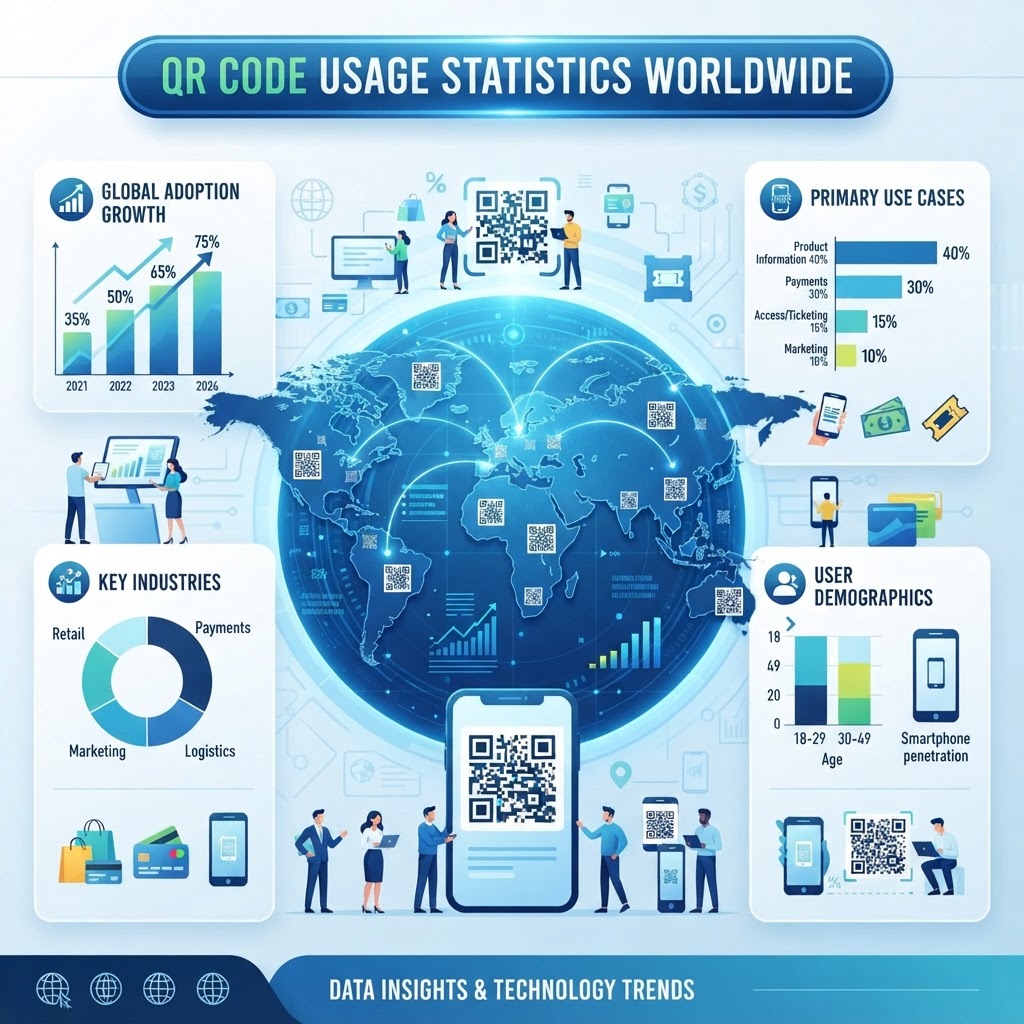
In the year 2026, the saturation of smartphone technology has reached unprecedented levels, effectively turning every consumer into a potential user of QR technology. The global statistics reveal that a vast majority of the population now interacts with QR codes on a weekly basis, whether to access a digital menu, verify product authenticity, or facilitate secure digital transactions. This widespread adoption is a direct result of the ubiquity of high-speed mobile internet and the inherent trust users place in scanning codes that lead to verified digital destinations. For businesses, these statistics indicate that the hurdle of user education has largely been cleared; potential customers now possess the muscle memory to point their camera at a code without hesitation. This shift in behavior makes QR codes one of the most cost-effective and low-friction marketing assets available. By analyzing how different demographics engage with scanning interfaces, many businesses can now tailor their digital experiences to match intent-driven traffic. Whether you are aiming to increase app downloads, simplify payments, or drive traffic to a landing page, understanding that the barrier to entry is virtually zero is critical. Furthermore, the data suggests that users are significantly more likely to engage with a QR code than to manually type a complex URL into their browser, reducing bounce rates and increasing the likelihood of conversion. The evolution of this technology, often discussed in resources like QR Code Placement Best Practices, proves that QR codes are no longer just a trend but a foundational requirement for any organization seeking to maintain relevance in a hyper-connected, mobile-dominant economic landscape.
2. How It Works Technically
The technical foundation of a QR code—or Quick Response code—is based on a sophisticated matrix barcode architecture that stores information in a two-dimensional format. Unlike traditional linear barcodes, which carry data horizontally, a QR code stores data both horizontally and vertically, allowing for a significantly higher density of information in a much smaller physical footprint. At its core, the code is composed of black squares arranged on a white grid, which can be interpreted by the image-processing software present in almost every modern smartphone camera. The data contained within these pixels can be encoded in various formats, such as numeric, alphanumeric, byte/binary, or Kanji, making it versatile enough to handle everything from simple URLs and WiFi credentials to complex vCard contact information or encrypted authentication tokens. Crucially, QR codes incorporate error correction technology, which allows the code to be partially obscured, damaged, or printed on uneven surfaces while still remaining scannable. This robustness is what makes them so reliable for outdoor advertising, retail packaging, and print media. As a user scans the code, the decoder identifies the three corner patterns, known as finders, which define the orientation and scale of the image. Once the orientation is established, the decoder reads the remaining data grid and executes the command—such as opening a browser to a specific URL, initiating a phone call, or prompting a file download. Platforms like blueqrcode.com ensure that the codes generated are compliant with international ISO standards, ensuring maximum compatibility across all devices and operating systems currently on the market worldwide.
3. Step-by-Step Guide Using blueqrcode.com
Creating professional, high-functioning QR codes is a streamlined process when utilizing a reliable platform like blueqrcode.com. The process begins by identifying your specific goal: are you looking to share a website link, a PDF document, or perhaps social media profiles? Once you have established your objective, the first step is to visit the blueqrcode.com homepage, which offers a user-friendly interface designed for rapid deployment. You will be prompted to select the type of content you wish to embed, such as a URL, a vCard, or text. For example, if you are setting up a professional contact system, you might explore the options detailed in QR Code vCard Business Card Digital. After inputting your data, the platform allows for a degree of customization regarding the visual appearance of the code. While standard black and white codes offer the highest scan success rate, some businesses choose to adjust colors or incorporate subtle branding elements to match their corporate identity. Once the design is finalized, you should always perform a test scan to verify that the destination URL or information is accurate; you can find more guidance on this in Test QR Code. After testing, you can download the final file in various high-resolution formats, such as PNG, SVG, or EPS, depending on whether the code is intended for a digital screen or a large-format physical print. Because the platform does not require complex sign-ups or hidden fees for basic functions, it is an ideal solution for small to medium enterprises that need to generate bulk codes quickly for marketing campaigns, inventory management, or public-facing information displays. Following these steps ensures your QR code is not just functional, but also visually optimized for your target audience.
4. Best Practices for Deployment
The success of a QR code implementation depends heavily on the physical and digital environment in which it is placed. For starters, the size of the QR code relative to the viewing distance is paramount; a code intended to be scanned from across a room needs to be significantly larger than one placed on a tabletop menu. As a general rule, the scan distance should be approximately ten times the side length of the QR code. Lighting conditions also play a critical role; avoid placing codes in areas with high glare, direct sunlight on glossy surfaces, or excessively dim environments, as these can interfere with the camera's ability to distinguish the contrast between the black and white modules. When printing, ensure that the substrate—the material the code is printed on—does not warp or wrinkle, as distortion can make the code unreadable to standard smartphone scanners. Furthermore, it is essential to leave a 'quiet zone'—a buffer of empty space—around the perimeter of the QR code. This border allows the scanner to isolate the code from surrounding graphics, text, or images, preventing decoding errors. It is also wise to consider the placement height; for physical displays like posters or banners, placing the code at eye level increases the likelihood of engagement by minimizing the physical effort required from the user. Finally, avoid placing multiple QR codes in close proximity to one another, as this can lead to 'accidental scanning' where the user's device captures the wrong code. By following these rigorous placement and formatting standards, businesses can ensure that their QR codes provide a seamless, frustration-free experience for their customers, effectively turning passive viewers into active participants in the digital ecosystem.
100% Free — No signup required
Create your QR Code Usage Statistics Worldwide in seconds
Create Free QR Code →5. Common Mistakes to Avoid
Even with the widespread adoption of QR technology, many businesses inadvertently sabotage their campaigns by making easily avoidable mistakes. One of the most frequent errors is the lack of a call-to-action (CTA) next to the code. A lone QR code sitting in a design without context leaves the user wondering why they should scan it. A simple phrase like 'Scan for a 10% discount' or 'Scan to download the menu' significantly boosts scan rates. Another common pitfall is linking to a non-mobile-optimized destination. If a user scans a code only to be directed to a website that does not load correctly on a smartphone or takes too long to render, they will abandon the site immediately. High bounce rates are often the result of poor mobile optimization, not the QR code itself. Furthermore, using a code that is too complex or too small can lead to decoding failures. While modern software is impressive, excessive customization with colors that lack sufficient contrast against the background will inevitably lead to user frustration. It is also important to consider the longevity of the link; linking to a URL that might expire or change in the future without a redirect strategy in place renders the printed code useless. Static codes are efficient, but if you anticipate needing to update the destination URL, it is highly recommended to use a dynamic QR code system from the outset. Finally, ignoring analytics is a missed opportunity. Many businesses fail to track how many scans their codes receive, thereby losing the ability to refine their marketing strategies based on real-world data and user engagement patterns observed over time.
6. Concrete Use Cases by Industry
In the hospitality industry, QR codes have revolutionized the guest experience by enabling contactless ordering and payment. Restaurants now frequently use digital menus that are accessible via a quick scan, which not only improves hygiene but also allows for real-time updates to pricing and inventory, as seen in QR Code Restaurant Menu. In the retail sector, QR codes are used for 'smart packaging,' allowing customers to scan a product to view its origin, ingredients, or even watch a video on how to use it. This adds significant value and builds brand trust. For service-based businesses, such as automotive or home repair, QR codes attached to invoices or receipts provide a direct link to digital feedback forms, which helps in managing online reputation. This is particularly popular for businesses looking to streamline the review collection process. In the education sector, academic institutions utilize QR codes on library shelves or museum exhibits to provide visitors with supplemental audio guides or historical context, creating an interactive learning environment that goes beyond what can be printed on a physical sign. Event management is another sector that has been completely transformed; from conference registration to digital seating charts, QR codes eliminate the need for paper tickets and manual check-ins. By scanning a code, attendees can receive their digital credentials instantly, reducing wait times and improving the overall event flow. Across all these sectors, the common thread is the reduction of friction—whether it's checking in for an appointment, ordering a meal, or accessing detailed product information, the goal remains the same: provide the information the user needs exactly when they need it.
7. Summary and Next Steps
The global statistics on QR code usage in 2026 clearly indicate that this technology has matured into a vital tool for digital connectivity. As we have explored, the combination of high smartphone penetration and user familiarity makes QR codes an incredibly potent asset for marketing, operations, and customer engagement. By understanding the technical parameters, following professional deployment best practices, and avoiding common pitfalls like poor contrast or missing CTAs, any business can leverage this technology to drive significant results. As you move forward, the next step is to evaluate your current customer touchpoints and identify areas where a QR code could simplify a process or add value to the user experience. Whether it is adding a QR code to your printed marketing materials, streamlining your internal inventory, or enhancing your digital presence, the potential for growth is immense. Platforms like blueqrcode.com are built to support this journey, offering the reliability and ease of use required for both small-scale projects and large-scale enterprise deployments. The digital transformation is continuous, and staying ahead means adopting tools that bridge the gap between physical reality and digital convenience. We encourage you to start small, test your implementations, analyze the performance, and iterate based on the data you gather. The world is scanning; ensure your business is ready to capture that attention and turn every scan into a meaningful connection with your audience.
No watermark · No expiry · Works on all phones
Your QR code is ready in under 30 seconds.
Generate Free QR Code →